
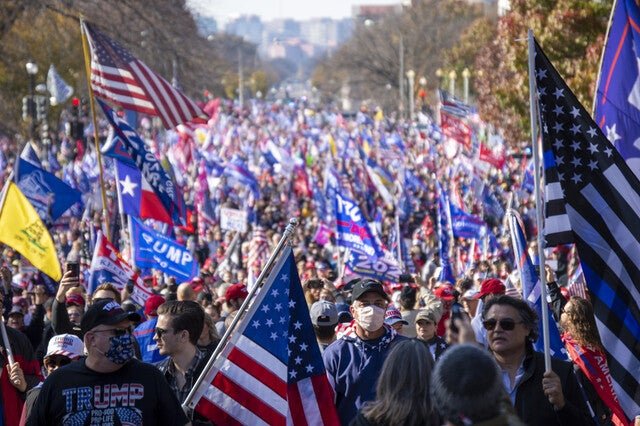


“Trump has cost us.” The words came from Michael Little, a 59-year-old businessman and three time Trump voter, in a Dallas hotel bar on election night, and they caught a mood spreading through the Make America Great Again movement after the Republican Party’s worst electoral defeat in decades. MAGA loyalists streamed out of a ballroom where they had hoped to toast a win for Senate candidate Ken Paxton, a favourite of President Donald Trump, and they left with a question they had not asked before: is the movement over?
The midterm losses on Tuesday were more than a defeat for Trump. They were a referendum on the political and cultural movement he built, which began as a campaign slogan during his 2016 run for president and grew into a defining force in American politics. Voters disillusioned by soaring fuel prices, the Iran war and corruption in Washington gave Democrats decisive majorities in both chambers of Congress, and the Senate could end up with Democrats holding as many as 56 of its 100 seats.
Democrats also won governorships in all seven states Trump carried in 2024, and they swept the statewide races in Texas. The scale of the defeat forced the movement to face a question it had never had to ask, and interviews by Reuters with more than a dozen MAGA activists, influencers, party strategists, Christian nationalist leaders and researchers who track right wing politics show a movement turning its anger on itself.
MAGA and the doubts in its own ranks
An analysis of social media traffic done for Reuters by PeakMetrics, a data firm, found that more than 20 percent of self described loyalists raised doubts about the movement’s leadership and direction. The study sampled 12,850 posts from a universe of 4.6 million Trump related comments on X and Reddit, from 9pm on election day to 8pm the next evening, and it found the doubts running through a large slice of the movement’s own base.
Of the posts that assigned blame for the losses, nearly a third cited the Iran war and Israel’s influence, and a quarter cited Republicans who were not committed enough to MAGA. The stolen election claims that have driven the movement since Joe Biden beat Trump in the 2020 presidential election have mostly gone quiet, and the anger has turned inward instead. Across the coalition, some supporters who once saw Trump as the movement’s greatest asset are starting to ask whether he has become its biggest liability.
Steve Bannon, a leading MAGA voice, podcaster and former Trump White House adviser, told Reuters: “We have to rebuild.” He urged a harder populist and nationalist turn, and his words were echoed by others who want the movement to return to its roots. But the factions disagree about what comes next, and that disagreement is now the central argument inside MAGA.
MAGA and the argument over what comes next
Some in MAGA want a return to populist and nationalist basics. Some want a movement less tied to one man. And a vocal minority say the movement is already dead. Christian nationalist pastor Douglas Wilson said MAGA “is not going anywhere” but must become less driven by one personality, and his view sits between the two camps that are pulling the movement apart.
Trump’s first major response to the midterms came on Friday. Instead of changing course, he doubled down on the movement’s core, and he promoted Stephen Miller, the main architect of the administration’s hardline immigration crackdown, to chief of staff, replacing Susie Wiles. The move was cheered by ardent MAGA influencers, and it showed that Trump intends to fight on the same ground, not to shift.
The White House did not directly answer Reuters’ questions about why Republicans lost, the defeat of candidates who embraced Trump’s false 2020 election claims, or where the movement goes from here. It pointed instead to Trump’s remarks on Wednesday, when he said: “If I were on the ballot, we would have won.” He also said it was “largely true” that the Iran war had cost Republicans because “it drove the gasoline up”, but that he would do it again.
What the midterms mean for the movement
The movement now faces a reckoning that will play out in the months ahead. The election gave Democrats large majorities, and it left Trump facing a Congress he does not control. MAGA has to decide whether it is a movement that can outlive the man who built it, or whether it fades with his fortunes.
For now, the question hangs over the movement. The loyalists are asking if it is over, and the answers they give will shape the Republican Party for years to come.