
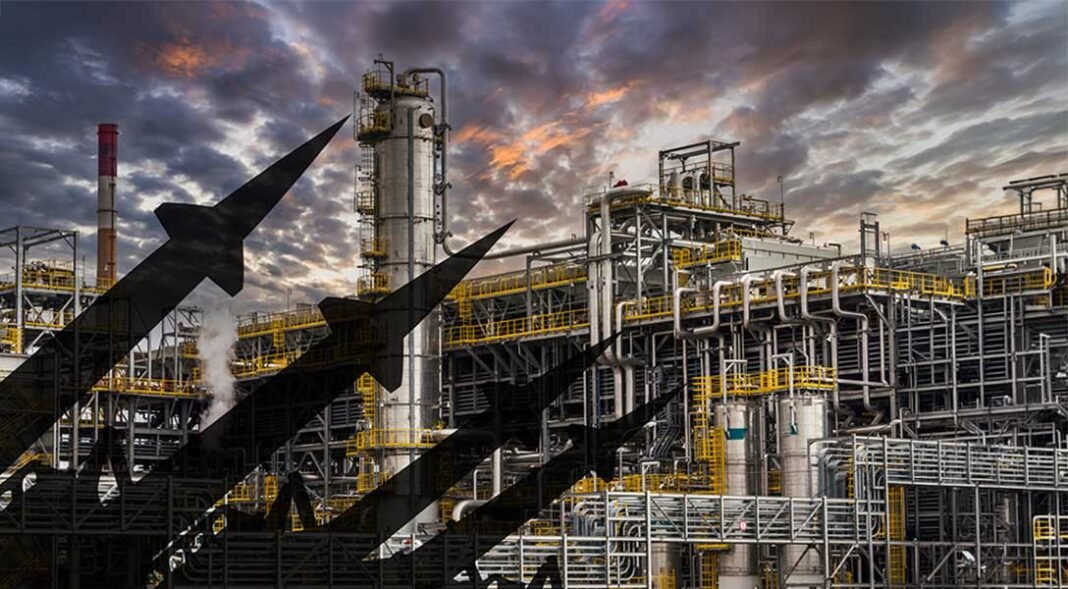


Refinery outages pumping up consumer costs across the United States have triggered widespread economic concern, according to recent data from the Federal Reserve Bank of Dallas.
The ongoing supply chain disruptions and unexpected processing plant failures throughout the country are driving finished fuel prices higher at a much faster rate than raw crude oil costs.
This alarming economic divergence has left motorists and industrial consumers facing persistently high bills at the pump despite stabilizing international commodity markets.
Market analysts note that this unexpected disconnect between crude oil costs and retail pump rates highlights deep vulnerabilities in domestic energy infrastructure.
While oil is flowing smoothly again through major international maritime routes, domestic processing networks continue to struggle with operational bottlenecks.
Consequently, drivers across the United States are seeing higher prices that fail to reflect broader downward trends in the global crude sector.
Why Refinery outages pumping up fuel costs
The Federal Reserve Bank of Dallas recently highlighted how constrained processing capacity limits the production of vital transportation fuels. Processing facilities across the United States are failing to keep pace with steady regional demand.
- Unexpected mechanical failures at key processing sites
- Prolonged maintenance schedules reducing overall output
- Constraints affecting both gasoline and diesel production
- Rising operational overhead for independent distributors
Compounding these domestic processing hurdles, the broader economic landscape faces a severe diesel crunch. Major financial institutions report that tight diesel supplies will likely persist for years as global processors struggle to satisfy rising demand.
This persistent shortage fuels a wider wave of energy nationalism, as governments prioritize domestic stockpiles over international exports.
Even as traffic steadily improves in critical transit lanes like the Strait of Hormuz, retail prices remain stubborn. This dynamic challenges traditional economic assumptions about how crude oil benchmarks dictate everyday energy costs.
Motorists and logistics companies find themselves paying a heavy premium for finished products due strictly to downstream constraints.
Industry experts project that structural processing challenges will continue to dictate market conditions well into the future. Refineries must successfully navigate extensive overhauls and infrastructure upgrades to restore balanced supply levels.
Until these critical operational hurdles are fully resolved, consumers should anticipate sustained price pressures across the United States.
Background and next steps
Refinery outages pumping up fuel prices more than cost of crude oil Federal Reserve Bank of DallasOil Is Flowing Again But Gasoline And Diesel Prices Aren’t Cooperating ForbesWhy are gas prices still high even as traffic improves in the Strait of Hormuz? ABC News – Breaking News, Latest News and VideosGlobal Diesel Crunch Fuels New Wave of Energy Nationalism Crude Oil Prices Today | OilPrice.comGoldman: Diesel prices set to stay high through 2027 as refineries struggle to meet demand CNBC
The story remains in motion, and readers should watch for official updates as more facts are confirmed.
Public interest is likely to stay high while new details emerge from reporters and officials.
Early claims should be treated cautiously until primary sources corroborate them.
Coverage of Refinery outages pumping up continues to evolve as more details become available.
Readers watching Refinery outages pumping up should look for official updates in the coming hours.