


San Diego State University has officially confirmed an active mumps outbreak affecting student-athletes on a single sports team, prompting immediate intervention from county health officials in the United States.
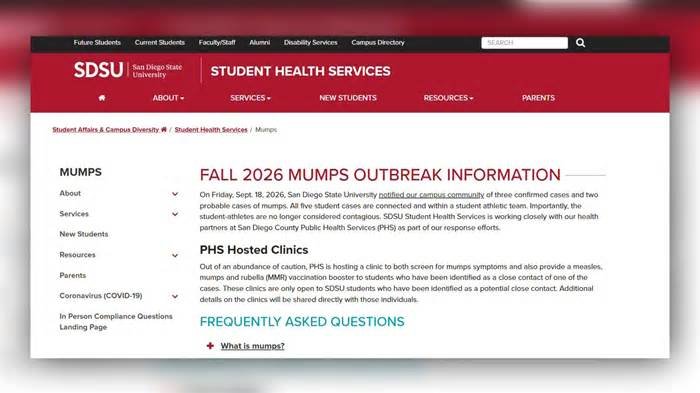
The San Diego County Health and Human Services Agency confirmed five connected cases within the athletic program. Officials are working diligently to limit transmission and ensure public safety across the entire campus community.
This sudden cluster of cases highlights the persistent vulnerability of highly connected populations to infectious diseases. Even with high vaccination rates, close-contact settings like collegiate athletic teams present unique challenges for campus health administrators.
The cases were identified after several athletes exhibited classic symptoms of the viral infection. Public health teams quickly moved to trace contacts and isolate the affected individuals to prevent a wider outbreak.
According to county medical reports, the five confirmed individuals are all members of the same sports team. This specific grouping suggests localized transmission occurred during practices, shared travel, or locker room interactions.
Health representatives emphasize that the outbreak remains contained to this specific group. No additional cases have been detected among the broader student body or university staff at this time.
To manage the situation, the university is executing established health protocols. These measures are designed to halt the spread of the virus within athletic facilities and the general campus.
The Outbreak at San Diego State University
The response effort involves coordinated action between campus medical staff and regional epidemiology experts. Their immediate priority is identifying anyone who may have been exposed to the infected athletes.
To control the transmission of this highly infectious respiratory disease, medical teams have implemented several standard containment measures:
- Isolating active cases: Affected student-athletes are placed in isolation away from team activities and classes.
- Conducting contact tracing: Health officials are interviewing classmates, teammates, and close contacts.
- Reviewing immunization records: Staff are verifying the vaccination status of all individuals in close contact with the team.
- Sanitizing shared spaces: Athletic facilities, locker rooms, and training equipment are undergoing deep disinfection.
Mumps is a contagious viral illness best known for causing painful swelling in the salivary glands, leading to a distinctive puffy cheek appearance. Other common symptoms include fever, headache, muscle aches, fatigue, and loss of appetite.
The virus spreads primarily through direct contact with saliva or respiratory droplets. In an athletic setting, sharing water bottles, utensils, or close physical contact during training can facilitate rapid transmission.
While the measles, mumps, and rubella (MMR) vaccine is highly effective, outbreaks can still occur in high-density environments. This is particularly true when individuals experience prolonged, close-range exposure to an infected person.
Public health agencies emphasize that vaccination remains the single most effective defense against mumps. The standard two-dose vaccine protocol provides robust protection for the vast majority of individuals under normal circumstances.
However, immunity can occasionally wane over time, especially under conditions of prolonged, intensive contact. This phenomenon explains why small clusters can still emerge within tight-knit environments like university sports teams.
Local health guidelines suggest that a third dose of the MMR vaccine is sometimes recommended during active outbreaks. This measure is typically reserved for individuals identified as having a high risk of exposure.
In addition to vaccination reviews, health authorities are monitoring any potential secondary symptoms among the student body. Early detection is vital to stopping the spread of the virus before it reaches classrooms.
The university’s athletic department has suspended joint activities for the affected team until further notice. This temporary pause ensures that no further transmission occurs during close-contact athletic events.
Administrators at San Diego State University took immediate steps to communicate the risk to the wider student population. Educational materials regarding mumps symptoms and preventive practices have been distributed campus-wide.
Students who exhibit symptoms are advised to avoid attending classes or public events. They should contact student health services immediately for guidance on testing and quarantine.
The current situation at San Diego State University highlights the ongoing importance of maintaining robust immunization compliance. Most universities require incoming students to provide proof of vaccination to mitigate these exact scenarios.
Epidemiologists note that mumps has an incubation period of 12 to 25 days. Because symptoms do not appear immediately, health officials must remain vigilant for several weeks after the initial exposure event.
This delay in symptom presentation makes active contact tracing crucial. By identifying potential exposures early, medical teams can prevent further transmission chains from developing on campus.
For students attending San Diego State University, maintaining health and safety during this period requires cooperative vigilance. Avoiding shared personal items and practicing consistent hand hygiene are key preventive steps recommended by medical personnel.
Local health authorities will continue to work closely with school administrators to monitor the situation. Regular updates are expected as the incubation window progresses and additional test results return.
Officials from San Diego State University continue to monitor the affected athletes and provide support during their recovery. The university aims to resume normal athletic operations once health agencies declare the cluster fully resolved.
Coverage of San Diego State University continues to evolve as more details become available.