
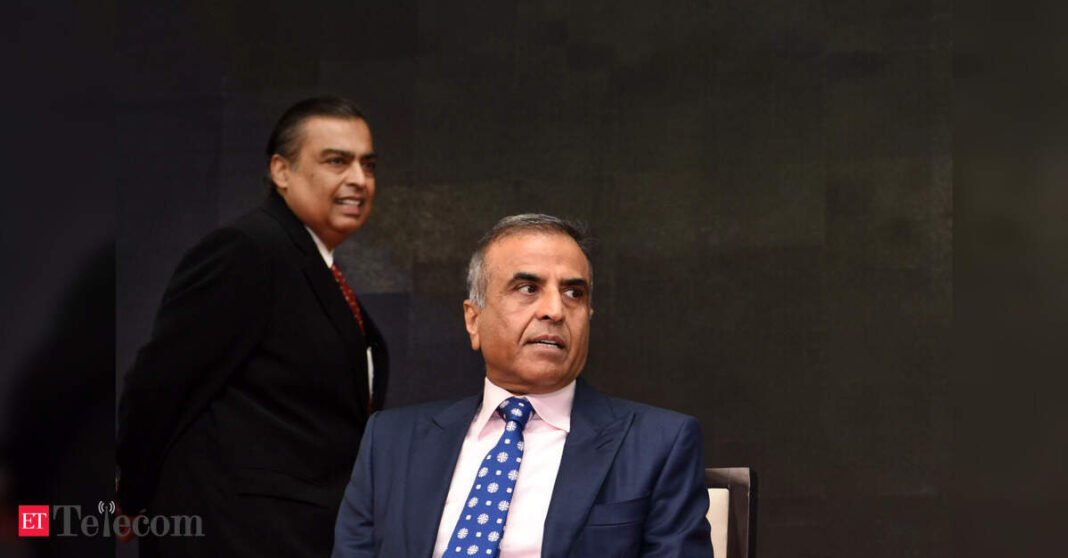


The satcom row escalates online
Reliance Industries has broken its silence on the satcom row, saying it welcomes competition in satellite communications, including from Elon Musk’s Starlink, but insisting that every player must obey Indian laws. In a statement posted on X on Friday, the Mukesh Ambani-led company placed what it called the facts on record, in its first direct response to Musk’s public criticism of India’s satellite communications landscape and the latest salvo in the satcom row.
Musk had criticised Reliance and argued that more competition would benefit consumers in satellite broadband, accusing unspecified oligarchs of blocking Starlink’s entry to India before naming Ambani in a series of posts. The posts drew wide attention in Indian policy circles, where spectrum and licensing policy have been debated for years. Reliance rejected the charge without naming Musk. “At Reliance, we have never feared competition. We see it as the truest test of who serves the customer best,” the statement said.
What Reliance said in the satcom row
“We welcome competition in satellite communications, including Starlink. Every player, Jio included, must serve the people of India and abide by the laws and policies of the land,” the company said. It backed its stance with Jio’s own record: Jio entered India’s crowded telecom market in 2016 as the newest player, with not a single customer, and in ten years earned the trust of over 530 million customers, offering some of the world’s most affordable data. “Like every Indian enterprise, Reliance has grown in an India that welcomes investment and innovation, homegrown or international. That openness rests on the rule of law,” the statement added, escalating the rhetoric of the satcom row.
The approvals bottleneck at the heart of the satcom row
Reliance pointed out that the government applies the same process to every applicant, Indian or foreign, and noted that Jio’s own satellite services are still awaiting clearances, placing it in the same queue as Starlink. At the centre of the satcom row is a licensing logjam. Union telecom minister Jyotiraditya Scindia has said three operators hold licences: Starlink, Jio Satellite Communications and Eutelsat OneWeb. But none has yet received security clearance, and spectrum pricing is still pending, so no commercial launch dates or consumer tariffs have been announced. The minister has indicated that spectrum will be assigned on a revenue-share basis once the charging framework is decided and each operator meets its security conditions. Amazon’s Project Kuiper is also reported to be eyeing an Indian licence, which would add a fourth heavyweight to the queue.
Starlink responded on X that it has worked with Indian regulators, industry and operators for more than five years and built dedicated in-country infrastructure, including gateways, with the requisite government approvals, asserting its readiness to deliver high-speed internet in India. The exchange turns the satcom row into a public test of India’s licensing regime: whether approvals move at the same pace for domestic and foreign applicants. Industry watchers note that satellite broadband is a long game, with constellations, ground stations and user terminals all needing to be in place before the first paying customer comes online.
What happens next
The timing is sensitive. Jio is preparing for a reported Rs 30,213-crore initial public offering, and any narrative of regulatory capture could unsettle investors, which may explain why Reliance chose to respond so publicly. Analysts expect the Department of Telecommunications to clarify the spectrum pricing framework first, since commercial planning cannot begin without it. For consumers, the prize is real: satellite broadband could connect remote areas where laying fibre is unviable, from Himalayan villages to offshore installations. But until security clearances land and spectrum pricing is decided, the satcom row will remain a war of statements rather than services, and the regulator’s next move will matter more than the next post.