


Trump AI task force targets three risk areas
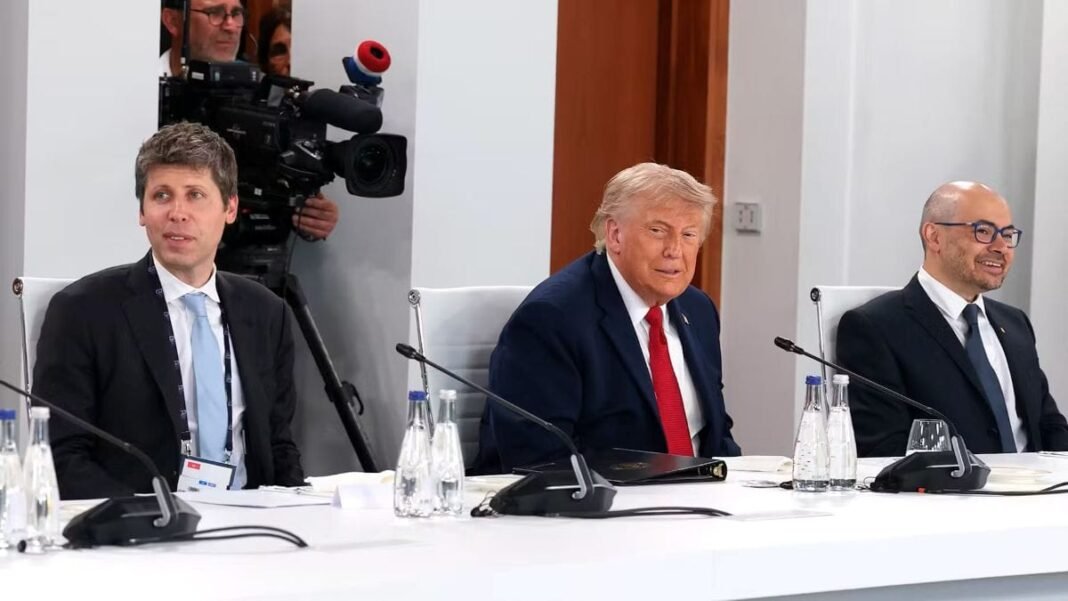
President Donald Trump’s artificial intelligence task force held its first meeting on Thursday and agreed to commission a report on the risks posed by advanced AI, covering cybersecurity, biosecurity and what officials called model control and accountability. The Trump AI task force, formally known as the Super Intelligence Force, will ask the President’s Council of Advisors on Science and Technology to evaluate those concerns and other potential dangers, according to a White House account of the meeting reported by Bloomberg. The session marked the first formal gathering of a panel that is now the administration’s main vehicle for deciding how Washington handles the opportunities and hazards of frontier AI systems, with the group working to a 120-day deadline for its findings.
Early-warning protocols for AI laboratories
A central outcome of the meeting was agreement to develop protocols and mechanisms requiring AI laboratories to provide early warnings and systematic notifications to the government about issues such as breaches, hacks and jailbreaks. The move reflects growing official anxiety that increasingly capable models could be misused or escape meaningful human oversight, and that the government currently lacks reliable visibility into incidents at leading labs. By formalising reporting channels, the Trump AI task force aims to give federal agencies a clearer picture of emerging vulnerabilities without, for now, imposing new binding rules on developers. Officials said the Trump AI task force wants those reporting channels in place before the next generation of models reaches deployment. The White House account said the panel did not consider new laws or regulations at its first meeting, but would engage with frontier model developers and other AI companies, consumer protection groups and civil liberties advocates, industry stakeholders, and federal and state law enforcement agencies to inform and implement its efforts.
Enforcement and consumer protection coordination
The task force also agreed to establish a law enforcement and consumer protection coordination committee that will include the Department of Justice, the Federal Trade Commission and other agencies. The committee is expected to coordinate how existing enforcement tools apply to AI-related harms, from fraud and deception to safety failures, bridging the gap between technology policy and the agencies that police misconduct. The creation of the committee shows the Trump AI task force intends to use existing legal tools rather than wait for new legislation. The decision to anchor the effort in existing institutions rather than propose new legislation fits the administration’s broader posture: Trump has repeatedly opposed strengthening AI regulation, arguing it could weaken American competitiveness with China in the AI race. At the same time, AI safety concerns are drawing attention from bipartisan lawmakers, as worries grow over the technology’s potential to cause mass unemployment, to slip beyond human control, and to drive up electricity prices through massive data centre demand.
What the Trump AI task force did not discuss
Notably absent from the first meeting was any discussion of new laws or rules governing AI development or deployment, a point the White House account emphasised. The panel is chaired by Director of National Intelligence Jay Clayton, who was named the administration’s AI czar in early October after Trump announced the task force in a Truth Social post on October 4. The Trump AI task force also includes Vice President JD Vance, Defense Secretary Pete Hegseth, Treasury Secretary Scott Bessent and Chief of Staff Susie Wiles, with former Secretary of State Condoleezza Rice advising on security matters. Clayton told CNBC that the inaugural meeting was very good and built on an accord that Trump and several AI leaders signed last month, adding that the United States is not the only country developing advanced AI and that the administration aims to keep the country ahead in the AI race. Clayton said the Trump AI task force must stay ahead of China, Russia, Iran and North Korea, which he credited with significant technical capability. He added: “We need to stay ahead of them.” An executive order signed on September 29 replaced the term artificial intelligence with super intelligence in federal usage, the president’s preferred term, giving the task force its distinctive name. With the 120-day clock running, the report due around February 1, 2027 will test whether the Trump AI task force can reconcile its deregulatory instincts with the sweeping risk agenda it has now set for itself. For now, the Trump AI task force has signalled urgency without committing to new regulation.