
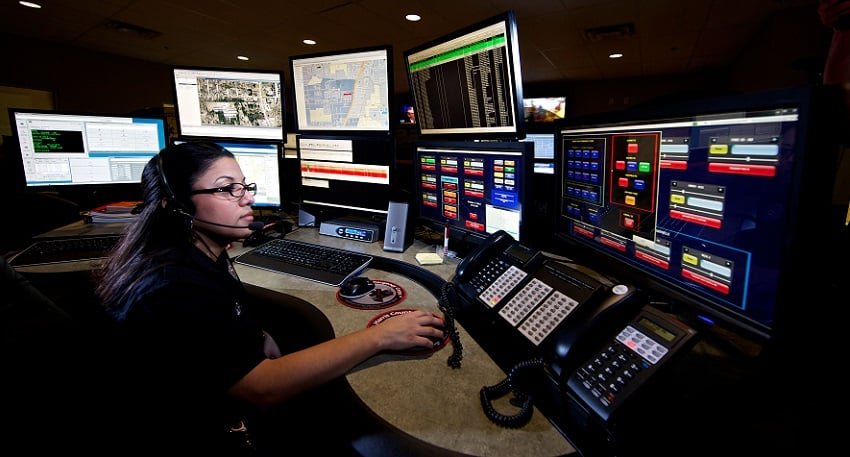


Years ago, a technology officer inside Seattle’s government warned the city’s Fire Department that using artificial intelligence on 911 medical calls would pose equity risks. Seattle 911 AI has been listening to every medical call in the city since 2023, helping dispatchers decide which callers do not need a rapid response. The warning went almost nowhere. The Seattle Times reported the story on 4 November 2026, after obtaining city records.
Ginger Armbruster was Seattle’s chief privacy officer in 2019, working in the city’s Information Technology Department, when she learned the Fire Department was planning to deploy artificial intelligence. A Danish company called Corti was building the department a new 911 call-taking platform, and the Fire Department wanted to use Corti’s AI to review calls for quality assurance. Armbruster examined the Seattle 911 AI project and wrote a privacy risk analysis memo.
She knew research showed AI could worsen bias based on traits such as race and gender, and she worried about that affecting life-or-death decisions. Her memo identified concerns about data ownership, data sharing, data breaches and equity. She wrote that AI models would present potential civil liberties concerns about equity of service provision and response dispatch. She recommended mitigation steps for Seattle 911 AI, including a plan to share details with the public.
How Seattle 911 AI reached live calls
The Fire Department went ahead anyway. Since 2023, Seattle 911 AI has been listening to all 911 medical calls and helping dispatchers decide which callers do not require a rapid response. The technology prompts dispatchers to route certain patients to a Texas nurse line rather than send aid right away. Ambulances ordered by the nurse line are exempt from Seattle’s response-time standards.
Callers did not know Seattle 911 AI was in use until a Seattle Times report in June. The department had rolled out the system without any disclosure to callers, any public review, or any demonstration that the technology would treat diverse callers equitably.
In one case, before the Fire Department started using AI prompts, a woman sent to the nurse line waited more than 10 hours and was found dead. The Times reported that case, and it shows why the routing decision matters. A caller sent down the slower path waits longer for help, and the wait is not measured against the city’s response-time standards.
What Seattle 911 AI does on a call
Fire Department officials say Seattle 911 AI is safe because human dispatchers remain in control of all calls and are trained to handle them equitably. Chief Harold Scoggins defended the department’s use of the tool at a City Council public safety committee meeting in September. “AI does not make any decisions. It offers an opportunity, but the dispatchers still make the ultimate decision,” Scoggins said. He noted that all of the dispatchers are firefighter emergency medical technicians.
The technology officer who raised the concerns in 2019 and several independent specialists said they still have questions about the system. They said the Fire Department should stop using AI on live 911 calls until a thorough evaluation of risks is completed and shared with the public. Emily Bender, a University of Washington professor who specialises in computational linguistics, was among those who raised questions.
Ryan Calo, a University of Washington law professor and co-director of the university’s Tech Policy Lab, said people have the right to know when AI is used to make consequential decisions, such as who should be fast tracked and who should be sent on an alternative track. Calo said he did not like the fact that the system was hidden from the public, or the idea of a third party listening in on 911 calls without notice.
The questions Seattle 911 AI still faces
Mayor Katie Wilson said when the June report appeared that her administration was developing a framework for assessing how Seattle agencies are using AI. The City Council has since held a hearing on the subject. Wilson declined to be interviewed for the November story. Her spokesperson, Ansel Herz, wrote in an email last week that the mayor is highly concerned about the disparate impacts of AI algorithms on the public and is working with the Fire Department on the issue. Herz promised a public update in early 2027 on all uses of AI by Seattle’s government.
That update is still more than a year after the 2019 memo, and more than three years after the system went live. Armbruster’s recommendations included sharing details with the public, and that step still has not happened. The Fire Department continues to use Seattle 911 AI on every medical call while the city works on its framework. The evaluation the technology officer called for in 2019 has yet to be completed or shared.