
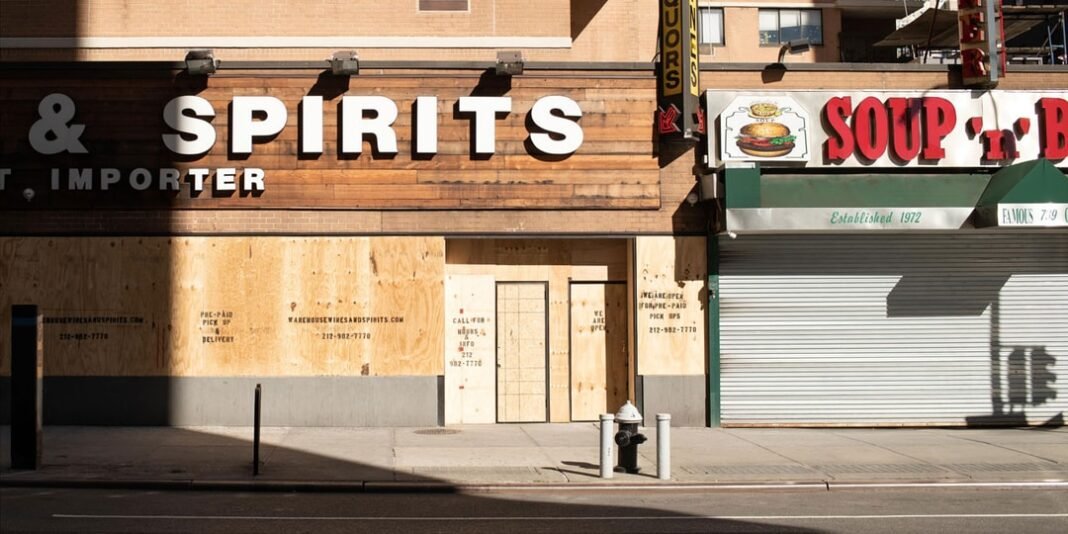


More than 16,000 storefronts across New York City sat empty at the end of September, and the new figures show the problem has not eased. NYC empty storefronts numbered 16,047 out of 141,744 citywide, a vacancy rate of 11.32 percent, according to a dashboard launched on Wednesday by City Comptroller Mark Levine. The rate rose from 11.26 percent in the previous quarter and stands at its highest in more than two years.
Between July and September, 2,551 storefront businesses closed while 2,275 opened, a net loss of 276. It was the 12th straight quarter in which closings outpaced openings, a run that stretches back three years. The comptroller’s office said the dashboard will be updated every quarter and draws on street-level surveys carried out by Live XYZ, which tracks openings, closings and vacancies down to the neighborhood level.
Small businesses bore much of the loss. From January through September, 7,146 small businesses closed and 6,547 opened, a net loss of 599. In the third quarter alone, 1,996 small businesses opened, the lowest quarterly count since the dashboard’s records began in late 2023. The comptroller’s office generally classes a small business as an independent operator with fewer than five locations citywide, and the figures behind NYC empty storefronts show those operators opening fewer shops than they close.
NYC empty storefronts cluster in some neighborhoods
Manhattan had the highest vacancy rate of the five boroughs, at 13.12 percent. The comptroller’s earlier report, published in June, found that some neighborhoods in Lower Manhattan, northern Brooklyn and western Queens had vacancy rates near or above 20 percent. Vacancies also tend to cluster: a storefront within one block of a vacant property is 30 percent more likely to be unoccupied itself than the typical storefront citywide.
Empty shops also tend to stay empty. In many neighborhoods, 80 to 90 percent of vacant storefronts at the start of 2026 had sat unoccupied for at least nine months. The June report counted about 15,700 NYC empty storefronts citywide, a rate of 11 percent, or roughly a half-point above the pre-pandemic level. The new dashboard puts the September count higher still, and the gap between closings and openings has not closed.
Some corridors have felt the losses more sharply than others. In Astoria, Queens, the Ditmars corridor has seen a rapid run of closures that local business owners say points to a wider strain on small shops. The dashboard lets users follow NYC empty storefronts street by street, rather than relying on a single citywide rate.
NYC empty storefronts worry owners and landlords
Andrew Rigie, executive director of the NYC Hospitality Alliance, called the report “another wake-up call” and said the city must focus on helping new businesses open and keeping existing ones from shuttering. His group represents restaurants and nightlife venues, many of which operate out of the same ground-floor spaces the dashboard tracks, and he said the latest count of NYC empty storefronts should push the city to act on both fronts.
Not every part of the picture is bleak. A surge of new restaurants helped drive a revival in storefront occupancy after the pandemic, and the comptroller’s June report found that 84 percent of the 96,500 storefronts occupied by a small business in early 2020 were either still operating or had been replaced by another small business. Restaurants have filled some of the gaps left by retailers, though the new data shows they have not filled them fast enough to turn the quarterly balance positive.
What the NYC empty storefronts dashboard will track next
Levine said retail storefront occupancy is a key indicator of the economic health of a neighborhood and of the city as a whole. The dashboard is meant to give the public, landlords and policymakers a shared set of numbers to work from, updated each quarter as new survey data comes in. The next update will cover the final three months of the year, including the holiday shopping season.
For now, the numbers point in one direction. Closings have outpaced openings for three straight years, small business openings hit their lowest quarterly count since late 2023, and more than 16,000 shops sit dark heading into the busiest retail weeks of the year. The dashboard will show whether the holiday season cuts the count of NYC empty storefronts, or extends the run.