
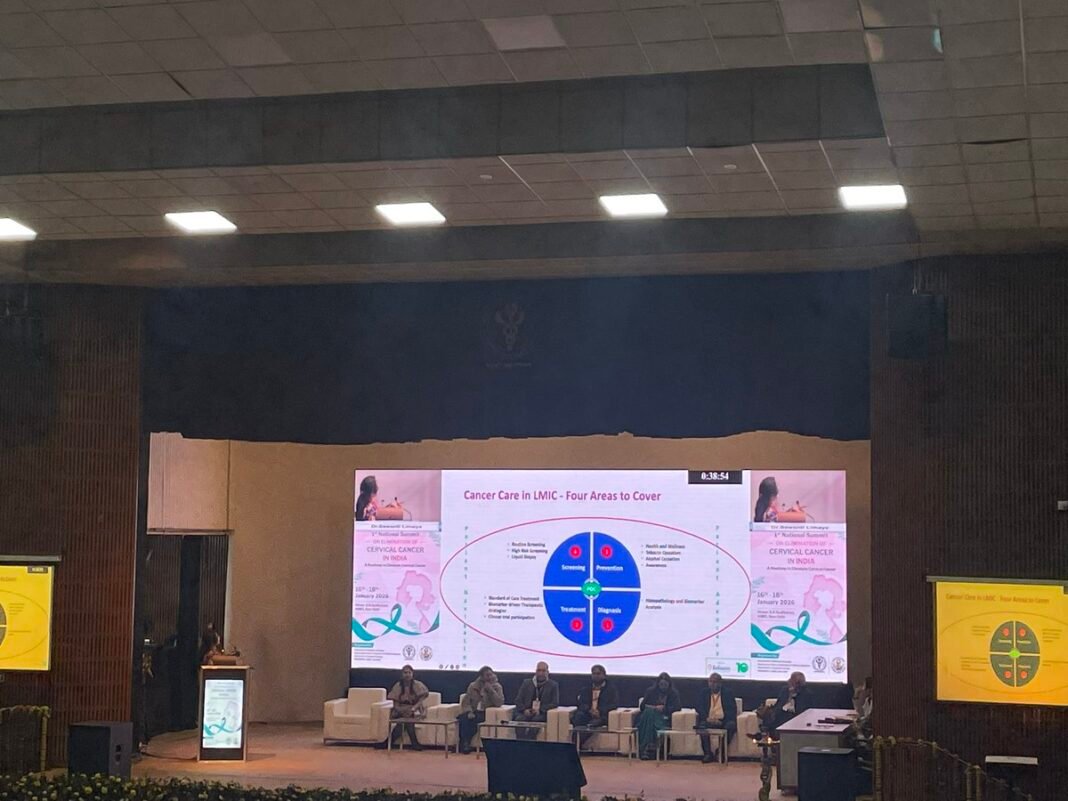


New Delhi: Catching disease early can save lives, and early diagnosis may be India's best defence against a rising tide of illness in younger people. That was the message from doctors and health officials at THE WEEK Health Summit 2026 in New Delhi, where speakers said the country must move from treating illness after it appears to stopping it before it starts. Union Minister Dr Jitendra Singh, the chief guest, said research is now working at the molecular and genetic level, with prevention and early detection at its centre.
Singh said diabetes, obesity, hypertension and cardiovascular diseases are increasingly affecting younger people, making preventive healthcare and early diagnosis imperative. Changing diets, declining physical activity and the spread of lifestyle-related health risks across urban and rural India have made the challenge more widespread, he said. He was speaking at the summit on Sunday, November 22, where he delivered the chief guest address on healthcare initiatives of the Union government and spoke with healthcare professionals, researchers and industry representatives.
Early diagnosis and the shift to prevention
The summit brought together Dr Nikhil Tandon, Director of AIIMS New Delhi, Sharad Aggarwal, Director of the Food Safety and Standards Authority of India, and Dr Andrei Kozik, Deputy Head for India at the International Committee of the Red Cross, besides senior doctors, researchers and industry representatives. Singh said healthcare is evolving beyond conventional treatment towards scientific interventions, preventive strategies and more precise disease management, with early diagnosis at the centre, in line with the vision of Viksit Bharat 2047.
Early diagnosis depends on people showing up for checks, and prevention cannot be left to medical professionals alone, Singh said. It needs collective participation and greater awareness. He cautioned young people against health misinformation on social media and the unsupervised use of medicines for cosmetic purposes, and urged them to seek guidance from doctors instead. The warning pointed to a gap the summit returned to more than once: people often act on what they read online before seeing a doctor.
What early diagnosis looks like in practice
At the heart of the plan Singh laid out is GenomeIndia, which has sequenced the whole genomes of 10,000 Indians from 84 population groups. The research covers more than 400 genetic traits, and could support targeted medical interventions, strengthen precision medicine and sharpen early diagnosis. Precision medicine considers a person's genetic profile, lifestyle and environment to shape more personalised treatment.
Singh pointed to programmes where molecular science is already reaching patients. More than 50 lakh adolescent girls have been vaccinated against HPV, which causes cervical cancer. At CMC Vellore, doctors have treated severe haemophilia A with gene therapy, using patients' own genetically modified blood stem cells, in work published in the New England Journal of Medicine. Tests are being developed to spot chronic kidney disease before symptoms appear, as dialysis expands in district hospitals. The government and the Indian Council of Medical Research are widening diagnosis and treatment for rare genetic diseases, where families face delayed diagnosis and high costs.
Diabetes, heart disease and the case for screening
The summit also heard about research on biomarkers among women with gestational diabetes, aimed at identifying those at higher risk of Type 2 diabetes later in life. Singh said effective management of diabetes and hypertension was essential to reducing the long-term burden of chronic disease. Early diagnosis can start with a basic metabolic check: a young adult with a family history of diabetes or heart disease can already get blood sugar, lipids, blood pressure and kidney function tested in their twenties, long before symptoms appear, and that check is the cheapest version of prevention.
That point matters because the conditions the summit discussed are often silent for years. Diabetes and high blood pressure can damage the heart, kidneys and eyes before a person feels ill, which is why doctors at the summit kept returning to screening and early diagnosis. The minister also recalled India's indigenous DNA vaccine developed during the Covid-19 pandemic, and highlighted the country's growing capabilities in vaccine development as part of the same shift towards prevention.
The test beyond big cities
The real test is not in a laboratory, but in a clinic in a small town. Sequencing and gene therapy are still expensive and concentrated in big-city hospitals, and if precision medicine stays limited to a few research centres, it will change headlines more than health outcomes. Singh called for stronger collaboration between government institutions, research organisations, healthcare professionals and private-sector players to accelerate medical innovation.
India is moving towards a healthcare approach that places greater emphasis on prevention, early detection and advanced research at molecular and genetic levels. For ordinary readers, the change starts with early diagnosis: a blood sugar test, a blood pressure reading, a kidney function test, taken years before any symptom appears.