
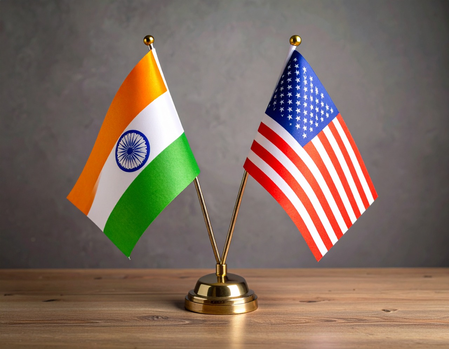


US tariffs on India of up to 25 per cent have been proposed by Washington, and the government in New Delhi said on 25 November that the notice is under examination. The proposal came from the Office of the United States Trade Representative (USTR) as part of a wider action against 14 economies, after an investigation into manufacturing policies.
The USTR said the duties would apply to all goods from India, net of existing Section 301 tariffs, with exemptions for certain goods. It also proposed a lower rate of 17 per cent if India reaches a reciprocal trade agreement that addresses the findings of its investigation. The proposed US tariffs on India are the second highest in the group, behind Vietnam at 35 per cent.
What the US tariffs on India investigation found
The US tariffs on India investigation was launched in March under Section 301 of the Trade Act of 1974, which lets Washington act against foreign practices it finds unreasonable and a burden on US commerce. USTR Jamieson Greer determined that the manufacturing policies of 14 economies are unreasonable and a burden on US commerce, and therefore actionable under Section 301. The 14 economies are China, the European Union, Singapore, Switzerland, Indonesia, Malaysia, Cambodia, Thailand, Korea, Vietnam, Taiwan, Bangladesh, Japan and India.
For India, the USTR listed industrial plans to expand manufacturing, inadequate labour protections, financial repression policies, sustained market access barriers, and a failure to address global excess capacity, including through imports and foreign direct investment from non-market economies. The US tariffs on India findings named Make in India, Atmanirbhar Bharat and the Production Linked Incentive scheme. The USTR also cited an International Monetary Fund assessment that 15 per cent of continuously operating firms in India were zombie firms, companies that stay in business despite weak financial performance. It pointed to India’s trade surplus with the US, which stood at $57.3 billion in 2025.
How the proposed US tariffs on India would work
The proposed duties are not yet in force. The USTR has invited public comments until 5 January 2027 and will hold public hearings on 25 January before deciding on further action. Under the US tariffs on India proposal, the new rate would not be added on top of existing tariffs. Instead, the USTR proposed calculating the rate net of certain existing duties under Section 301, while considering adjustments for other tariffs, including those imposed under Section 232 on national security grounds. The US currently imposes an additional 10 per cent tariff on many Indian goods, apart from regular customs duties.
The US tariffs on India proposal lands in the middle of trade talks between the two countries. In February 2026, India and the US announced a framework for an interim trade agreement under which Washington proposed lowering the reciprocal tariff rate on Indian goods to 18 per cent. Commerce Secretary Rajesh Agrawal said last week at the Federation of Indian Chambers of Commerce and Industry annual general meeting that negotiations were nearly complete, but the agreement could not be signed until Washington finalised its new tariff framework. The administration had earlier imposed a 25 per cent reciprocal tariff on Indian goods, alongside a separate 25 per cent tariff linked to India’s purchases of Russian oil.
India’s response to the notice
The Ministry of Commerce and Industry said India had cooperated with the investigation and presented its position during the proceedings. “Government of India has taken note of the Notice of Determination and Request for Comments issued by the United States Trade Representative (USTR) in the Section 301 Investigation concerning Acts, Policies, and Practices of 14 economies, including India, relating to Structural Excess Capacity and Production in Manufacturing Sectors. The Notice is currently under examination,” the ministry said in a statement. The government said India has no structural excess capacity in any sector and that trade concerns should be settled inside the bilateral trade agreement negotiations.
Indian exporters pressed the government on 26 November to conclude a trade agreement with Washington as fast as possible. S C Ralhan, president of the Federation of Indian Export Organisations, was among those who said order books made an early deal urgent. The USTR schedule puts Bangladesh and Cambodia at 18 per cent. If India signs a deal that answers the findings, the US tariffs on India rate would fall to 17 per cent, below the rates offered to several of its Asian competitors.
The comment period runs until 5 January 2027, and the hearings follow on 25 January. Until then, the proposed duties remain only a proposal, and the final US tariffs on India rate will depend on what the USTR decides after the comments and on whether the two countries reach a trade agreement.