


The Ganga water treaty between India and Bangladesh expires on 12 December 2026, and Dhaka has asked New Delhi for formal talks on a replacement deal that would guarantee Bangladesh a minimum share of water in dry years. With fewer than three weeks left before the deadline, no date for negotiations has been set, and the future of the 30-year arrangement is now an open question for both governments.
Bangladesh wants the new agreement to restore a guarantee clause of the kind written into a 1977 water-sharing deal, which promised Bangladesh a set quantity of water even when the flow of the Ganges fell sharply. The Ganga water treaty has governed sharing for 30 years, but it carries no such promise. It divides dry-season water at Farakka on a formula that shifts with availability, so Bangladesh receives less when the river runs low. Dhaka says a guarantee would turn its share into an entitlement that must be delivered whatever the monsoon brings.
What Dhaka wants in a new Ganga water treaty
Water Resources Minister Md Shahid Uddin Chowdhury Anee told the Bangladesh Sangbad Sangstha (BSS) that restoring the guarantee is a priority for Bangladesh. “Restoring a guarantee clause, similar to the one in the 1977 agreement, is a priority for Bangladesh. We are ready to hold talks with India and hope to reach a long-term and mutually acceptable solution,” he said. Anee said Bangladesh wants a new Ganga water treaty that protects its legitimate share of the river’s water, above all in the dry season when flows fall sharply.
Anee wrote to his Indian counterpart on 17 November, calling for formal talks on the Ganga water treaty to start as soon as possible. Dhaka had first proposed negotiations in June. India responded in August by asking Bangladesh to form a technical committee. Bangladesh has now set up a high-level committee to prepare for the talks, led by Professor Rashed Al Mahmud Titumir, the prime minister’s adviser on finance and planning. India has yet to give a date for negotiations.
Why the Ganga water treaty matters in the dry season
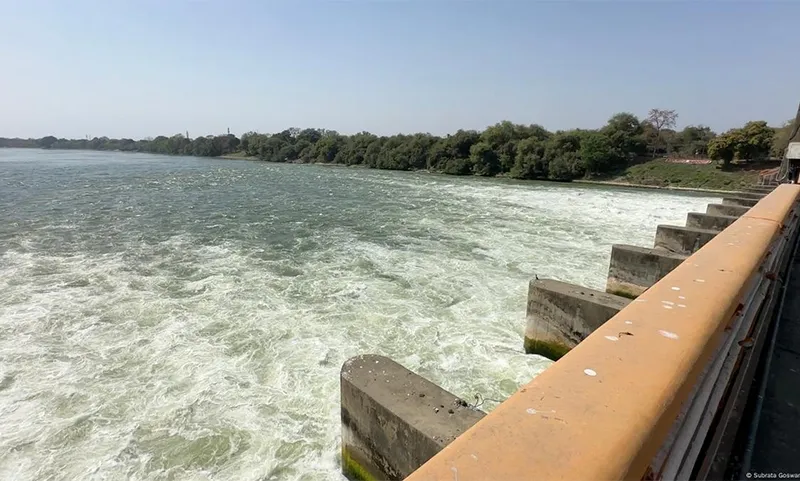
The treaty was signed on 12 December 1996 and provides for monitoring water flows at India’s Farakka Barrage and Bangladesh’s Hardinge Bridge from 1 January to 31 May each year. Article 12 says the agreement stays in force for 30 years and can be renewed only with the consent of both countries. It has no provision for automatic extension, so the legal framework for sharing lapses unless the two sides agree on a new arrangement. The expiry itself would not stop water flowing at once, but it would leave sharing without an agreed legal basis.
The dry season is when the dispute bites. Flows in the Ganges fall sharply between January and May, and southwestern Bangladesh depends on that water for farming, irrigation and fishing. Titumir told BSS that sharing the river is tied to agriculture, food security, the environment and the economy, and not only to water supply. Water specialists have warned that letting the Ganga water treaty lapse without a replacement would leave farmers and fishing communities unsure how much water they can count on in the months when they need it most.
Talks so far and the road ahead
The 91st regular meeting of the India-Bangladesh Joint Rivers Commission was held in Dhaka on 22 November. The two sides finalised the annual report on implementation of the Ganga water treaty for 2026, which will go to both governments within the set timeframe. Renewal was not discussed at the meeting, because negotiations on a new agreement fall to the two governments and their political leadership rather than to the commission.
India has its own claims on the river to weigh. New Delhi must consider the drinking water, irrigation and industrial needs of states in the Ganga basin, including West Bengal and Bihar. Changes in river flow, sediment build-up and the effects of climate change could also complicate talks on a new Ganga water treaty. India has said water questions will be handled through bilateral channels such as the Joint Rivers Commission, and it has issued no formal statement on Dhaka’s letter.
With 15 days left before the Ganga water treaty expires, Anee’s letter of 17 November is the latest formal move from Dhaka, and New Delhi has yet to reply with a timetable.