
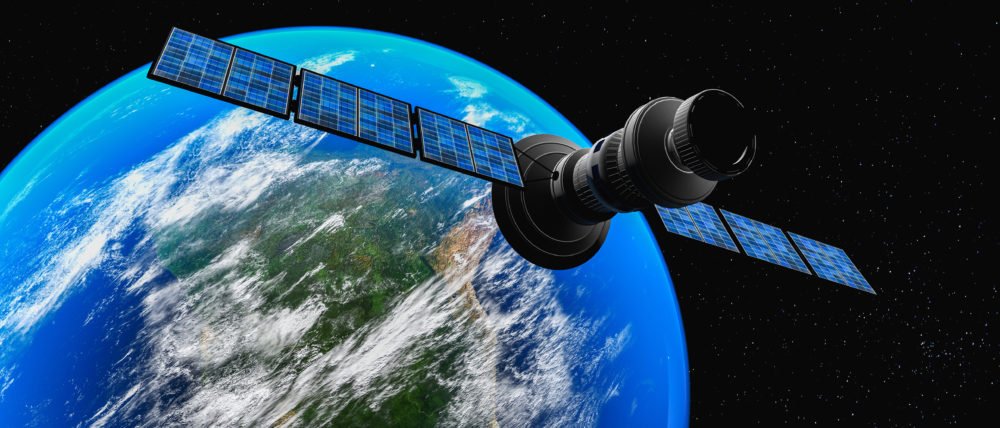


Data centers on Earth use more electricity and water every year, and the companies building them are running into limits. Space data centers are the industry’s most ambitious answer: put the servers in orbit, where sunlight is constant and no town can object to the building. Researchers at the University of Cambridge say space data centers could work, but they would move the environmental cost rather than remove it. Their analysis was published on 4 November 2026.
Global data center electricity use is projected to rise from 415 terawatt hours in 2024 to more than 945 by 2030, according to the International Energy Agency. That total is roughly equal to Japan’s current electricity consumption. Cooling adds to the strain, because data centers draw large volumes of water as well as power. Against that backdrop, several AI companies have started to treat orbit as a serious option.
Google launched a prototype satellite on 1 October 2026 under its Project Suncatcher, built with Planet and carried into orbit on a SpaceX rideshare. The satellite is about the size of a refrigerator and carries four Google Tensor Processing Units. SpaceX is working on its own orbital computing project, called Starmind. The startup Starcloud launched the first Nvidia H100 graphics processor into orbit in November 2025 and says it trained the first large language model in space. Starcloud has raised about $450 million and is valued at $2.3 billion. China has announced a “space cloud” of its own, to be ready by 2030.
Why space data centers look attractive
Space data centers would sit in dawn-dusk sun-synchronous orbits, where solar panels receive near-constant sunlight. Google says a panel in the right orbit can produce up to eight times more power than the same panel on Earth. There is no permitting board in orbit, no local water supply to drain, and no grid queue to join. Permitting alone for a new energy project for a data center on Earth can take five to 10 years.
The pitch has drawn serious money. Starcloud’s chief executive, Philip Johnston, told Harvard’s Advanced Leadership Initiative that his company expects to compete with terrestrial data centers on energy and infrastructure cost around the end of 2028 or early 2029. The calculation rests on launch costs falling far enough that they undercut the price of permitted land, batteries and solar panels on Earth.
Cooling is the hardest part of the pitch for space data centers. Space is cold, but it is a vacuum, so heat cannot be carried away by air or water. It can only leave as infrared light from a radiator. Ars Technica reported that Google’s test satellite can run its processors for about 15 minutes at a time before it has to stop and let the radiators catch up. A perfect radiator at room temperature sheds about 460 watts per square metre.
What space data centers would cost the sky
Space data centers would need rockets at a scale nobody has attempted. The Cambridge researchers estimate that deploying AI infrastructure in orbit would require hundreds of launches of Starship or comparably super-heavy rockets. Rocket launches emit greenhouse gases, black carbon and soot, and pollutants released into the upper atmosphere can behave differently from those emitted at ground level. Black carbon and chlorine deposited high up can harm the ozone layer.
Kerosene is the most used rocket fuel today, and it powers the Falcon 9’s Merlin engines, but it produces large amounts of greenhouse gases, soot and black carbon. Methane burns more cleanly and powers Starship, but methane rockets are larger systems that burn more fuel. A Starship V3 could carry as much as 6,000 tonnes of methane, against about 1,500 tonnes of kerosene for Falcon Heavy, the heaviest kerosene rocket now flying. Hydrogen burns cleanest, producing mostly water vapour, but it needs bulky cryogenic storage that adds cost and complexity.
The researchers also flag problems for space data centers beyond emissions. Hardware in orbit is hard to reach, so a failed server cannot be repaired or upgraded. Debris and collision risk grow as more satellites go up, and orbits are already crowded. Regulation and security add further hurdles that ground-based data centers do not face.
The choice facing space data centers
The question for policymakers is not only whether space-based computing can ease pressure on water and electricity. It is how to manage the environmental costs that a rapid growth in launches would create elsewhere. The cheapest rocket is not necessarily the one that best balances cost, efficiency and environmental impact, and the researchers warn that choices made now could lock the sector into one path for decades. Moving space data centers beyond Earth does not delete their footprint. It moves it out of sight.