


The Republicans hoping to succeed Donald Trump in 2028 have begun to dissect their party’s midterm defeat in public, and they are blaming two parts of the president’s own agenda: the war in Iran and his tariffs.
Vice-President JD Vance, Florida governor Ron DeSantis and Senator Ted Cruz each pointed to frustration over the cost of living after Democrats swept the midterm elections, taking both chambers of Congress, a majority of governors’ races and seats in places Republicans had long treated as strongholds.
The defeats were wide. Democrats won in Texas and South Carolina, and the Associated Press called more competitive House races for the party on Thursday, though Senate races in Alaska and Mississippi remained undecided.
What the 2028 hopefuls blamed for the loss
Cruz was the bluntest of the three. Speaking on his podcast, Verdict With Ted Cruz, on Wednesday, he said: “Tariffs have made everything too expensive and the Iran war has dragged on too long.” Cruz, a former Republican presidential candidate, has not ruled out another run.
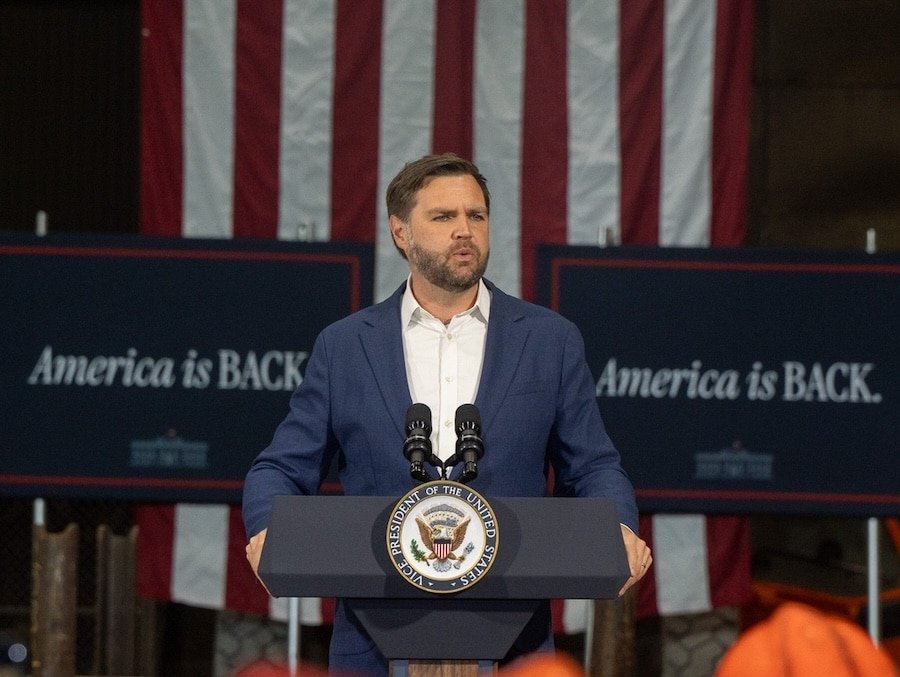
Vance put the blame squarely on the war. In a lengthy post on X, he wrote: “The reason we lost is the war.” He said voters were angry at the Trump administration for turning its attention away from Americans at home, and that former Republican voters had switched sides over the Iran war and the United States’ ties to Israel.
DeSantis went further still, describing the elections as close to “an extinction-level event” for the Republican Party. He also blamed Democratic ads that painted conservative candidates poorly, including ads over the case of the convicted sex offender Jeffrey Epstein and congressional stock trading.
Trump himself admitted on Wednesday that the war in Iran had pushed potential Republican voters away, saying it was largely true because the conflict had pushed petrol prices up.
The 2028 field after the midterms
Until Wednesday, Vance had seemed the natural candidate to lead the MAGA movement after Trump in the 2028 race. His position as vice-president gave him a wide advantage, and he was widely seen as the person best placed to win Trump’s endorsement and the support of the party’s grassroots.
Polling taken on Tuesday by The New York Times put Vance at 40 percent in a theoretical Republican presidential primary for 2028. Secretary of State Marco Rubio followed at 21 percent, alongside Donald Trump Jr, also at 21 percent.
Former House speaker Newt Gingrich wrote on X that if the administration had won a big victory, Vance would have had the perfect argument for the nomination. “Now there are a number of people who want to recruit the amazing Secretary of State Marco Rubio as a candidate,” Gingrich wrote. He also named Cruz, Senator Tom Cotton, DeSantis, Defense Secretary Pete Hegseth and Virginia governor Glenn Youngkin as possible contenders for 2028.
Representative Marlin Stutzman of Indiana, who won re-election on Tuesday, publicly backed Rubio after the results. A Republican strategist named DeSantis, Georgia governor Brian Kemp and former Virginia governor Glenn Youngkin as potential alternatives for the party’s next presidential campaign.
Andrew Payne, from the Chatham House think tank, told Al Jazeera that any Republican wanting to take on the 2028 election will now need to “distance themselves from the more unpopular aspects of Trump’s record.” That means the Iran war, he said, the greatest poisoned chalice of them all.
The 2028 balancing act for Vance
Vance has not formally announced a 2028 presidential campaign. He also named four concerns among former Republican voters that could bring them back: ending the war, addressing living costs and inflation, prioritizing American interests, and changing the United States’ relationship with Israel.
Former White House chief of staff Mick Mulvaney described the task facing Republican hopefuls as a difficult balancing act. A candidate must stay close enough to Trump to win the primary, he said, but not so close that Trump drags them down in the general election.
DeSantis, who challenged Trump for the Republican nomination two years ago and lost, was asked overnight whether he might consider another presidential run. “On January 5, I will be a private citizen,” he told CNN, referring to the end of his term as Florida governor.
No major Republican has formally announced a presidential campaign for 2028. Vance faces particular scrutiny because he is Trump’s second-in-command and put political capital behind several Republican campaigns that lost on Tuesday.