
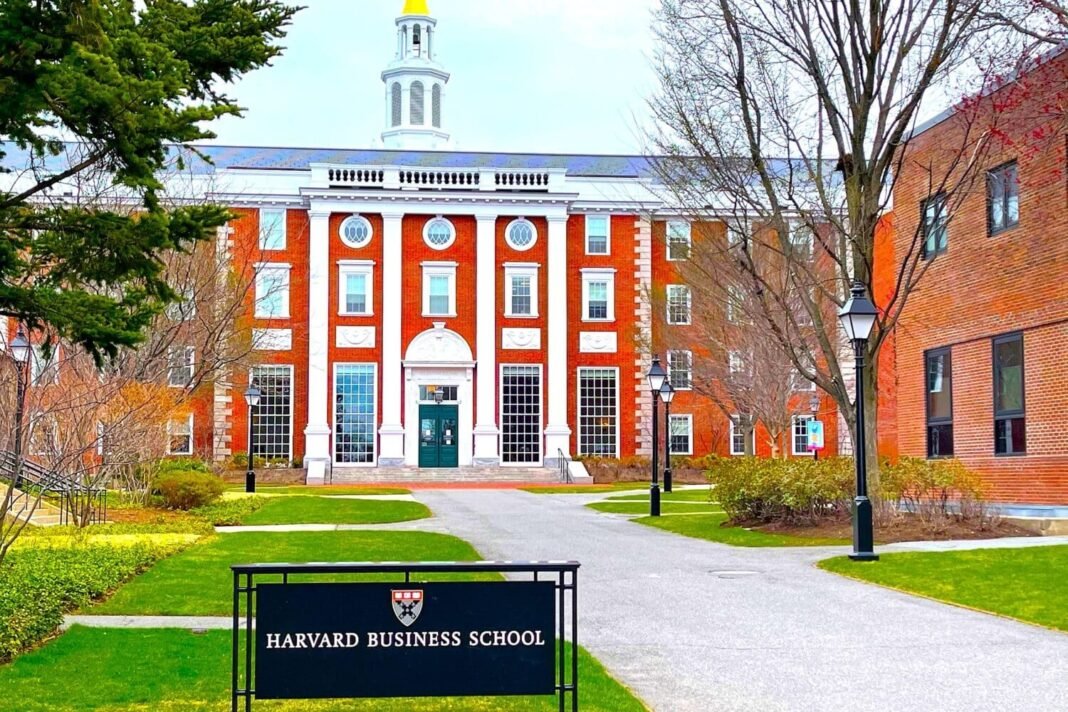


Harvard MBA applications totaled 7,682 for the Class of 2028, down from 9,409 for the Class of 2027 and 9,856 the year before that. The school enrolled 906 new MBA students this fall, 37 fewer than last year's class of 943. The new class comes from 67 countries and 293 undergraduate institutions, according to the school's class profile released on November 23.
The drop puts Harvard in the middle of a broad pullback in demand at elite US business schools this year. Dartmouth Tuck saw applications fall 31.5 percent. Harvard's leadership says the smaller class was its own choice, not a result of the smaller applicant pool.
Why Harvard MBA applications fell
Harvard is not alone in seeing fewer applicants. Application volumes rose sharply after the pandemic, then cooled. Harvard MBA applications bottomed out in the Class of 2025 cycle, when just over 8,000 candidates applied. The school rebounded for the Class of 2026, with 9,856 applications, and the latest total of 7,682 looks more like a return to the range the school typically operates in than a collapse.
The pattern matches the wider market. Several top schools reported declines this cycle, and the falls follow a year in which Harvard MBA applications had jumped by about a fifth. Poets and Quants, which first reported the figures, noted that the current Harvard MBA applications volume still sits well above the lows of the pandemic years.
Harvard MBA applications and the smaller class
Jana Kierstead, executive director of MBA and doctoral programs and alumni engagement and development at Harvard, said faculty pushed for the smaller class so that every student in its case method classrooms gets more airtime.
"This was a proactive and intentional decision driven by strong faculty and growing student preference for smaller sections," Kierstead said in comments shared with Poets and Quants ahead of the profile's public release. "HBS's case method classrooms and forced grading curve mean student participation is vital. Faculty want to ensure students are engaging with course materials beyond whatever summaries AI may generate; they are spending more time going deeper with students to test their understanding and learning."
Kierstead said faculty are already seeing the benefits this semester. Smaller sections give each student more chances to participate and challenge their own thinking, and they let faculty give better feedback, including on grades.
The smaller class is not the only change for this year's first year students. In September, Harvard told the Class of 2028 that it was ending the first year FIELD Global Capstone requirement and moving global immersion to the second year.
What the Harvard MBA applications drop means for admission
Harvard does not publicly disclose its acceptance rate or the number of students it admits. A smaller pool feeding a smaller class still points to a higher admit rate. Last year, Poets and Quants estimated Harvard admitted about 11.3 percent of applicants, with a yield of roughly 87 percent.
Harvard MBA applications fell, but the school's competitive position is largely unchanged. Harvard remains one of the most selective MBA programs in the world, admitting an estimated 11.3 percent of candidates last year and enrolling 943 students. The acceptance rate continues to sit around 12 percent, and the yield stays among the highest in graduate education, second only to Stanford Graduate School of Business.
The Class of 2027 averaged 4.9 years of work experience before enrolling. Nineteen percent had worked in consulting, 16 percent in venture capital or private equity, and 13 percent in technology. Ten percent came from financial services. Women made up 44 percent of the class, and 37 percent held international citizenship. The median GMAT score for the class was 730, with a median GMAT Focus score of 685.
Tuition for Harvard's MBA program is $84,760 a year, and the total cost, including budgeted living expenses for single students, is $130,318 a year. The school has not said whether the smaller class size will continue for the Class of 2029, and Harvard MBA applications for that class are now open.