
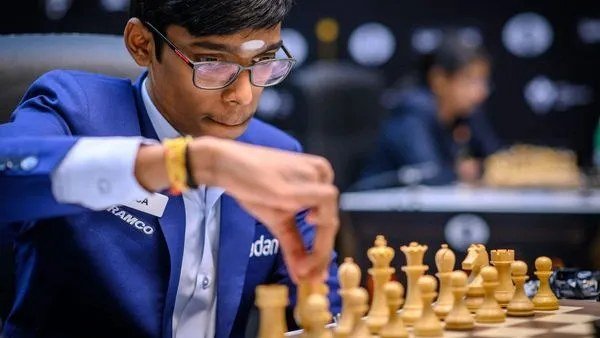


Indian grandmaster Rameshbabu Praggnanandhaa has called for chess to use one classical time control across the whole World Championship cycle, instead of changing the format from event to event. The Praggnanandhaa chess time format proposal came in a post on X on Monday, November 23, 2026, after the Total Chess pilot event ended. Praggnanandhaa said four different time controls are now used through the cycle, and that makes it harder for players to prepare and for fans to follow the game. He pointed to football for the model, saying the FIFA World Cup keeps a standard 90-minute game from the qualifiers through to the final.
Praggnanandhaa chess time format: what he proposed
“After the Total Chess event, I started thinking more about the World Championship cycle format,” Praggnanandhaa wrote. “One thing I’ve been wondering about is the time control. I feel rather than having 4 different time controls throughout the cycle, it would be better to have one classical time control and use it consistently in every event.” The Total Chess pilot event used a 45+30 fast classical time control, which gives each player 45 minutes plus 30 seconds added per move. Other events in the cycle use longer formats, with some games running for up to seven hours. The Praggnanandhaa chess time format post put that spread at the centre of the debate.
“Whether it’s 45+30, 90 mins + 40 moves or the 7-hour format used in the Grand Swiss, having consistency could be good for both players and fans,” he added. Praggnanandhaa said one fixed control would let players settle on a single rhythm for preparation and play. The Praggnanandhaa chess time format idea is that the same clock should apply at every stage, so a player does not have to adjust to a new pace when the stakes rise.
The 2027 World Cup split that prompted the post
Praggnanandhaa also raised the reported format for the 2027 FIDE World Cup, which is set to split its classical time controls between stages. “I also read that the new World Cup 2027 format will have 45+30 in the Group Stage and 90 mins + 40 moves in the Knockouts. I feel these are two completely different formats,” he wrote. The group stage would run on the fast classical clock used at Total Chess, while the knockouts would move to 90 minutes for 40 moves, a much longer game. Praggnanandhaa said that switch changes the character of the event midway through. The Praggnanandhaa chess time format argument is that a tournament should not change its clock halfway through.
“To give an example, the FIFA World Cup has a standard 90-minute game, and it doesn’t change for qualifiers, the Group Stage or the Knockouts,” he wrote. The comparison is the core of his case: football keeps the length of a match fixed, so players and viewers know what to expect at every round. Chess, he argued, should do the same with its classical clock. “I feel having one consistent time control would make it easier for fans to follow the games and plan their day around them,” he said. The Praggnanandhaa chess time format case rests on that point: a fixed length lets fans plan, and lets players prepare.
Praggnanandhaa chess time format: the fan and player case
Praggnanandhaa framed the change as a help to both sides of the board. For players, one control means one way to prepare, with opening work and time management built around a single pace. For fans, fixed match lengths make broadcasts easier to follow and plan around. “As a player, I would personally prefer to have one classical time control throughout the World Championship cycle, as it would allow us to adapt to and focus on one classical time control,” he wrote. The Praggnanandhaa chess time format post drew quick attention from chess fans, who have long debated whether the sport’s many formats help or hurt its audience. The Praggnanandhaa chess time format post is the latest word in that debate.
He closed the post by making clear it was a suggestion, not a demand. “P.S. This is just to start a discussion on the topic. I haven’t read anything specific about this, and these are just my personal thoughts,” he wrote. FIDE has not responded to the post. The Total Chess pilot, which prompted the reflection, tested the 45+30 format with leading players, and Praggnanandhaa was among those who played through its time scrambles. The Praggnanandhaa chess time format debate now sits with the sport’s organisers and fans, and the 2027 World Cup format is the next place it will be tested.