
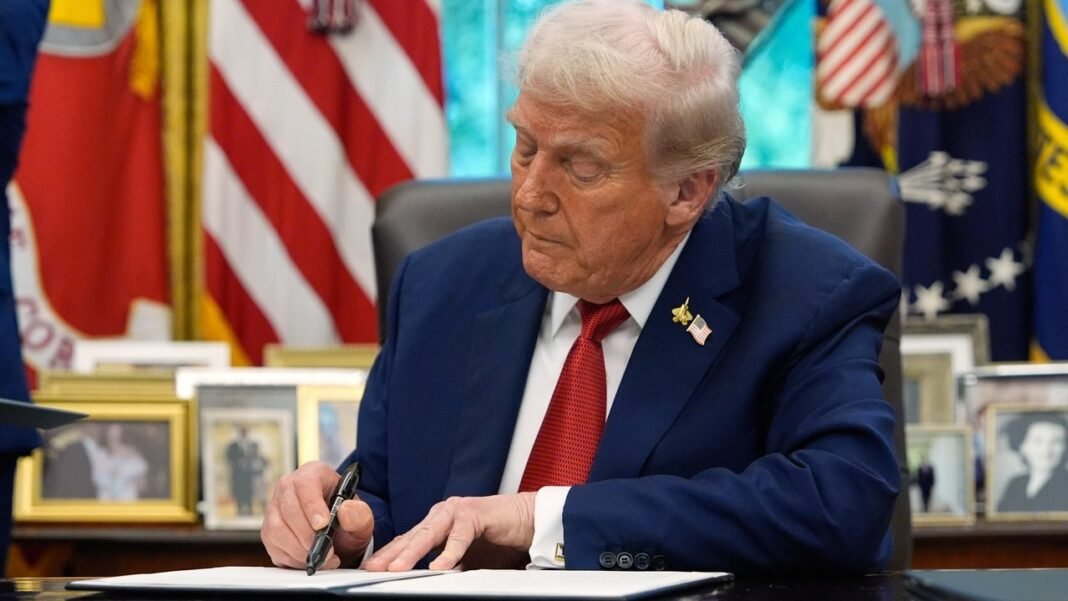


Donald Trump has waived dozens of sanctions and tariff measures that were due to take effect under a sweeping new United States law, sparing India and other large buyers of Russian oil from duties of up to 100 per cent. The executive order, signed on Friday and released by the White House late that evening, both puts into effect and immediately suspends central provisions of the Lindsey O. Graham Sanctioning Russia and Iran Act of 2026. As Trump waives sanctions just days before they were due to bite, the decision has brought visible relief in New Delhi, where officials had been bracing for the worst.
Why Trump Waives Sanctions Days Before the Deadline
Trump signed the Graham Act into law on September 18, and it required duties of up to 100 per cent on goods from the biggest buyers of Russian oil and gas within 30 days, a deadline that falls on Sunday, October 18. The order raises the duty on goods from the largest five importers of Russian-origin fuel by 100 per cent where a country knowingly makes new purchases on or after October 18, 2026. The same increase applies to the top five facilitators of sanctions evasion, while the duty on goods from Russia itself rises by 500 per cent.
Section 4 of the order, however, immediately suspends those measures. Trump wrote that he hereby waives the application of any duties provided for in sections 112 and 113 of the Graham Act. The waiver also covers most of the law’s sanctions on foreign persons, including sections 102(a), 102(d), 102(e), 103 to 111 and 117. Because Trump waives sanctions through a formal certification, he told Congress the waiver is in the national interests of the United States.
Relief for India as Trump Waives Sanctions on Russian Oil
Countries such as India, which is among the biggest buyers of Russian oil, had raised concerns about the Russia sanctions bill, according to reporting by Reuters. The waiver arrives just as Secretary of State Marco Rubio heads to India, underlining how seriously Washington takes the trade relationship. India has been a major purchaser of discounted Russian crude since 2022, and the threat of 100 per cent duties had loomed over its refiners and exporters. Now that Trump waives sanctions, Indian officials and industry groups can breathe easier, at least for the time being.
The reprieve also extends to China, another of the largest buyers of Russian oil and gas, which faced the same tariff threat. The way Trump waives sanctions here has steadied energy prices across Asian trading desks, where refiners had been gaming out worst-case scenarios for weeks.
What the Waiver Means for the Graham Act
Beyond the headline tariff relief, the executive order pauses a broad swathe of the Graham Act’s sanctions on foreign persons. The suspended provisions limit the exposure of overseas companies and individuals with links to the Russian energy trade. The legislation had been championed by the late Senator Lindsey Graham and was designed to squeeze Moscow’s energy revenues by punishing its customers.
The decision reflects a balancing act between pressuring Russia and avoiding collateral damage to partners such as India. It also comes as Trump has been warming toward Russia and publicly criticising Ukrainian President Volodymyr Zelenskiy, including suggesting that Ukraine needs a new leader.
Critics Question the Timing as Trump Waives Sanctions
As Trump waives sanctions days before the October 18 deadline, critics argue the administration is easing pressure on Moscow at precisely the moment the new law was meant to bite. They contend buyers will read the waiver as a signal of wavering resolve. Supporters counter that the way Trump waives sanctions is a pragmatic pause, not a repeal: the law remains on the books and the duties can snap back into force.
For now, the fact that Trump waives sanctions before the deadline means the immediate threat of 100 per cent tariffs on India has been lifted. The episode offers a measure of stability to one of the world’s most important trade relationships, though how long the reprieve lasts remains unclear. With Rubio’s visit under way, both governments will watch for any sign the waiver could be withdrawn.