
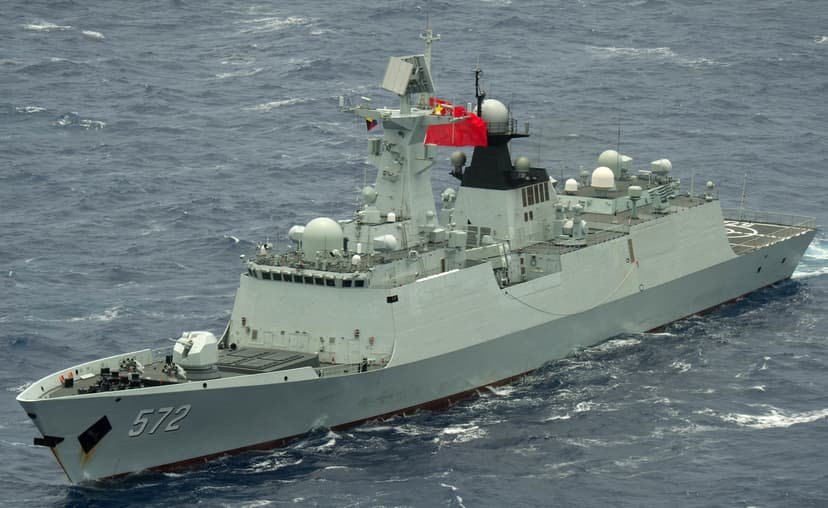


China naval fleet has passed 400 warships and submarines, according to United States data reported by the Wall Street Journal on 7 November. The People’s Liberation Army Navy now has about 35 per cent more hulls than the United States Navy, which has about 290 ships. The United States is still larger by tonnage, and its ships are bigger on average, but the gap in numbers has grown fast. China has added 71 major warships and submarines since 2020, including 19 in the last year.
The China naval fleet now includes three aircraft carriers, with a fourth on the way, and the Pentagon has projected that China could have nine carriers by 2035, against 11 for the United States. The fleet is active across the Asian shipping routes, with about 100 Chinese naval vessels at sea on a given day, and about six near Taiwan at any time. The build-up follows a directive from President Xi Jinping in 2013, when he told the navy to build China into a maritime great power.
China naval fleet growth has been driven by the shipyards, and the scale of the building is clear from the figures. The Congressional Research Service puts the Chinese battle force at more than 370 ships, and projects 395 by 2025 and 435 by 2030. The United States had 293 battle force ships on 1 October 2025. The Centre for Strategic and International Studies has said more than 75 per cent of the commercial production at the top Chinese yards from 2019 to 2024 was for foreign buyers, which shows the scale of the industry.
China naval fleet and the shipbuilding gap
The China naval fleet has grown while the United States fleet has stayed flat, and the shipbuilding gap is the reason. The United States shipbuilding budget has doubled in two decades, but the fleet is no larger than it was in 2003. The Chinese yards build faster and cheaper, and the navy has been able to add ships at a rate the United States has not matched. The Congressional Research Service projects the Chinese battle force will reach 435 ships by 2030, while the United States had 293 on 1 October 2025.
China naval fleet includes a new submarine being built at the Jiangnan shipyard, which is thought to be nuclear-powered, though that has not been confirmed. The submarine is one of the new vessels that the navy is adding, and it shows the direction of the build-up. The fleet also includes the carriers, the destroyers and the submarines that have been added since 2020, and the 19 major warships and submarines added in the last year are the fastest rate of growth yet.
China naval fleet and the Taiwan question
The China naval fleet is watched most closely around Taiwan, where about six Chinese naval vessels are present at any time. The island is claimed by Beijing, and the navy has stepped up its patrols around it in recent years. The United States has said it will defend Taiwan, and the build-up of the Chinese fleet has raised the stakes. The 100 vessels at sea each day across the Asian shipping routes show the reach of the navy, and the carriers are the most visible sign of it.
China naval fleet growth has drawn a response from the United States, which has said it will keep its own fleet strong. The United States Navy is still larger by tonnage, and its 11 carriers are the most powerful ships at sea. The Pentagon has projected that China could have nine carriers by 2035, and the gap in numbers will narrow. The United States has said the fleet must be able to meet the challenge, and the shipbuilding budget has doubled in two decades.
The China naval fleet has passed 400 warships and submarines, and the United States data show the gap in numbers is growing. China has added 71 major warships and submarines since 2020, and 19 in the last year. The fleet has three carriers, with a fourth on the way, and the Pentagon projects nine by 2035. The United States is still larger by tonnage, but the numbers favour China, and the shipbuilding gap is the reason.