
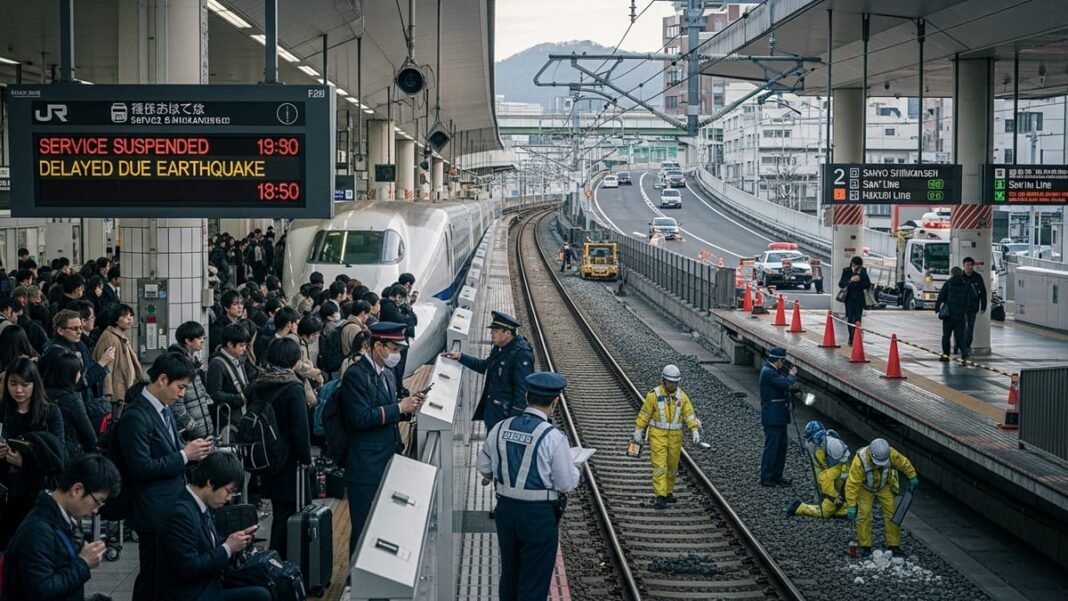


Japan earthquake of magnitude 5.7 struck central Japan at 1:04 am local time on 8 November, injuring at least 22 people. The quake was centred in Shizuoka Prefecture, at a depth of 40 kilometres, and it was felt across the region. The United States Geological Survey put the magnitude at 5.5, while the Japan Meteorological Agency put it at 5.7. The quake was not felt in Tokyo, but it shook the prefectures around Shizuoka, and the most violent shaking was in Aichi.
The Japan earthquake injured at least 22 people, most of them in falls and accidents as they fled their homes. Store windows shattered, books fell off shelves, and people were hurt as they ran down stairs in the dark. The injured were taken to hospital. The quake struck at 1:04 am, when most people were asleep, and the shaking woke them. The areas affected included Aichi, Kyoto, Nara, Yamanashi and Gifu, as well as Shizuoka and the city of Hamamatsu.
Japan earthquake damage was limited, but the shaking was strong enough to break windows and knock books off shelves. The Shinkansen bullet trains were slowed as a precaution, and the services were checked before they resumed normal speed. The quake was not felt in Tokyo, and the capital was not affected. The most violent shaking was in Aichi, where the quake was felt most strongly.
Japan earthquake and the Shinkansen
The Japan earthquake slowed the Shinkansen, which runs through the region, and the trains were checked before they resumed normal speed. The precaution was taken because the quake was strong enough to shake the ground, and the railway wanted to make sure the tracks were safe. The services were slowed, not stopped, and the trains kept running. The Shinkansen is the high-speed rail line that links Tokyo with the cities of central Japan, and it runs through Shizuoka and Aichi. The railway slows the trains after any strong quake, and the checks cover the tracks, the bridges and the overhead wires. The trains were back to normal speed once the checks were done.
Japan earthquake struck at 1:04 am, when most people were asleep, and the shaking woke them across the region. The quake was centred in Shizuoka Prefecture, at a depth of 40 kilometres, and it was felt in Aichi, Kyoto, Nara, Yamanashi, Gifu and Shizuoka. The most violent shaking was in Aichi, and the injured were taken to hospital. The authorities said the quake was not felt in Tokyo, and the capital was not affected.
Japan earthquake and the injuries
The Japan earthquake injured at least 22 people, and the number may rise as the authorities count the cases. The injuries came from falls on stairs, from shattered windows and from books falling off shelves. The quake struck at 1:04 am, and the people who were hurt were mostly those who fled their homes in the dark. The injured were taken to hospitals in the region, and the number of people hurt may rise as more cases are reported.
Japan earthquake was measured at magnitude 5.7 by the Japan Meteorological Agency, and at 5.5 by the United States Geological Survey. The difference is normal, and the two agencies use different methods to measure the quake. The depth was 40 kilometres, and the epicentre was in Shizuoka Prefecture. The quake was felt across central Japan, and the most violent shaking was in Aichi. The Shinkansen was slowed as a precaution, and the trains were checked before they resumed normal speed.
The Japan earthquake struck central Japan at 1:04 am on 8 November, injuring at least 22 people. The quake was centred in Shizuoka Prefecture, at a depth of 40 kilometres, and it was felt across the region. The Shinkansen was slowed as a precaution, and the most violent shaking was in Aichi. The quake was not felt in Tokyo, and the damage was limited to shattered windows, fallen books and injuries from falls. The epicentre was in Shizuoka Prefecture, and the quake was felt across central Japan.