
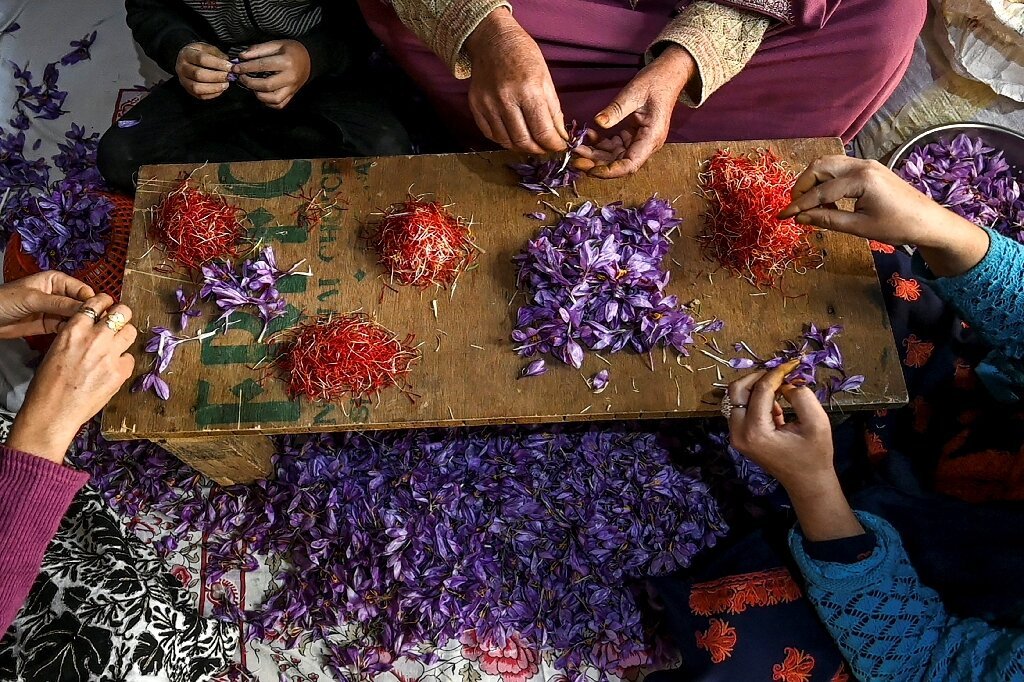


Kashmir saffron is in crisis as output falls sharply, with production down from 8 tonnes in 2010-11 to 2.6 tonnes in 2023-24. The spice, which grows on the karewa plateau at Pampore, is one of the most expensive in the world, at more than 4 dollars a gram, or 110 dollars an ounce. The fall has hit the growers hard, and the reasons are a mix of climate change, rats and fake imports. The BBC, reporting from Pampore on 6 November, said the growers are struggling to keep the crop alive.
The Kashmir saffron crop comes from the crocus sativus flower, which has three crimson stigmas in each bloom. About 4,000 flowers are needed to make one ounce, or 28 grams, of saffron, and the flowers bloom for only two to four weeks a year. Kashmiri saffron is dark crimson, with thick stigmas, a strong aroma and a high level of crocin, the compound that gives it its colour. The spice has a geographical indication tag, which marks it out as a product of the region.
Kashmir saffron growers say the climate has changed, and the dry spell in 2024 cut yields in Pampore by 50 to 70 per cent. Climate researcher Rabia Khan has studied the crop, and the growers say the rain no longer comes when it should. The National Saffron Mission, launched in 2010 with about 400 crore rupees, was meant to revive the crop, but the output has kept falling. The farm-gate price is 2.5 to 3.5 lakh rupees a kilogram, but the growers say the crop is too small to make a living from.
Kashmir saffron and the rats from the landfill
The Kashmir saffron fields at Pampore are being damaged by rats from a nearby landfill, which eat the corms that the saffron grows from. The rats have devastated the corms, according to Down To Earth, and the growers say the problem has grown worse as the landfill has grown. The corms are the bulbs that the crocus grows from, and once they are eaten, the plant does not come back. The growers have asked for the landfill to be moved, but the problem remains.
Kashmir saffron is also under threat from fake imports, which are repackaged under Kashmiri labels and sold as the real thing. A Delhi trader told the BBC in January 2026 that imported saffron is being passed off as Kashmiri, and that the buyers cannot tell the difference. The fake saffron is cheaper, and it undercuts the growers who sell the real crop. The geographical indication tag is meant to protect the name, but the growers say it is not enough.
Kashmir saffron and the future of the crop
The Kashmir saffron crop has fallen from 8 tonnes to 2.6 tonnes in a decade, and the growers say the future is uncertain. The National Saffron Mission was launched in 2010 with about 400 crore rupees, but the output has kept falling. The dry spell in 2024 cut Pampore yields by 50 to 70 per cent, and the rats from the landfill have eaten the corms. The growers say the crop needs water, protection from the rats and a market that pays for the real thing.
Kashmir saffron growers at Pampore have farmed the crop for generations, and the karewa plateau is the heart of the industry. The spice is one of the most expensive in the world, at more than 4 dollars a gram, and the growers say the price should be enough to make a living. The problem is the size of the crop, which has fallen to 2.6 tonnes, and the fake imports that undercut the price. The growers say the crop will not survive unless the problems are fixed.
The Kashmir saffron crisis is a story of a crop that is too small to survive on its own, and too valuable to lose. The output has fallen from 8 tonnes to 2.6 tonnes, and the growers at Pampore are struggling. The climate has changed, the rats have eaten the corms, and the fake imports have undercut the price. The National Saffron Mission was meant to revive the crop, but the output has kept falling. The growers say the saffron will not survive unless the problems are fixed, and the time to fix them is now.