
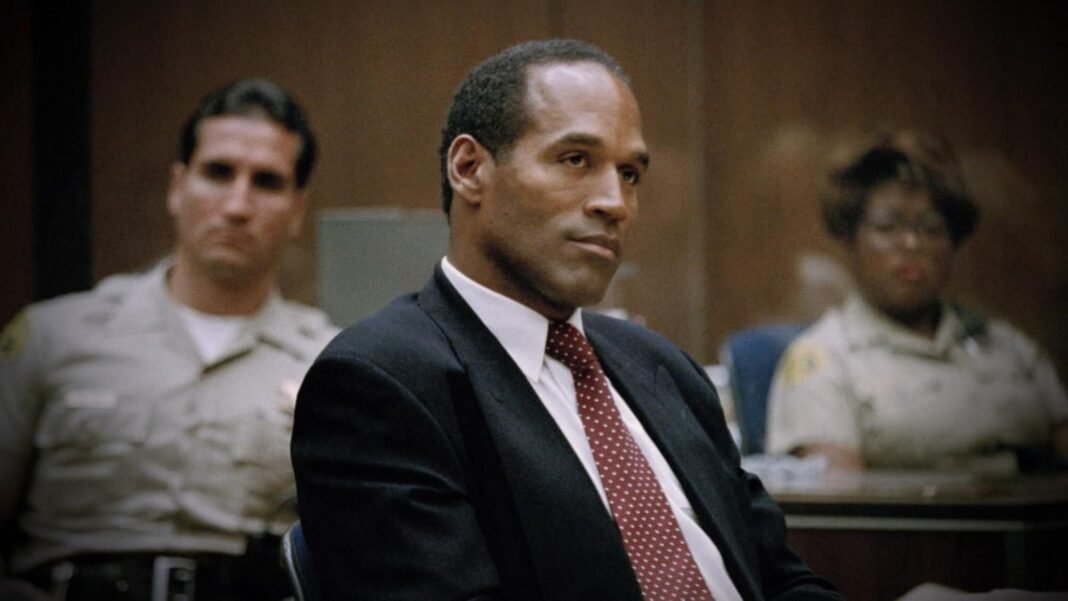


Nine unidentified OJ Simpson fingerprints from the scene of the 1994 murders of Nicole Brown Simpson and Ron Goldman could hold new clues more than 30 years later, according to the makers of a new Peacock docuseries. The OJ Simpson fingerprints were never matched to any known sample during the original investigation, and the filmmakers say modern forensic technology and larger databases may now be able to identify who left them behind.
Ari Mark, who co-directed the Peacock docuseries OJ’s Accomplice, told Fox News Digital that he wants investigators to consider re-examining the prints. The series re-examines the 1994 killings and the theory that Simpson may not have acted alone. Mark said the OJ Simpson fingerprints deserve a fresh look because the tools available now are far more advanced than those used in the 1990s.
The Los Angeles Police Department told Fox News Digital that the case remains open. “The Simpson case remains an open and ongoing investigation,” a department spokesperson said. “The Department has an obligation to continue to pursue justice in this matter, at a point that, if new evidence is found, detectives will follow those investigatory leads. At this point there is no other information available for release.”
OJ Simpson fingerprints and the trial testimony
The prints were discussed at length during the trial in the 1990s. Forensic print specialist Gilbert Aguilar testified that 17 latent prints were recovered from the Bundy Drive condominium where Brown Simpson and Goldman were killed, and that nine of them could not be matched to any known sample. The OJ Simpson fingerprints were compared with prints from Simpson, Brown Simpson and 58 friends, relatives and acquaintances, but no match was found.
The Los Angeles Times reported in 1995 that none of the identifiable prints collected at the scene matched Simpson. Aguilar, who appears in the docuseries, said the OJ Simpson fingerprints could now be run through expanded databases that did not exist at the time of the trial. “At the crime scene, there were nine identifiable prints that I never identified to whom they belong,” he said. “LAPD has all the prints and they could have them tested again.”
OJ Simpson fingerprints and the accomplice theory
The docuseries links the OJ Simpson fingerprints to a wider question about whether someone else was at the scene on the night of the killings. It focuses on Joey Ippolito, a convicted drug trafficker and Simpson associate who, according to the series, had ties to organised crime. Ippolito died in 2006, and the series draws on his brother Sam, who told the New York Times that Joey came home on the night of the killings with blood on his hands and a bag holding something heavy.
A federal prosecution memorandum from December 1996, unsealed at the request of The New York Times, described Ippolito as a valuable source who had information about Simpson’s alleged efforts to dispose of the murder weapon and his attempted flight from the authorities. The knife used in the killings was never found. Sam Ippolito later took back his account when he sought payment for the story, though federal agents who looked into the claim were reported to have found him credible. The OJ Simpson fingerprints are only one part of the material the series wants retested.
Simpson was acquitted of the murders in October 1995, and a civil jury found him liable for the wrongful deaths of Brown Simpson and Goldman about 16 months later. He maintained his innocence for the rest of his life and died in 2024 at the age of 76. The producers of the docuseries said they asked the Los Angeles County District Attorney’s Office to have the prints re-examined and received no reply. The OJ Simpson fingerprints remain with the LAPD, and Mark said his aim was to raise enough questions for the case to get a second look. “I feel very confident that if everyone was on the same page and we wanted to look at something objectively and see if there’s any new truth there, we could do it,” he said.
Web story: Filmmakers Want OJ Simpson Crime Scene Prints Retested