
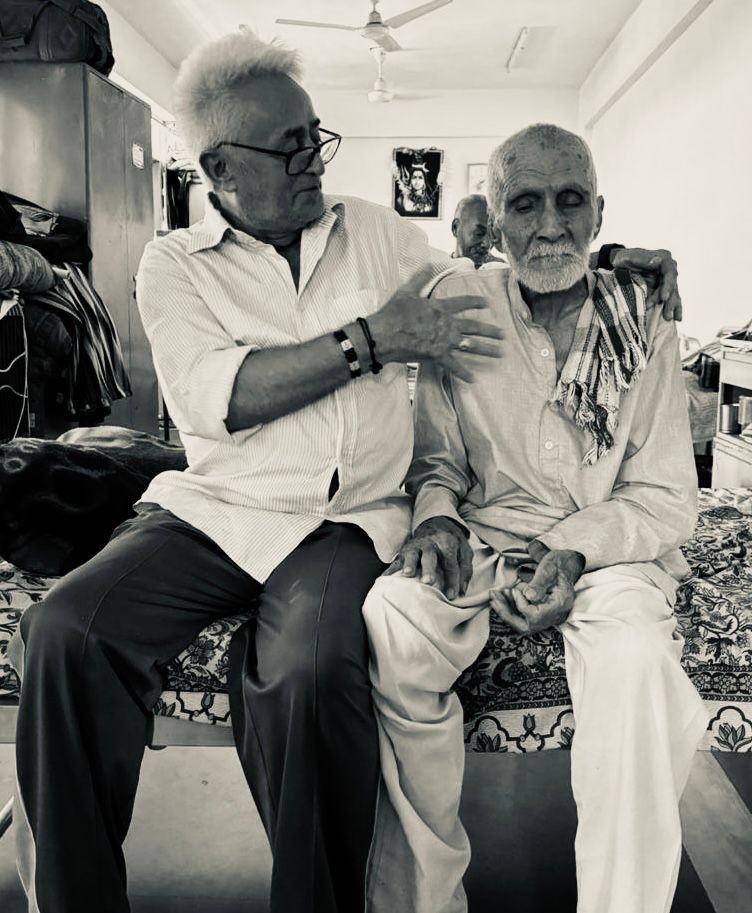


In Gurugram, an elderly couple in their 80s spend their days with a 26-year-old man they call their hired grandson. Roney Raju, who holds a master’s degree in social work, has been looking after the Budhirajas for the last few months, taking them to the temple, sitting with them during hospital visits, playing cards, and listening to them. The rent-a-grandchild business he works for is one of a small but growing number of firms in Indian cities selling company to older people.
“I was comfortable with him from the get-go,” Budhiraja told Al Jazeera. “I feel he understands me 200 percent.” The work is simple, and that is the point: the rent-a-grandchild firms sell time and attention, not medical care. Some call their workers “children for hire”. Others call them a “grandchild for rent”.
Across Indian cities, a small but growing number of companies are now selling what families once took for granted: someone to take care of ageing people. The chores include taking them to the temple, sitting with them during a hospital visit, playing cards, or simply listening to them. The work is paid by the hour, and the companions are usually young graduates, many with degrees in social work.
Rent-a-grandchild: how the service works
Raju’s boss, Gaurav Mittal, charges 450 rupees an hour for 10 hours of service in a month, or 400 rupees an hour if the booking is for 25 hours. Mittal says many clients come to treat their companions “like their own grandchildren”. The companions undergo police verification before they start working with a senior person.
Vinay Kumar works as a companion for a rent-a-grandchild firm based in Hyderabad. He told Al Jazeera the work is about building a relationship with clients, supporting them and spending quality time with them so they do not miss their close ones, rather than simply carrying out tasks. Santosh Abraham runs a Bengaluru-based startup founded in 2015. He says the children of elderly people worry about medical emergencies or market errands, while their parents mostly had a different concern: company.
For the companies, the model is straightforward: recruit young workers, put them through police verification, and match them with older clients who want company. The rent-a-grandchild business is paid by the hour, and the clients are mostly older people in cities.
Rent-a-grandchild: who pays and who benefits
Rent-a-grandchild services are not cheap by Indian standards. Average per capita income in India is about 220,000 rupees a year, or about $2,750, and Mittal’s rates put the service within reach of only a small minority of urban, financially secure families. The firms know this, and their clients are mostly older people in cities.
A 2017 report counted at least five startups offering young companions to seniors. In 2022, the late Ratan Tata of the Tata Group promoted a Mumbai-based startup whose tagline says: “Everything Grandkids Do!” The rent-a-grandchild idea has been around for years, but the number of firms offering it has grown as India’s population has aged.
What the numbers say about ageing in India
People over 60 made up 10.5 percent of India’s population in 2022, a share projected to nearly double to 21 percent by 2050, according to the India Ageing Report 2023 by the United Nations Population Fund and the International Institute for Population Sciences. The Indian government estimates the senior care industry at about $7bn, and several startups see an opening in it.
India is the world’s most populous country, and it is growing older quickly. The rent-a-grandchild business is growing with it, as more families look for someone to spend time with an ageing parent. The demand is strongest in cities, where children often live far from their parents and cannot visit every day.
Shilpa Bandyopadhyay, assistant professor at the Jindal Institute of Behavioural Sciences near New Delhi, told Al Jazeera that hiring a companion “should not automatically be interpreted as evidence that their families have failed”. For the Budhirajas, the arrangement is simpler than that. They have a young man who comes to their home, takes them out, and sits with them, and they treat him as family.