
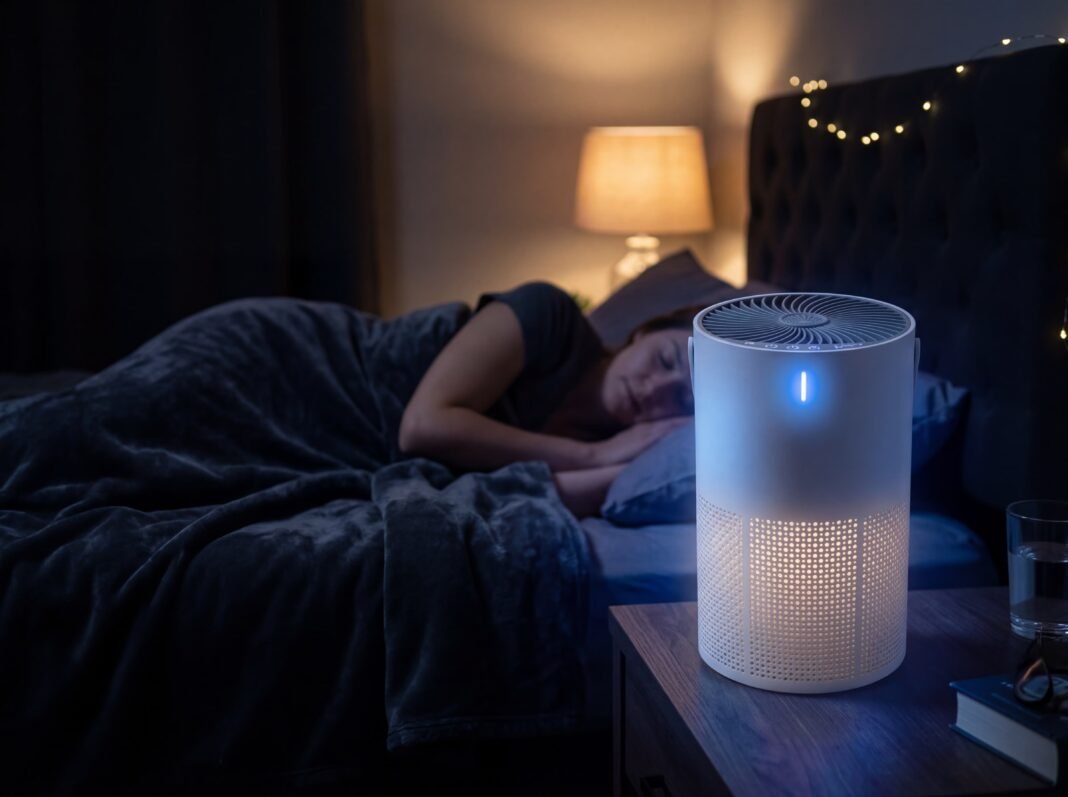


Cleaner bedroom air may help people with prediabetes keep their blood sugar steady, according to a new trial from NYU Langone Health. Researchers found that running a portable HEPA filter in the bedroom overnight cut fine-particle pollution by 36 percent, and that the cleaner air was linked to a nearly 8 percent drop in daily blood sugar swings, along with smaller surges after breakfast. The bedroom air results were presented on 8 November at the American Heart Association’s Scientific Sessions 2026 in Chicago.
Prediabetes means blood sugar levels are higher than normal but not yet high enough to count as diabetes, and it raises the risk of type 2 diabetes and heart disease. Air pollution has already been tied to worse blood sugar control, but the NYU trial is the first to test in people whether filtering bedroom air at home can improve glucose control in adults with prediabetes.
The trial, called Cleaner Air for Lower Cardiometabolic Risk and registered as NCT05994937, enrolled more than 150 men and women with prediabetes who live in New York City and had no known build-up of cholesterol in their arteries, a condition called atherosclerosis. Half the participants slept with real bedroom air filters for about a month, while the other half used lookalike sham filters that did not clean the air, and neither the participants nor the staff taking measurements could tell which was which.
The devices ran continuously in bedrooms for four weeks, while researchers measured indoor fine-particle pollution and tracked blood sugar with continuous glucose monitors, and the bedroom air in the real-filter rooms grew steadily cleaner. The real filters cut levels of tiny, harmful air particles by 36 percent. In turn, the cleaner air was linked to a nearly 8 percent drop in daily blood sugar swings, a 17 percent fall in total extra glucose in the blood after breakfast, and a 13 percent fall in peak levels after breakfast.
Bedroom air and the trial design
“Our findings suggest that cleaner air at home, especially in the bedroom, may help people with prediabetes keep their blood sugar steady and blunt morning spikes,” said Sharine L. Wittkopp, MD, PhD, the study’s lead author and a cardiologist and clinical instructor in the Leon H. Charney Division of Cardiology at NYU Grossman School of Medicine. Wittkopp presented the results on Sunday morning in a session on rigorous evaluations of human, digital and environmental interventions.
The study was funded by the Doris Duke Foundation, and no air purifier manufacturer funded the research. That matters because the trial tested bedroom air filters that companies sell, and independent funding removes one reason to doubt the results. The trial was randomised and double-blind, which is the strongest design for this kind of question, and it used continuous glucose monitors rather than relying on finger-prick tests or on what participants remembered eating.
Bedroom air and the limits of the findings
The results have not yet been peer reviewed, and that is the main caveat. They were presented at a conference and released in an NYU Langone news release, but no p-values or confidence intervals have been published, so peer review still has to confirm the statistics. The study also lasted only four weeks, so it cannot show whether the glucose improvements would persist over months or years, or whether they would translate into fewer people developing diabetes or having heart problems.
Dr. Jonathan Newman, the study’s senior author, cautioned that the findings may not apply to people who already have diabetes, or to people living in other parts of the country who are exposed to different types and levels of pollution. New York City air is not the same as air in a rural town or a city with different sources of pollution, and a filter that helps in one place may help less in another.
The researchers also noted that the trial tested bedroom air only, not the air in the rest of the home or at work. People spend about a third of their lives asleep, and the bedroom is where they spend the longest unbroken stretch of time, which is why the team chose it. Whether filtering air in the living room or at work would add anything is a question for a later study.
For now, the finding is modest but practical: a portable filter improving bedroom air cut indoor particle levels by about a third and steadied blood sugar in people with prediabetes over four weeks. It is not a treatment for diabetes, and it does not replace diet, exercise or medication, but it points to indoor air quality as a factor in cardiometabolic health that people can act on at home. The researchers say further studies in different populations are needed before the advice can be generalised.