


Tampa Bay dengue outbreak is being driven by mosquitoes that bite during the day and live close to homes, health officials say, as Florida records its worst local dengue outbreak in years. The state had confirmed 524 locally acquired cases in 2026 by Oct. 31, with 407 of them in Hillsborough County.
Dengue is a viral illness spread by the bite of an infected Aedes mosquito, mainly Aedes aegypti. It is not passed from person to person like a cold. The Tampa Bay dengue outbreak has already passed Florida’s previous record of 186 locally acquired cases, set in 2023. Since July, 209 Floridians have been hospitalized with dengue fever.
The mosquitoes behind the Tampa Bay dengue outbreak
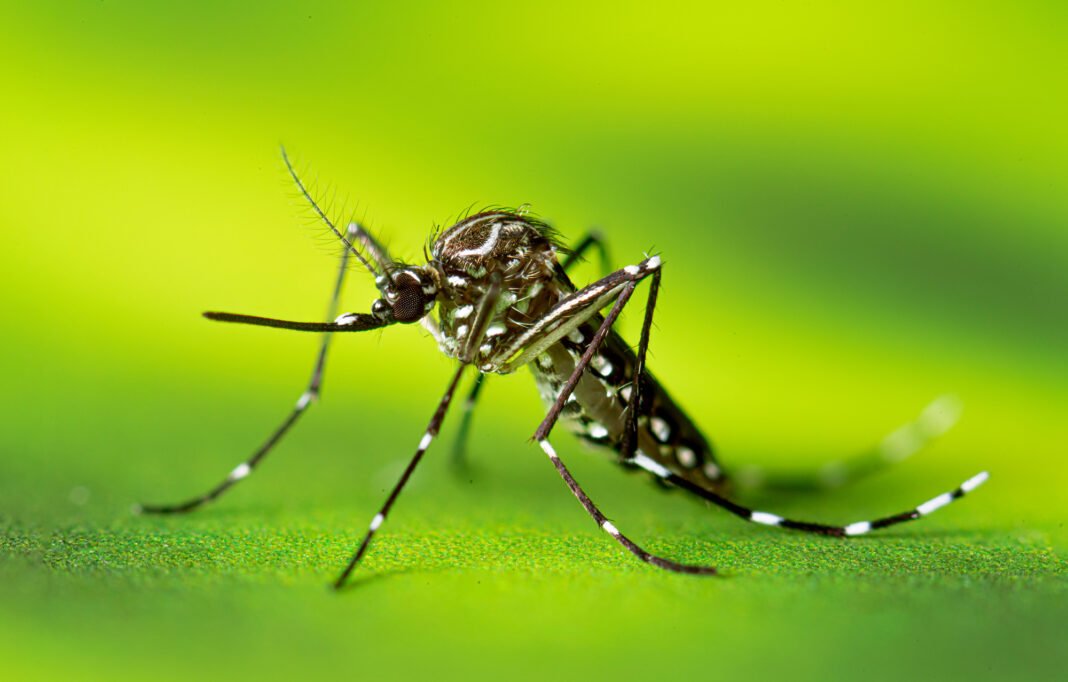
The Aedes aegypti mosquitoes behind the Tampa Bay dengue outbreak live close to homes, lay eggs in containers and often bite during the day. Unlike nuisance mosquitoes that emerge mostly around dusk or dawn, Aedes mosquitoes feed most aggressively in the early morning and late afternoon. They breed in small amounts of standing water in flowerpot saucers, buckets, tires and toys. A second species, Aedes albopictus, can also carry the virus.
That behavior is what makes the Tampa Bay dengue outbreak hard to stop. A mosquito that bites near a home can pick up the virus from one person and pass it to a neighbor within days. Researchers are examining why transmission has centered on Tampa Bay this year, including whether travelers from the Caribbean introduced the virus, Gabriela Paz-Bailey, head of the dengue division at the Centers for Disease Control and Prevention, told The New York Times.
How the Tampa Bay dengue outbreak grew
Hillsborough County, the center of the Tampa Bay dengue outbreak, added 22 locally acquired cases in the week of Oct. 25 to 31, its smallest weekly increase since mid-August, bringing the county total to 407 since the outbreak began in July. Statewide, Florida added 39 cases that week. Weekly cases in Hillsborough peaked at 53 during Sept. 20 to 26. Pinellas County has 80 cases, while Miami-Dade and Orange counties report 12 and 10.
The Tampa Bay dengue outbreak claimed its first life in September. Gay Small, an 80-year-old Tampa resident, died Sept. 4 at Tampa General Hospital, and her death certificate listed dengue infection along with septic shock and multi-organ failure. Family members told reporters they believe she was bitten by an infected mosquito near her own home. A University of South Florida researcher told WUSF she was the first person in the Tampa Bay area killed by dengue in nearly a century.
Dengue is an acute viral illness caused by four distinct viral serotypes, DENV-1 through DENV-4, in the Flavivirus genus. State reporting undercounts the true spread because many infections cause no symptoms or go unrecorded. A report in The New York Times this week said scientists and public health officials warn that local transmission could become increasingly common in the United States, with Florida at highest risk among the 50 states. Miami-Dade County recorded more than 300 locally acquired infections between 2010 and 2024.
What cooler weather does to the mosquitoes
Hillsborough, Pasco and Pinellas counties each declared a local state of emergency as the Tampa Bay dengue outbreak grew and case numbers climbed. Hillsborough County Administrator Bonnie Wise extended the county’s emergency order through Nov. 12. The slowdown in new cases comes as cooler air moves into Tampa Bay. Cooler weather makes Aedes mosquitoes less active, but Dr. Nicole Iovine, UF Health’s chief epidemiologist, said it would take at least one night of a hard freeze to kill off their numbers.
The outbreak is easing but has not ended, health officials say. Mosquito surveillance still shows dengue virus activity in many neighborhoods, and county mosquito control teams are urging residents to empty standing water around their homes. A 2026 modelling and genomic study of the outbreak by Taylor-Salmon and colleagues, which has not yet completed peer review, traced transmission patterns across Florida.