
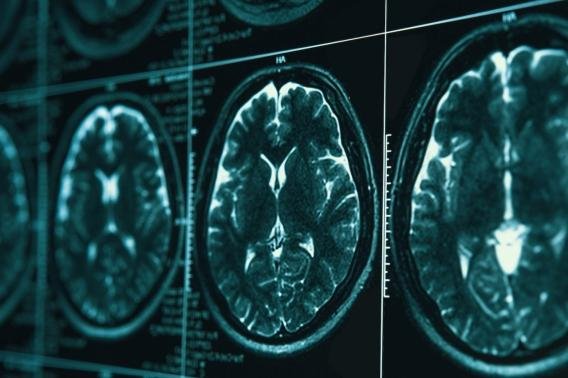


Stanford Alzheimer brain signals can flag people likely to develop Alzheimer’s disease years before memory problems appear, according to a study published Nov. 4 in the journal Science Advances. The researchers turned patterns of brain activity at rest into a single number, the ARC score, which separates people whose brains look resilient from people whose brains look at risk.
Inside the brains of some cognitively normal adults, Stanford Alzheimer brain signals foretold Alzheimer’s years before memory loss or the build-up of plaques and tangles, the sticky protein clumps linked to the disease. For others, different patterns pointed the other way, toward brains unusually resilient to decline. The researchers described the score as a possible new early biomarker, and one that might be modifiable, though that has yet to be shown.
The study started with two groups at opposite ends of the cognitive spectrum. One group held 180 adults aged 75 and older known as super agers, people whose memory matches that of adults decades younger. The other held 110 people of similar age who had been diagnosed with Alzheimer’s disease. The team compared resting-state functional MRI scans from both groups, watching which brain regions rose and fell in step while participants lay still.
The Stanford Alzheimer brain signals gave the team a way to build the score. They named it the Alzheimer’s resilience-vulnerability connectome, or ARC score. A low score looks more like a super ager. A high score looks more like Alzheimer’s. In the group used to build the score, it separated super agers from people with Alzheimer’s with roughly 85 percent accuracy, according to Stanford Medicine.
How Stanford Alzheimer brain signals were measured
The scans rely on resting-state functional MRI, which tracks changes in blood oxygen as an indirect measure of brain activity. Participants lie still for a few minutes while the scanner records which regions activate together. The Stanford team looked for connections that were stronger in super agers and connections that were stronger in people with Alzheimer’s. Links involving the front of the brain were stronger in super agers, while links involving the insula, a region tucked deep inside the brain, were stronger in people with Alzheimer’s. The pattern also drew on prefrontal, temporal, insular and parietal regions tied to memory, executive function and emotional regulation.
What the Stanford Alzheimer brain signals predicted
To test whether Stanford Alzheimer brain signals held up in healthy people, the team applied the ARC score to 1,315 adults aged 55 to 70 who had no signs of cognitive impairment, drawn from three research projects. Most were followed for five to six years, and the longest follow-up ran to 12 years. At the start, people with high and low scores performed much the same on memory and daily-function tests. Over time, those with more Alzheimer’s-like scans declined faster, accumulated amyloid-beta plaques more quickly and were more likely to develop mild cognitive impairment or Alzheimer’s disease.
The score also beat the tools doctors use now. Stanford Alzheimer brain signals predicted cognitive decline more accurately than age, amyloid-beta and tau biomarkers, and genetic risk, Stanford Medicine said. Adding the ARC score improved predictions of who would develop mild cognitive impairment or Alzheimer’s beyond what age, amyloid and tau scans, and APOE gene risk could predict on their own. In a separate check on 143 people, the score placed about 71 percent in the correct group.
Limits of the Stanford Alzheimer brain signals test
For now, Stanford Alzheimer brain signals remain a research measure. The ARC score is not a test a doctor can order. There is no price, no waiting list and no clearance from regulators. Yu Zhang, assistant professor of psychiatry and behavioral sciences at Stanford and the study’s senior author, said the score should be treated as a guide for monitoring cognitive status rather than a diagnosis. Lead author Kanhao Zhao, a postdoctoral researcher in computational neuroscience at Stanford Medicine, led the analysis.
The study also has gaps the authors acknowledge. All participants came from research groups in the United States, so the score still needs testing in more varied populations. Nobody knows yet whether a person’s score can change, though Stanford plans a study to see whether brain training can shift Stanford Alzheimer brain signals. No start date has been announced. The work was funded by the National Institutes of Health, a joint Rosenkranz Foundation-Knight Initiative program, an Alzheimer’s Association grant and a Lehigh University CORE grant.