
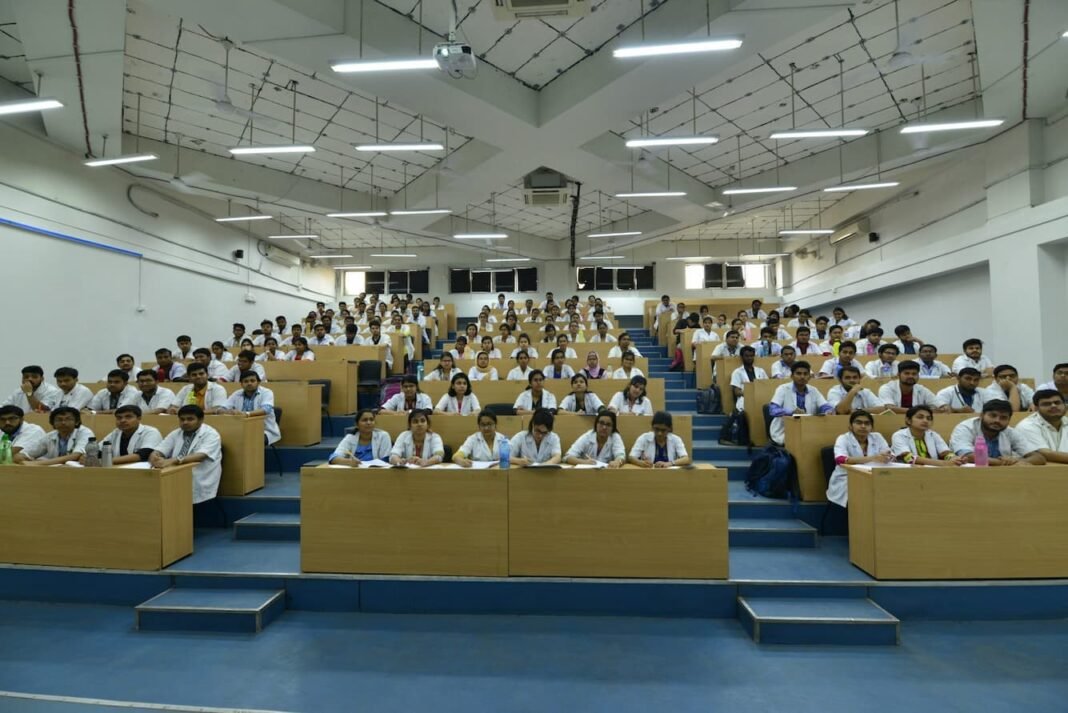


India will add 75,000 medical seats by 2029, Union Health Minister J P Nadda said on Wednesday, restating a commitment first announced by Prime Minister Narendra Modi from the Red Fort. Nadda was speaking at the eighth convocation of Vardhman Mahavir Medical College (VMMC) and Safdarjung Hospital in New Delhi, where he told graduating doctors that the government would meet the target on schedule. The new medical seats will span undergraduate and postgraduate courses, easing the contest for places in a country where medical aspirants far outnumber the seats on offer each year.
Nadda said the growth in medical education over the past decade had been sharp, and he set out the figures to the graduating class. The number of medical colleges in India has risen from 387 to 863, he said, while the number of All India Institutes of Medical Sciences has gone from one at the end of the 20th century to 23. Undergraduate medical seats have grown from around 51,000 to 1.43 lakh, and postgraduate seats have risen from about 31,000 to 91,000. The minister said 45,000 medical seats had been added over the previous two years alone.
How medical seats have grown over a decade
The expansion has changed the map of medical training in India. Twelve new AIIMS have been set up over the past 12 years, Vice-President C. P. Radhakrishnan told the same gathering, and government medical colleges have added teaching beds, faculty and clinical facilities as medical seats were added. Nadda said the growth had to go hand in hand with standards in teaching and clinical training, and he warned that expansion must not come at the cost of quality. Seats will be added in phases, subject to approvals from the National Medical Commission, which sets the seat matrix for each college.
For students, the numbers matter because entry to medical courses remains among the most competitive in the country. Admission to undergraduate courses runs through the National Eligibility cum Entrance Test (NEET UG), and postgraduate admission through NEET PG, with counselling authorities publishing seat matrices for each round. The planned increase in medical seats is intended to widen that bottleneck over the next three years, giving more aspirants a place in government and private colleges alike.
Funding for new medical seats
The Union Cabinet approved financial support for the expansion in December 2025. Under the scheme, the government will provide Rs 1.5 crore for each additional undergraduate and postgraduate medical seat, with an overall allocation of Rs 15,000 crore to create 10,000 seats. Nadda said the assistance was meant to help institutions add the teaching staff, beds and clinical facilities that larger intakes require, so that more medical seats do not weaken the training each student receives.
The minister told the graduating class that a medical degree carried a duty to serve society. “While education is a fundamental right, the opportunity to enter the medical profession is a privilege that entails a profound responsibility towards society,” he said. He asked the graduates to discharge that responsibility with dedication, compassion and integrity, and to place their knowledge at the service of humanity. He described graduation from VMMC as a matter of great distinction, given the clinical exposure the college and Safdarjung Hospital offer.
What the expansion means for students
Vice-President Radhakrishnan also addressed the convocation, which was held as part of VMMC’s silver jubilee year, marking 25 years since the college was set up in 2001. He congratulated the college on its work in medical education and patient care, and he told graduates that the human touch between doctor and patient remained irreplaceable. He urged them to treat every patient with dignity, compassion and respect, whatever the patient’s financial circumstances or social background.
A total of 423 students received their degrees at the ceremony, including 265 postgraduate and super speciality students and 158 undergraduates. Of those, 46 meritorious students, 29 from postgraduate and super speciality courses and 17 undergraduates, were awarded medals. The 423 graduates join a health workforce that the government plans to expand with 75,000 medical seats by 2029.