
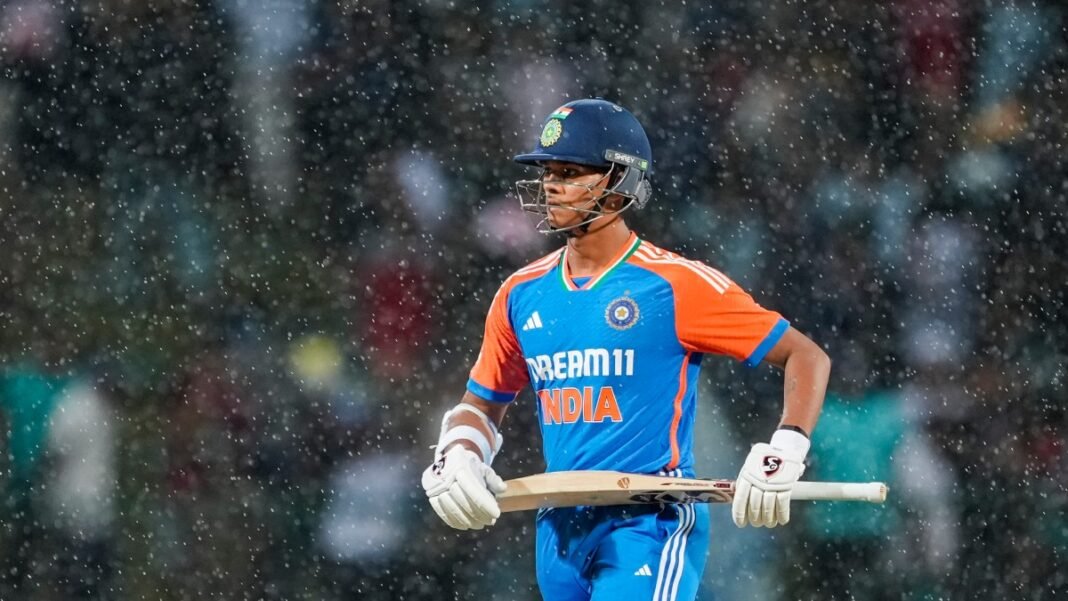


Yashasvi Jaiswal struck 85 from 89 balls on the second day of the first Test against New Zealand at the Basin Reserve in Wellington, sharing a 130-run opening stand with KL Rahul that gave India their best opening partnership in New Zealand in 36 years. The pair replied to New Zealand’s first innings total of 368, and by stumps India were 159 for one, 209 behind, with Rahul unbeaten on 52 and Devdutt Padikkal on 16.
Jaiswal was the aggressor from the start. The 24-year-old left-hander hit 16 fours, took on the new ball, and looked set for a hundred before Matt Henry had him caught behind by Tom Blundell in the 28th over. The dismissal ended a stand that had put India firmly in the game after a long day in the field.
Jaiswal sets the pace in Wellington
Both openers were playing their first Test in New Zealand, and the early overs asked plenty of them. The ball moved around, and both batters were lucky to survive chances against the new ball. Once Jaiswal settled, he took the attack to the bowlers, driving through the covers and cutting anything short. The runs came quickly, and the pressure shifted back onto the hosts.
Rahul played the steady hand at the other end. He left well outside off stump, waited for the ball to come to him, and kept his wicket intact while Jaiswal scored freely. The contrast worked. India passed 100 for the first wicket, then 130, and the stand became the first century opening partnership by an Indian pair in New Zealand in the 21st century.
Jaiswal fell short of three figures, but the innings had done its job. He had set the tempo, taken the sting out of the new ball, and left India with a platform to build on. Rahul carried on after the break in the stand, reaching his fifty from 116 balls with five fours, and by stumps he had seen India safely through the rest of the day with Padikkal.
A 36-year wait ends at the Basin Reserve
The stand was India’s second highest opening partnership in a Test in New Zealand, and their best in the country in 36 years. Only Manoj Prabhakar and WV Raman, with an unbeaten 149 in Auckland in February 1990, have done better. The 130 also ended a wait that stretched back to March 1994, when Navjot Singh Sidhu and Nayan Mongia put on 102 in Hamilton, the last time an Indian opening pair had reached three figures in New Zealand.
The previous best by an Indian opening pair in New Zealand in this century had been 73, by Virender Sehwag and Gautam Gambhir at the same ground in April 2009. Jaiswal and Rahul went well past that, and the stand was only the fourth century opening partnership by an Indian pair in New Zealand. The new ball had done its damage on the first day, when New Zealand were bowled out for 368, and the reply showed that the pitch had eased.
New Zealand’s total had been built on two hundreds of their own. Henry Nicholls carried his bat for 175 not out from 335 balls, and Glenn Phillips made 118 from 216 balls, the pair adding 216 for the sixth wicket. India had asked New Zealand to bat first, and the bowlers had to work hard for their wickets on the opening day.
Jaiswal and Rahul end a long drought
The stand also ended a drought that had nothing to do with New Zealand. It was India’s first century partnership for the opening wicket in 17 Tests, covering 30 innings, and the last one had also featured Jaiswal and Rahul. The pair put on 201 together against Australia in Perth in November 2024, and since then the openers had not managed three figures together.
Rahul’s fifty in Wellington carried a record of its own. He became the first Indian opener to score at least 50 runs as an opener in Test cricket in each of the four SENA countries, South Africa, England, New Zealand and Australia, and only the sixth Asian opener to do so. The others are Sanath Jayasuriya, Marvan Atapattu, Dimuth Karunaratne, Saeed Anwar and Imran Farhat. Rahul is second only to Sunil Gavaskar among Indian openers for fifty-plus scores in SENA conditions.
India closed the second day at 159 for one, with Rahul on 52 and Padikkal on 16. The side still trailed by 209 runs, but Jaiswal’s 85 had set the tone for the reply, and the openers had given them a start that no Indian pair had managed in New Zealand for more than three decades.