
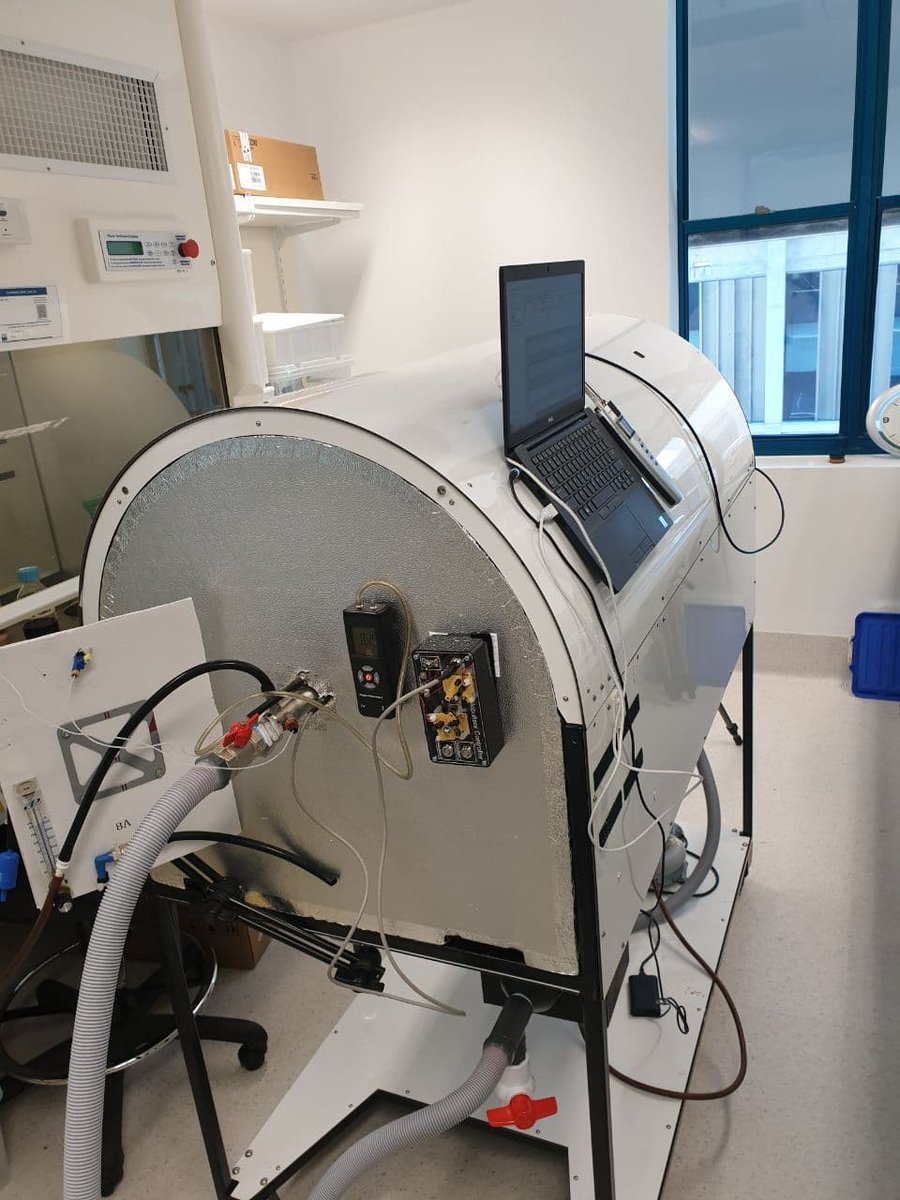


Union Health Secretary Punya Salila Srivastava inaugurated the human metabolic chamber CMC Vellore on 23 November, opening India’s first dedicated facility for studying how the human body uses energy. The chamber was set up jointly by the Tata Institute of Fundamental Research (TIFR) and Christian Medical College (CMC) Vellore, and it will support research into metabolism, nutrition, diabetes, obesity and other metabolic conditions.
The human metabolic chamber CMC Vellore is a room-sized calorimeter. It measures the oxygen a volunteer consumes and the carbon dioxide the volunteer produces while living, eating and sleeping inside for 24 hours or longer. The measurements show total energy expenditure and how the body uses fat and carbohydrates across meals, physical activity and sleep.
The project brings together TIFR’s Advanced Research Unit on Metabolism, Development and Ageing, known as ARUMDA, and the Department of Endocrinology, Diabetes and Metabolism at CMC Vellore. The two teams will use the human metabolic chamber CMC Vellore to produce evidence drawn from Indian volunteers, so that advice on diet and activity rests on data from the population it is meant to serve.
How the human metabolic chamber CMC Vellore works
Inside the human metabolic chamber CMC Vellore, a volunteer stays for a full day or more, in a room fitted with a bed, a desk and a toilet so that daily life can continue while every meal, movement and hour of sleep is measured. Sensors track oxygen intake and carbon dioxide output around the clock. The readings let researchers see small differences in energy use between people, differences that shorter tests can miss.
The human metabolic chamber CMC Vellore works alongside ARUMDA’s National Analytical Facility for Nutrition and Metabolism Research, which was set up last year. Together, the two facilities let researchers connect molecular and biochemical measurements with the way the body uses energy. CMC Vellore also brings clinical work on diabetes and other endocrine and metabolic disorders, including earlier studies of insulin sensitivity and energy use in people with a history of undernutrition and low birth weight.
Why India needs its own metabolic data
Srivastava told the gathering that research must reflect the diversity and risk profiles of India’s population, since findings from other countries may not capture them. The human metabolic chamber CMC Vellore is meant to fill that gap, giving doctors and policymakers figures that come from Indian bodies, Indian diets and Indian patterns of work and rest.
The work will draw on a Vellore birth cohort that CMC has followed since 2010-12. A joint ARUMDA-CMC study of that cohort, published in 2026 in The Lancet Regional Health Southeast Asia, found overweight and obesity nearly tripling between the ages of seven and nine, while about one in five children remained thin. Dr Nihal Thomas, senior professor in the department of endocrinology, diabetes and metabolism and head of the Centre for Stem Cell Research at CMC Vellore, said the chamber “lets it detect small but important differences between individuals that shorter tests miss”.
Funding and partners behind the human metabolic chamber CMC Vellore
The Department of Atomic Energy funded the facility, with corporate social responsibility support from Hindustan Unilever Limited. NUTRIM at Maastricht University gave expert advice, and the Embassy of the Kingdom of the Netherlands in India gave network support. Srivastava thanked the department for backing the collaboration between TIFR, ARUMDA and CMC Vellore.
Prevention work around the new facility
Srivastava used the visit to the human metabolic chamber CMC Vellore to set out the government’s prevention work under Ayushman Bharat. She said 1.87 lakh Ayushman Arogya Mandirs provide primary healthcare and screening for non-communicable diseases and three types of cancer, with follow-up through 781 district NCD clinics and 6,489 NCD clinics at community health centres. The Rashtriya Bal Swasthya Karyakram 2.0 helps identify children at risk early, and five more diseases, including chronic obstructive pulmonary disease, stroke and chronic kidney disease, will be covered under the National Programme for Non-communicable Diseases.
She also pointed to the Prime Minister’s call for a 10 per cent cut in oil consumption, with Sugar and Oil Boards, awareness work in schools, the ‘Aaj Se Thoda Kam’ campaign and outreach on social media, radio and video. More than 7.8 crore yoga sessions have been held at Ayushman Arogya Mandirs so far. The programme was attended by CMC Vellore director Prof Biju George, TIFR director Prof Jayaram Chengalur, Prof Ullas Kolthur, Prof Mahendra Sonavane, Prof Nihal Thomas and Nico Schiettekatte, health counsellor at the Embassy of the Kingdom of the Netherlands.
Srivastava asked TIFR, ARUMDA and CMC Vellore to work with the health ministry and other national institutions on a focused research agenda, and pointed to the Pan-AIIMS Research Consortium as a partner that could work with research facilities such as the human metabolic chamber CMC Vellore to build national datasets.