
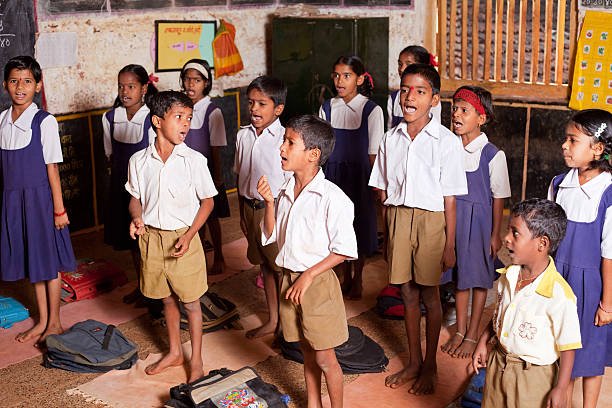


Children’s Day 2026 falls on Saturday, 14 November, the 137th birth anniversary of Jawaharlal Nehru, India’s first Prime Minister. The day, known in Hindi as Bal Diwas, is observed every year on Nehru’s birthday to raise awareness about the rights, education and welfare of children. Schools across India will mark Children’s Day 2026 with cultural programmes, games and activities, while students receive sweets and small gifts. Nehru, fondly called Chacha Nehru by children, believed that children were the foundation of a strong and progressive nation.
Nehru was born on 14 November 1889 in Allahabad, now Prayagraj, in Uttar Pradesh. He served as India’s first Prime Minister from 1947 to 1964, and he died on 27 May 1964. Before 1964, India observed Children’s Day on 20 November, the date of Universal Children’s Day recognised by the United Nations. After Nehru’s death, Parliament decided to observe Children’s Day on his birth anniversary instead, and Children’s Day 2026 follows that decision.
How Children’s Day 2026 traces back to 1954
The first Children’s Day in India was observed on 5 November 1954 as “Flower Day”, when the predecessor of the Indian Council for Child Welfare sold flower tokens to collect funds for the United Nations Appeal for Children. In 1951, V. M. Kulkarni, a United Nations Social Welfare Fellow studying the rehabilitation of juvenile delinquents in Britain, had proposed marking Nehru’s birthday to raise funds for child welfare, inspired by the Flag Day observed in England on the birthday of Queen Elizabeth II. Nehru’s consent was sought, and he agreed reluctantly.
On 14 November 1957, a number of white pigeons were released during the celebrations at the National Stadium in Delhi. One of the pigeons came back and sat on Nehru’s head. That year, 14 November was officially declared Children’s Day in India by a special government edict, and the Department of Posts and Telegraphs issued first day covers and three commemorative stamps for Bal Din, or Children’s Day. The declaration set the pattern that Children’s Day 2026 still follows.
Nehru and children
Nehru wanted to “create an atmosphere in the country where the attention is constantly focused on children and their welfare”. In 1955, he established the Children’s Film Society of India so that Indian children could see themselves represented on screen. His letters to his daughter Indira Gandhi, written when she was a young girl, were published as Letters from a Father to His Daughter in 1929 and Glimpses of World History in 1934, and both became known as children’s non-fiction. That belief is the reason Children’s Day 2026 is still observed on his birthday.
Asked in an interview in 1958 whether he was fond of children because the future of the country depended on them, Nehru replied: “I have always felt that the children of today will make the India of tomorrow, and, the way we bring them up will determine the future of the country.” M. O. Mathai, who worked with Nehru, wrote that Nehru saw in children’s faces “the future of India” and was convinced that no amount of money spent on children and their mothers was too much.
How schools mark Children’s Day 2026
Children’s Day 2026 will be celebrated across India with cultural programmes, dance performances, singing, storytelling, drawing competitions, sports activities and fun games. The day is meant to raise awareness of children’s rights, care and education, and to underline the right of every child to grow up in a safe and nurturing environment. Many schools make it a holiday for students, while private schools organise fairs for their pupils.
The date has been questioned. In 2018, sixty MPs of the BJP asked Prime Minister Narendra Modi to designate 26 December as Children’s Day, the day of martyrdom of the younger sons of Guru Gobind Singh, while 14 November would be celebrated as “Chacha Diwas” in memory of Nehru. The proposal did not change the date. Children’s Day 2026 in India stays on 14 November, while World Children’s Day is observed internationally on 20 November.