
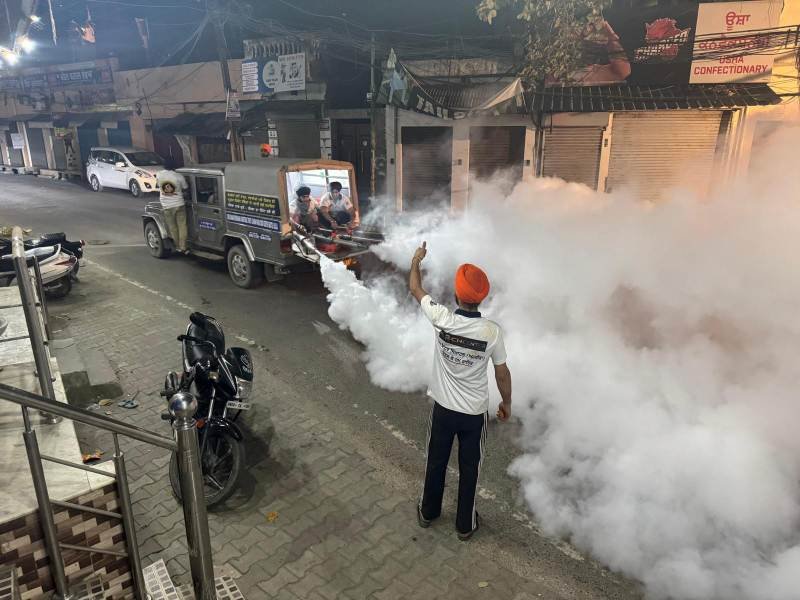


JAMMU: Jammu and Kashmir has recorded 1,393 dengue cases this year in what the Daily Excelsior describes as a "worrisome surge", with daily detections still running between 23 and 55 cases. Jammu district alone accounts for 771 infections, more than half the Union Territory's total.
The spread has moved beyond the urban plains. Doda has reported 228 cases, a caseload the hilly districts have not seen in recent memory, and Samba has recorded 188. The death of a 47-year-old man from Samba at AIIMS Vijaypur is a grim reminder that the disease can kill.
October's unseasonal rainfall and the flash floods that followed left stagnant water across Jammu city and its outskirts, exactly the conditions in which Aedes mosquitoes multiply. Breeding cycles are brief, so numbers that look manageable on paper today can become a crisis within weeks.
How dengue spread beyond the plains
Dengue was long treated as a disease of the urban plains in Jammu and Kashmir. The figures from Doda and Samba show the virus is no longer confined to a few urban pockets. Hilly districts with less experience of the disease face a steeper learning curve in surveillance and response, and the 228 cases in Doda mark new territory.
Daily detections of 23 to 55 cases suggest transmission is active rather than fading with the season. In a disease whose spread depends on mosquito density, such figures should be read as a warning of what may follow, not as reassurance. The trajectory in Jammu, where more than half the UT's cases sit, remains deeply worrying.
What has changed this year is the geography of risk. Dengue control programmes were built around the plains, with fogging routes, surveillance teams and hospital readiness concentrated where cases historically appeared. The hilly districts now need the same machinery, and building it mid-outbreak is harder than having it in place.
Why dengue control efforts lag
The causes are neither mysterious nor new, the Daily Excelsior reported. Construction sites and the prolonged excavation linked to Smart City works remain open for months, collecting rainwater and serving as ready-made nurseries for mosquitoes. Contractors who leave pits uncovered and waterlogged face no meaningful consequences.
Drains stay clogged, and discarded containers and tyres gather water unchecked across the city. Fogging is still treated as a reaction rather than a precaution, with drives launched only after cases surge, a pattern the report compares to fetching water once the house is ablaze.
Coordination between the Directorate of Health Services, including the State Malariologist, and the municipal bodies appears patchy at best. Public advisories and newspaper advertisements, however well-intentioned, cannot substitute for enforcement on the ground.
The year-on-year repetition of this crisis is what concerns doctors and residents most. Everyone knows the reasons, yet the response remains inadequate. Dengue is a preventable disease, and its recurrence reflects administrative inertia more than a lack of medical knowledge.
Surveillance data backs the concern. With 771 cases in Jammu district alone and daily detections holding at 23 to 55, the caseload shows no sign of the seasonal decline officials usually expect by late October.
What the dengue response needs now
Municipal corporations and committees should intensify fogging and larvicidal spraying in high-risk wards and extend the drives to the hilly districts, the report argued. Stagnant water at construction sites, drains and low-lying areas must be cleared on a war footing, with heavy penalties for contractors and agencies that flout norms.
Citizens have a part to play by emptying coolers, flowerpots and containers weekly and seeking medical advice at the first sign of fever. Early diagnosis and hydration management keep most dengue cases from turning severe, and delay in reaching a hospital is what turns a treatable illness into a fatal one.
Prevention is cheaper, kinder and more effective than cure. The administration must stop reacting and start preventing, the report concluded, or next October will bring the same surge.
Jammu and Kashmir has logged 1,393 dengue cases this year, with daily detections still running at 23 to 55.