
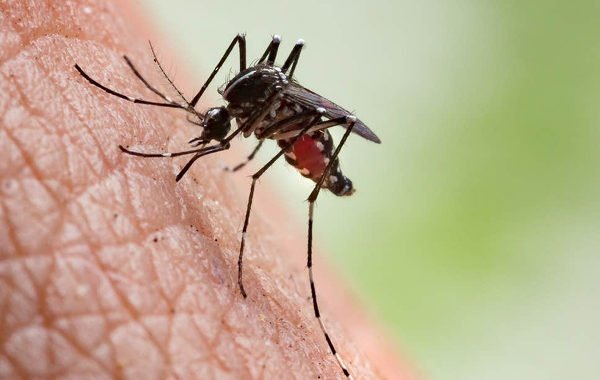


Maharashtra’s Gadchiroli district now carries more than half of the state’s malaria cases, and the Gadchiroli malaria burden has become the sharpest test of India’s plan to eliminate the disease by 2030. The district’s forested terrain and remote villages keep transmission going long after other parts of the country have brought it down. Frontline magazine reports that the stubborn caseload here is forcing health officials to rethink how the last mile of elimination gets done.
Malaria is caused by Plasmodium parasites and spreads through the bite of infected female Anopheles mosquitoes. Fever, chills and headache are the common signs, and severe cases can turn life-threatening when treatment is delayed. India set its elimination goal under the National Framework for Malaria Elimination, launched in 2016, which aims for zero indigenous cases across the country by 2030. The framework sorts states by how close they are to elimination: low and moderate-burden states were meant to reach zero first, while the high-burden Category 3 regions have until 2027 to interrupt indigenous transmission.
Why the Gadchiroli malaria fight is hard
Public health teams working on Gadchiroli malaria face a mix of geography and access. Villages sit deep inside forest areas where health workers must travel long distances to reach patients, and the monsoon season brings the water-logging that breeds mosquitoes. Delays in diagnosis and treatment remain the main reason malaria deaths still occur, and the Gadchiroli malaria picture shows why: when a fever goes untested for days in a remote hamlet, a treatable infection can become fatal.
The state government has answered with a mission-mode campaign called the Malaria Mukt Gadchiroli Abhiyan. A special task force chaired by the Chief Minister brings together multiple non-profit organisations under the leadership of the chief executive officer of the Zila Parishad. The campaign’s name translates as a malaria-free Gadchiroli, and it is run as a mission-mode push rather than a routine district programme. The Clinton Health Access Initiative’s Indian arm has been invited to run a programme management unit for three years, to coordinate the partners, research institutes and the district’s own action plan. The Gadchiroli malaria campaign treats the district as the place where Maharashtra’s elimination battle will be won or lost.
What the Gadchiroli malaria numbers say about 2030
Nationally, the numbers show both progress and pressure, and the Gadchiroli malaria story sits at the pressured end. The Health Ministry has identified 33 high-burden districts across nine states and Union Territories for intensive action; these districts accounted for 64 per cent of India’s malaria cases and 54 per cent of malaria deaths in 2025. The states reviewed included Maharashtra, Chhattisgarh, Jharkhand, Odisha, Assam, Mizoram, Tripura and Andhra Pradesh.
The government’s stated strategy is “Test, Treat and Track”: find cases fast, treat them fully and follow up so transmission stops. Officials have asked states to keep diagnostic tests and anti-malarial medicines available in remote areas, and to work with rural development departments and village councils to find breeding sites and report suspected cases early. Health interventions alone cannot fix water-logging and poor drainage, officials have said, so the Gadchiroli malaria plan leans on local bodies as much as on clinics.
There is real ground for hope elsewhere. About 160 districts have reported zero malaria cases for three years running, and the country’s overall burden has fallen by roughly 80 per cent since 2015. States such as Sikkim and Goa have already reached malaria-free status, showing that elimination is possible where surveillance holds. The National Vector Borne Disease Control Programme, the nodal agency for vector-borne diseases, runs the surveillance network that tracks every case. Its data decides which districts get intensive action and which ones move into the maintenance phase, where the job is stopping the disease from coming back.
The Abhiyan’s programme management unit is set to run for three years, coordinating the district’s action plan with its partner organisations and research institutes, and the early results will show in the district’s case counts.