
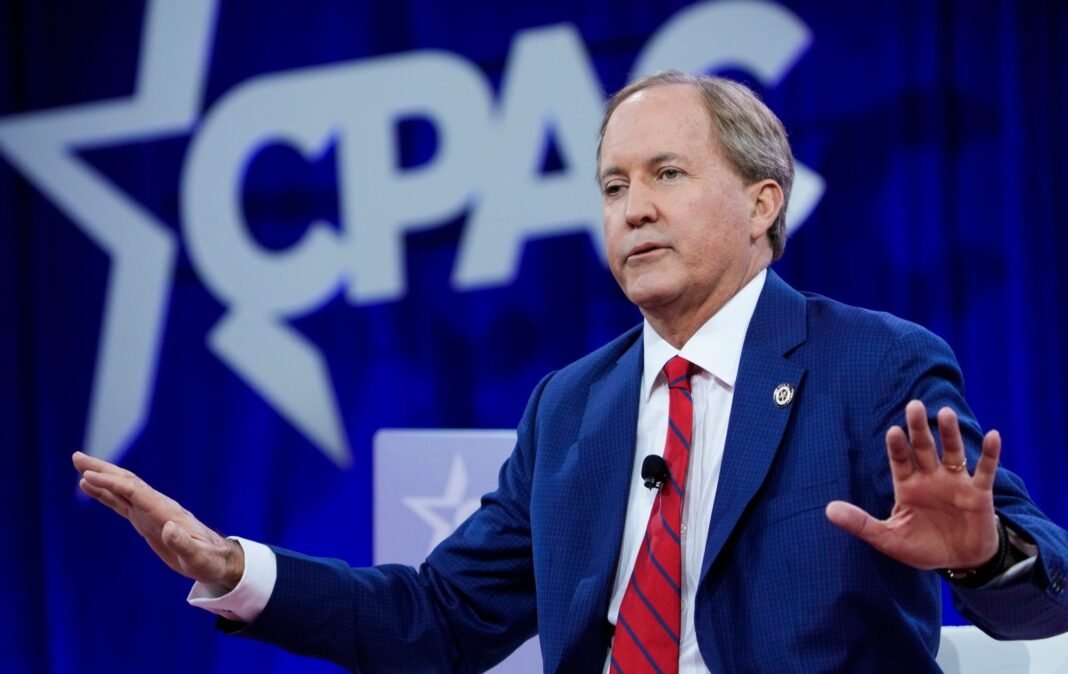


Texas Attorney General Ken Paxton has dropped his lawsuit accusing the NCAA of deceptive marketing of women’s sports, ending a case that ran for nearly two years. Paxton’s office abandoned all claims in the suit without prejudice on Thursday, according to a district court filing in Lubbock County, Texas. The decision came days before a new attorney general takes over the office.
The lawsuit was filed in December 2024. Ken Paxton said the association violated the Texas Deceptive Trade Practices Act, the state law that bars businesses from misleading buyers about goods or services that are not as advertised. The filing ran to 57 pages, and it asked the court for a permanent injunction.
What Ken Paxton accused the NCAA of doing
Ken Paxton said the NCAA was “engaging in false, deceptive, and misleading practices by marketing sporting events as ‘women’s’ competitions only to then provide consumers with mixed sex competitions where biological males compete against biological females.” He asked the court to bar the NCAA from allowing transgender athletes in women’s events held in Texas or involving Texas teams, or to stop marketing the events as women’s sports. He also said the NCAA misled consumers by not disclosing which participants in its women’s competitions were biologically male, and he argued the policy put female athletes’ safety at risk.
The NCAA pushed back. In a statement, the association said college sports are the premier stage for women’s sports in America, and it said it would continue to promote Title IX, invest in women’s sports and ensure fair competition in its championships. The association also changed its policy on transgender participation to comply with a directive from President Trump. Ken Paxton argued the change did not go far enough, because the policy still acknowledged a transgender identity.
The suit landed in the middle of a wider fight over transgender athletes in college sports. San Jose State volleyball player Brooke Slusser, who was part of a separate lawsuit against her school and the NCAA over a transgender player on the Spartans roster, spoke out in support of Paxton’s filing when it was announced. A judge had already denied a request to bar Blaire Fleming, the San Jose State player at the center of that dispute, from the Mountain West Conference volleyball tournament.
How the Ken Paxton case played out in court
The case spent most of its life in the 237th District Court in Lubbock, before Judge Les Hatch. In March 2025, Hatch denied Ken Paxton’s request for an immediate injunction to halt the NCAA Women’s Basketball Tournament, ruling on the request alone and leaving the merits of the case undecided. In May, Hatch granted the NCAA summary judgment against Paxton’s bid for an injunction that would have forced mandatory sex-verification testing for all student athletes. The judge let the state’s deceptive trade claims survive, so the case continued toward trial on those claims.
Paxton kept the case alive through the spring and summer, even as the injunction rulings went against him. The claims that survived were the ones the suit had opened with: that the NCAA marketed events as women’s sports while running competitions that included transgender athletes. No trial date had produced a verdict, and the case was still pending when Paxton’s office moved to drop it.
Why Ken Paxton dropped the case now
The timing points to the change of leadership in the attorney general’s office. Democrat Nathan Johnson, the attorney general-elect, won the race in the November election. He has pledged to end cases he inherits from Paxton that he considers politically motivated, a promise that covers several of Paxton’s lawsuits, not only the NCAA case. Ken Paxton’s office dropped the claims without prejudice, which means the claims could be filed again, but Johnson has given no sign that he plans to revive this one.
The move fits a wider pattern in the office’s final weeks. The Trump administration’s Justice Department has moved to take over another Paxton lawsuit, the case against Planned Parenthood, after Texas voters chose a Democratic attorney general. The lawsuit that once aimed to bar transgender athletes from women’s events in Texas now ends with no ruling on whether the NCAA misled anyone.