
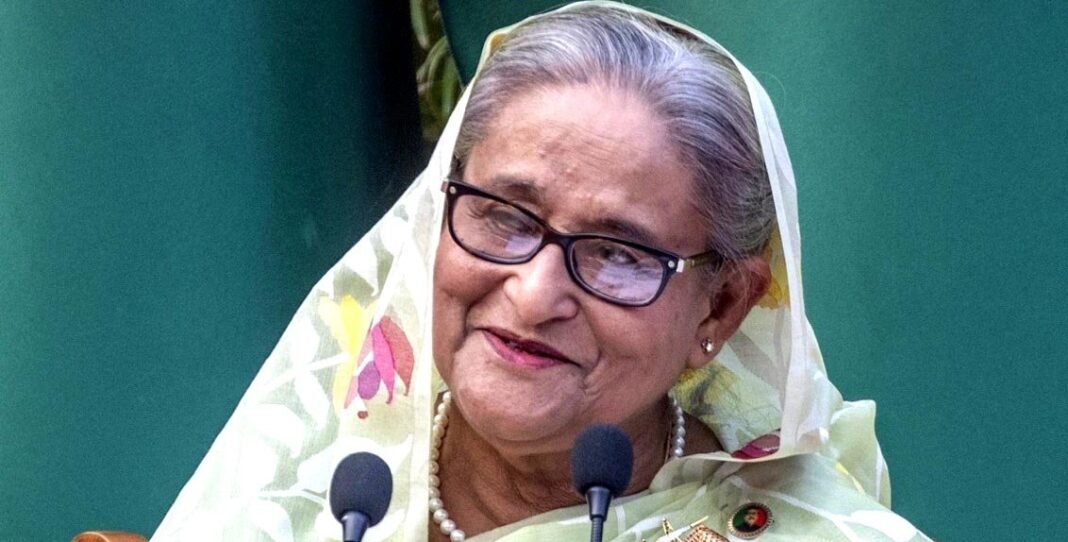


India has said a travel document is needed for the movement of people, after Bangladesh ruled out issuing a passport to former prime minister Sheikh Hasina, who plans to return home in December from India. The Sheikh Hasina travel document question came up at the weekly briefing of the Ministry of External Affairs, where spokesperson Randhir Jaiswal declined to comment on Hasina’s request for a new passport. He described the passport’s role in an extradition as a technical issue and said, “Obviously, for the travel of people, you need a travel document.”
Hasina, 78, fled to India in August 2024 after a student-led uprising ended her long rule, and she has lived in self-imposed exile there since. Her lawyers at London-based Matrix Chambers wrote on 9 November to Preeti Rahman, the acting high commissioner at the Bangladesh High Commission in New Delhi, asking for a new passport and national identity card expeditiously. The letter cited her Bangladeshi nationality and the country’s obligations under international human rights instruments, and it was her first formal communication with Bangladeshi authorities since she fled.
Bangladesh swiftly rejected the request. State Minister for Foreign Affairs Humaiun Kobir said the government does not provide a passport to a terrorist and urged New Delhi to hand her over under the extradition treaty between the two countries. The Sheikh Hasina travel document request was turned down the same week, and Dhaka has said the formal route for her return is extradition, not a fresh passport.
Sheikh Hasina travel document request and the court sentence
A Bangladeshi court sentenced Hasina to death in her absence in November 2025 for crimes against humanity, over the crackdown on protesters in 2024 that the United Nations estimates killed as many as 1,400 people. Chief Prosecutor Md Aminul Islam said she had exhausted her legal options after failing to appeal within 30 days of the verdict and would face execution if she returned. Hasina denies the accusations made against her, and her party, the Awami League, is now banned in Bangladesh. The Sheikh Hasina travel document dispute turns on that verdict, since any return would put her before the tribunal that passed it.
India has not handed her over. The foreign ministry did not respond to a request for comment this week, but in April it said it was examining Bangladesh’s extradition request, citing a desire to engage constructively with the new government and strengthen ties. The Sheikh Hasina travel document question now sits inside that wider standoff, since repatriation or extradition will have to rest on the availability of a passport, and without one India may not be able to transfer her.
Sheikh Hasina travel document row and the December plan
The Awami League has said Hasina will return home in December, with documents or without them, and has not said how she would travel if the papers are denied. Her aides have said the date of her return will be announced once various formalities are completed, and she has said she plans to return to surrender before a court. People regularly cross the long and partly porous border illegally, though neither Hasina nor her party has said how she would return without the papers. The Sheikh Hasina travel document row leaves that question unanswered.
If India hands her over under the 2013 extradition treaty, she will be arrested on arrival at the airport. If she returns on her own, she could instead use a land port such as Benapole-Petrapole on the West Bengal border. The Sheikh Hasina travel document dispute leaves both routes uncertain, since Dhaka wants her handed over and has ruled out issuing the papers, while New Delhi has said only that a travel document would be needed.
What the Sheikh Hasina travel document row means next
The standoff has put the two governments in different places. Bangladesh says it will not issue the papers and wants Hasina handed over under the treaty, while India has said it is examining the extradition request and has declined to comment on the passport request itself. Law Minister Md Asaduzzaman said on 8 November that the government would take all necessary legal steps to bring Hasina back under the prisoner exchange treaty, and Dhaka has given no sign of changing its position that extradition is the only route.
Hasina has told Reuters she plans to return to surrender before a court, and her aides said on Monday that the date would be announced once formalities were completed. The Bangladesh High Commission in New Delhi has not yet said whether it will process the passport and identity card applications. The Sheikh Hasina travel document question remains open, with Dhaka refusing the papers, New Delhi examining the extradition request, and December, the month she has named for her return, drawing near.