
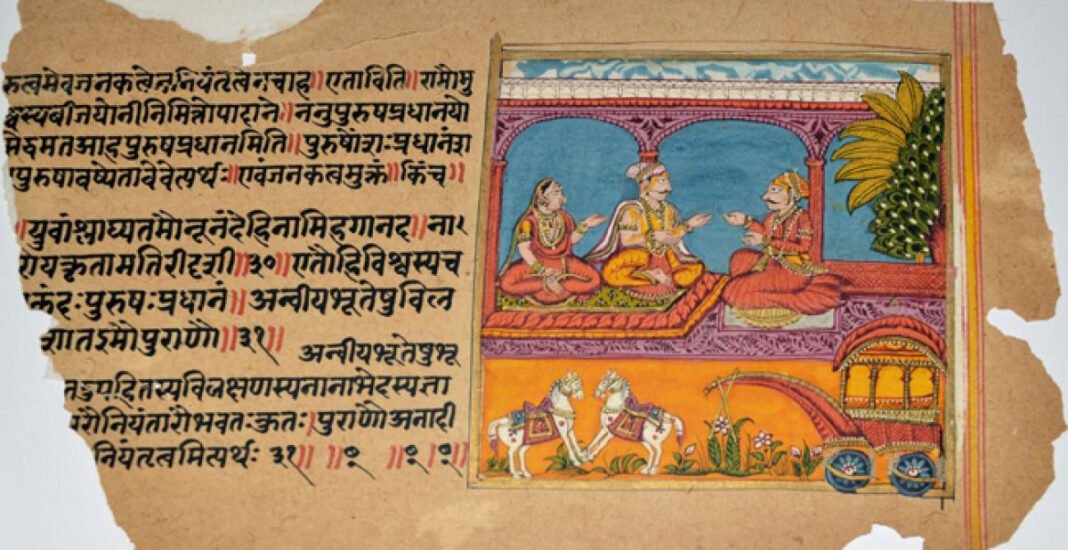


Three of India’s oldest works have entered the UNESCO Memory Register, after the Mahabharata, Kautilya’s Arthashastra and Kalhana’s Rajatarangini were inscribed in the Memory of the World Asia-Pacific Regional Register. The decision was taken at the 11th session of the register, held in Jakarta, Indonesia. The inscription takes India’s total in the regional register to six. The Indira Gandhi National Centre for the Arts (IGNCA) prepared the nomination dossiers for all three works. Its member secretary, Sachchidanand Joshi, announced the decision.
What the UNESCO Memory Register listing covers
The Mahabharata is one of the longest epic poems in the world and a core text of Indian thought, carrying the Bhagavad Gita within it. Kalhana’s Rajatarangini, written in 12th-century Kashmir, traces the dynasties of the Kashmir Valley and is treated as one of South Asia’s earliest systematic works of history. Kautilya’s Arthashastra, also known by its author’s name Chanakya, is a treatise on statecraft, economic policy and military strategy that is still studied in governance courses. Together, the three works cover dharma, history and governance, three strands of classical Indian thought. The UNESCO Memory Register inscription recognises them as documentary heritage of outstanding value within the Asia-Pacific region.
How the nomination reached the UNESCO Memory Register
The Indira Gandhi National Centre for the Arts prepared the nomination dossiers for all three works, gathering evidence on their history and condition over several years. The centre spent years gathering evidence on the significance of the manuscripts. The Ministry of Culture said the decision was taken at the 11th session of the Memory of the World Committee for Asia and the Pacific, known as MOWCAP, held in Jakarta. The centre’s member secretary, Sachchidanand Joshi, announced the development in New Delhi. The recognition sits alongside the Gyan Bharatam Mission, the government’s programme to preserve, promote and digitise India’s manuscript heritage. Officials said the mission will continue work on rare documents held in libraries and collections across the country.
UNESCO’s Memory of the World programme was set up in 1992 to safeguard documentary heritage such as manuscripts, archives and audiovisual records. The Asia-Pacific regional register covers material of significance within the region, while the international register covers heritage of global significance. India has 13 entries on the international register, including the Rig Veda, inscribed in 2005, and the Bhagavad Gita and the Natyashastra, added in 2025 among 74 new entries that year. With the three new inscriptions, India now has six entries in the regional register. The latest additions were among the nominations considered at the Jakarta session. The regional register is one of three levels of the programme, alongside the international register and national registers.
Gujarat Chief Minister Bhupendra Patel called the UNESCO Memory Register recognition a matter of pride for every Indian. He said the three works carry the essence of India’s dharma, history and statecraft, and credited Prime Minister Narendra Modi’s leadership for the growing international recognition of India’s civilisational heritage. The Ministry of Culture said the inscription gives India’s historical, literary, philosophical and political thought wider international acknowledgement. The UNESCO Memory Register listing also draws attention to the manuscripts themselves, many of which survive in fragile physical copies that need steady conservation work.
The three works are already widely read and taught, and the UNESCO Memory Register inscription does not change their texts. What changes is the formal recognition of the manuscripts as heritage worth protecting, which can help the institutions that hold them make the case for funding and conservation. Digitisation under the Gyan Bharatam Mission is meant to widen access to such material, so that scholars and readers do not have to rely on a single physical copy. For the Mahabharata, the Arthashastra and the Rajatarangini, the UNESCO Memory Register entry records their place in the documentary record of the region.
India’s earlier regional inscriptions include administrative records and manuscripts from previous rounds of nominations. The three new entries join them after the Jakarta session, and the Ministry of Culture said the total now stands at six. The UNESCO Memory Register process will continue with further nominations from the region in future sessions. For now, the Mahabharata, the Arthashastra and the Rajatarangini hold their place on the UNESCO Memory Register as three of the oldest records of Indian thought to receive the listing.