


A San Francisco startup is sending humanoid robots into homes to clean them, with people steering the machines from a distance. The humanoid robot cleaning service comes from Tau Robotics, and a reporter for MIT Technology Review booked a visit without saying she was a journalist to see how it worked. The robots cleaned a kitchen and a toilet in an hour, and they also knocked things over, left taps running and struggled on stairs.
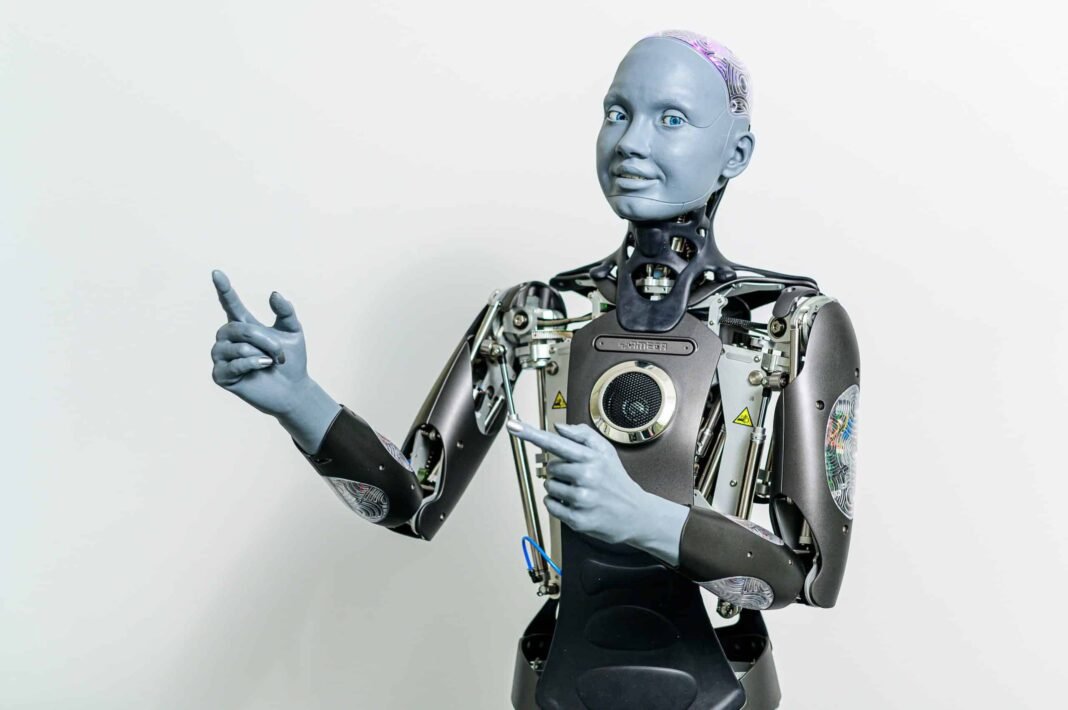
Tau Robotics opened the pilot in July, and it has completed only a couple of hundred cleanings so far. The service began as an invitation-only pilot in San Francisco. It started at 30 dollars for an hour with a single robot. It now costs 60 dollars for a weekly cleaning with two robots, or 100 dollars for a one-time visit. The robots are about four and a half feet tall, with a 3D-printed head carrying antennae and two 3D-printed claw hands.
Humanoid robot cleaning still needs a human pilot
The machines are not autonomous yet. Human pilots watch through cameras mounted in the robots’ heads and wrists and steer much of what they do. The company’s long-term goal is to make autonomous cleaning robots, but for now the pilots do most of the work. Each cleaning is recorded, and the data goes into training the company’s artificial intelligence models so the robots can do more on their own later. The humanoid robot cleaning visits work as a data-gathering exercise as much as a cleaning service.
Some tasks already run without a human hand on the controls. Tau cofounder Cornelia Weinzierl said the robot can vacuum and mop on its own. Bed-making and laundry folding still use kinematic guidance, in which a human pilot streams the motions from a distance and the robot copies them. Those motion streams then become training data for future models. Weinzierl said the humanoid robot cleaning system learns from each visit it completes. Each robot costs about 50,000 dollars to build, chief executive Alexander Koch told CBS News, so the cleaning fee works more like a subsidy for data than a price for the work.
Humanoid robot cleaning in the apartment
The visit showed how far the machines still have to go. The robot did a creditable job of cleaning the kitchen, though it did not brave the stove, and it cleaned the toilet, the task the reporter dreaded most. Three times the head fell off its toilet cleaning wand, and three times the robot managed to reattach it by poking around with the handle until it made contact at the right angle. The robot struggled on the building’s front steps and had to be carried up part of a carpeted staircase. It left taps dripping and knocked over an olive oil bottle and an air purifier. The humanoid robot cleaning trial was a beta test in a real home, not a lab demo.
What humanoid robot cleaning shows about the technology
Tau’s service runs in the San Francisco Bay Area and, according to the company’s website, in Los Angeles. New customers still join a waitlist. The humanoid robot cleaning program has no announced launch in Europe, Asia or Latin America. Koch told CBS News the target is 1,000 cleanings a week in San Francisco by 2027, followed by other American cities and international markets in 2028. The amount of data needed to train robots for the varied work of apartment cleaning is probably enormous, and the company has completed only a couple of hundred cleanings so far.
The trial shows the gap between the pitch for home robots and the state of the machines. The robots can already do some jobs on their own, and the company is collecting the training data it needs for more. The humanoid robot cleaning service is still small, and every visit depends on a remote pilot watching through a camera. Tau’s next step is to turn the visits it sells today into robots that can work a home without a person watching through a camera.