
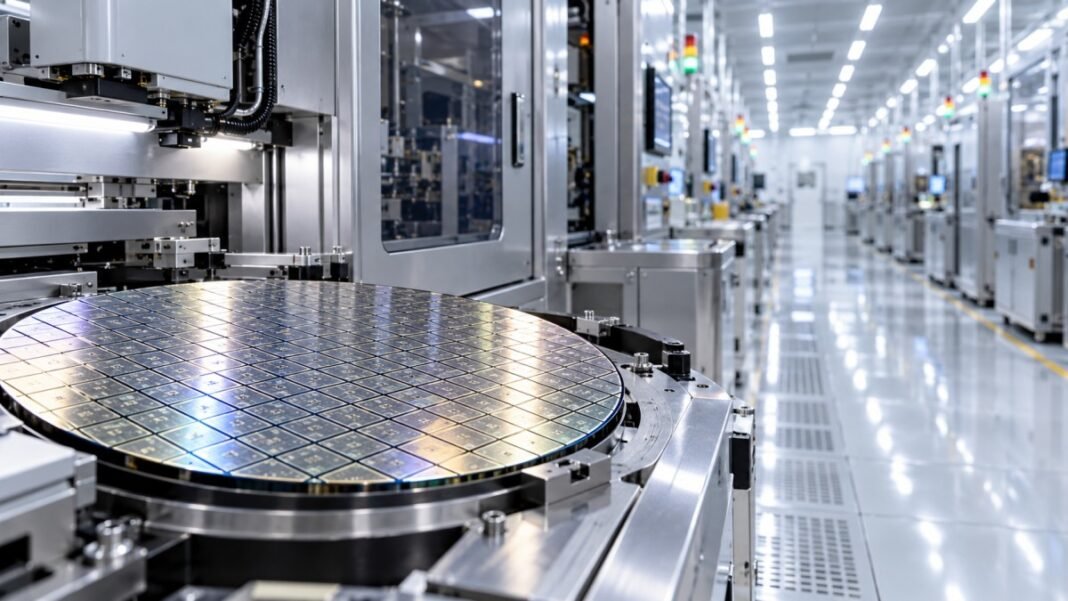


The Nvidia episode has given fresh urgency to the India semiconductor mission, after a controversy around the American chipmaker raised questions about how much of the country’s artificial intelligence computing depends on a single supplier. More than 85 percent of the common compute infrastructure under the IndiaAI Mission runs on Nvidia chips, according to The Secretariat, a policy publication. That dependence is now part of the argument for building chip capacity at home, and the government has signalled that work on domestic semiconductors will move faster.
India semiconductor mission after the Nvidia episode
Reports in the past week described turmoil around Nvidia, including reports that Singapore barred Alice Huang from re-entering the country and questions about restricted chips and artificial intelligence investments. The reports prompted debate in India about the risks of relying on one supplier for the graphics processing units, or GPUs, that power artificial intelligence work. Nvidia holds more than 80 percent of the global GPU market. For India, which is building its artificial intelligence plans around subsidised access to computing, the episode showed how quickly access to hardware can become a political question, and it has added weight to the India semiconductor mission.
The scale of the dependence is plain in the numbers. The IndiaAI Mission began with a target of 10,000 GPUs and has now deployed 38,000, according to the government, with access offered at a subsidised rate of Rs 65 an hour. The mission supports startups, researchers and academic institutions, and the government has picked 12 startups to build native artificial intelligence engines, including Sarvam AI, Soket AI, Gnani AI, Gan AI and Avaatar AI, along with an IIT Bombay consortium called BharatGen. All of that work runs on hardware that India does not yet make at scale, which is the gap the India semiconductor mission is meant to close.
Sovereign GPUs and the India semiconductor mission
Electronics and Information Technology Minister Ashwini Vaishnaw has met senior Nvidia officials to discuss the development of sovereign GPUs and the manufacture of high-end data processing devices in India. The talks covered edge devices such as the DGX Spark, a deskside system that delivers up to 1 petaFLOP of performance and can run models of up to 200 billion parameters. Vaishnaw said in the first half of 2025 that India would develop its own GPU within three to four years. The meeting also included Nvidia’s managing director for South Asia, Vishal Dhupar.
A separate proposal would see Nvidia work with India to develop a chip built for Indian use. Jensen Huang, the founder and chief executive of Nvidia, raised the idea with Prime Minister Narendra Modi during a meeting in the United States earlier this year, according to the Economic Times. Vaishnaw confirmed the talks to the newspaper, saying, “Yes, we are in discussions with Nvidia to develop AI chips; the discussions are at a preliminary stage.” Under the proposal, the core of the chip would be designed by Nvidia’s chip design partners, such as Arm or AMD, while the top 10 to 20 percent, the part customised for Indian needs, would be designed by the Centre for Development of Advanced Computing, known as C-DAC, or by a private chip design company.
Building chip capacity under the India semiconductor mission
The proposed chip could be customised for Indian uses such as Kavach, the safety system for Indian Railways, and made available to startups, companies and government departments through the AI mission. India has about 19 percent of the world’s chip designers, according to a Boston Consulting Group study, and the argument from the government is that this design talent should be put to work on hardware built for Indian conditions. The India semiconductor mission also covers manufacturing, with joint ventures and fabrication plants under the India Semiconductor Mission programme.
Vishay Intertechnology and Kaynes Technology signed a binding term sheet on 12 November to set up a semiconductor manufacturing joint venture in India, with Vishay investing $56.4 million for a 49 percent stake. The venture will handle post-fabrication wafer processing, assembly, testing and packaging, and the two companies may seek support under the India Semiconductor Mission 2.0 programme.
The Nvidia episode has not changed the government’s plans so much as it has sharpened them. India still needs foreign chips for the work under way, and the talks with Nvidia continue. The difference is that the case for domestic capacity is now argued in public, with the risks of dependence named in the open. The India semiconductor mission will be judged on whether that argument turns into factories, chips and a GPU that India can call its own.