
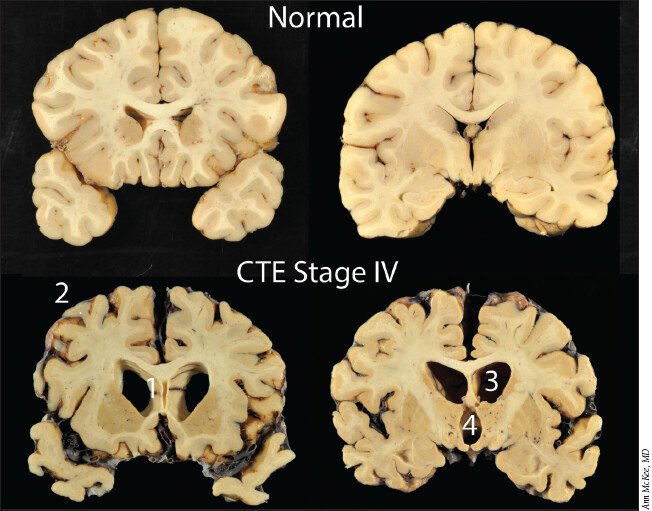


Scientists have found a CTE biomarker that points to advanced chronic traumatic encephalopathy, or CTE, in a step toward diagnosing the brain disease in living patients. CTE is linked to repeated blows to the head, and it can now be confirmed only by examining the brain after death.
The study, led by researchers at Washington University School of Medicine in St. Louis, was published on 13 November in JAMA. The CTE biomarker is a protein fragment in blood called eMTBR-tau243, a piece of the tau protein that forms toxic clumps in the brains of people with Alzheimer disease and other brain diseases.
Kanta Horie, a co-senior author of the study, said the work could change how the disease is found and treated. “We are potentially opening a new door for diagnosing and treating CTE in living patients,” Horie said. Chihiro Sato, also a co-senior author, said the marker should not be treated as a stand alone answer on its own.
How the CTE biomarker was found
The team was testing eMTBR-tau243 in samples from more than 80 people whose brain diseases had been confirmed at autopsy, along with healthy volunteers. One patient stood out: the blood level of the marker was high, yet the autopsy showed no Alzheimer disease. When Horie looked into that patient’s records, the brain showed advanced CTE instead.
The researchers then tested blood stored from 11 people whose CTE had been confirmed at autopsy. Levels of the CTE biomarker were higher than in healthy people, and the levels rose as the disease became more severe. The test separated people with advanced CTE from healthy people with high accuracy, but it could not reliably pick up early stage disease.
What the CTE biomarker can and cannot do
The study included 229 participants drawn from several research biorepositories, and samples were analysed with a mass spectrometry assay at the university’s Tracy Family SILQ Center. Levels of eMTBR-tau243 in CTE were much lower than in Alzheimer disease, which makes the measurement harder, and the marker also rises in other tau diseases, so a positive result is a signal rather than a verdict.
Rudolph Castellani, a neuropathologist at Northwestern University who was not involved in the research, called the finding interesting but very preliminary. He said far larger studies were needed to see whether there is a real connection. The CTE result rests on 11 autopsy confirmed cases, a small base for a test that would be used in clinics.
Who could benefit from a CTE biomarker test
If large studies confirm the findings, clinicians could use such a blood test to monitor people at risk of CTE, such as former football players, boxers and combat veterans. Doctors now judge possible CTE from symptoms such as mood swings and memory loss, but other diseases cause similar symptoms, so the diagnosis stays uncertain during life.
A CTE biomarker could also help researchers test treatments, because trials need a way to tell whether a living patient has the disease and whether it is getting worse. Without a marker, trials must rely on symptoms and brain scans that cannot confirm CTE, which has slowed work on drugs for the disease.
Work still needed before clinics can use it
Washington University has licensed the technology used to measure eMTBR-tau243 in blood to C2N Diagnostics, a university startup that also developed a blood test cleared by the Food and Drug Administration to aid in diagnosing Alzheimer disease. The test has not been validated for diagnosing CTE, and larger studies are needed before it can be used for that purpose in clinics.
The researchers said the next step is to test the marker in larger groups of living people at risk of CTE and to follow them over time. Until that work is done, the CTE biomarker remains a promising clue rather than a test a doctor can order, but it is the first blood signal tied to the disease in living patients.