
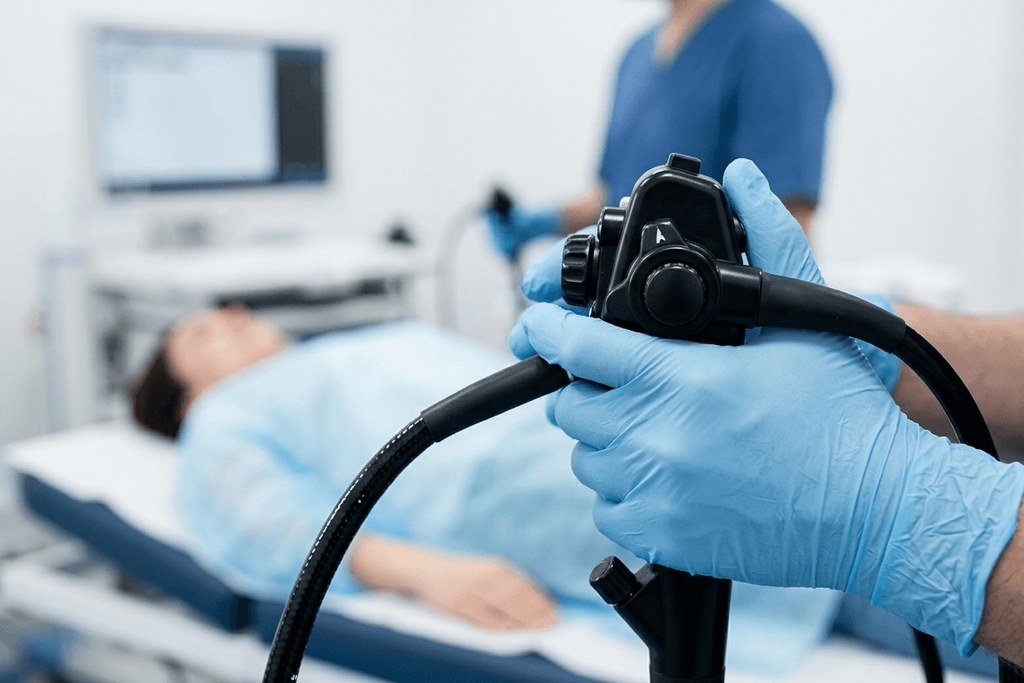


A cancer sponge test that checks for oesophageal cancer could be offered to more people with persistent indigestion, under draft guidance for the NHS in England. The National Institute for Health and Care Excellence, known as NICE, said the tests could help find cancer and a condition called Barrett’s oesophagus earlier, without a hospital endoscopy.
The cancer sponge test is already offered in some places, but the draft guidance would make it available more widely across England. Heartburn or acid reflux can occur with Barrett’s oesophagus, a condition in which the cells lining the lower part of the food pipe change. It affects about 1 to 2 percent of adults and is more common among people with long term acid reflux.
A cancer sponge test works without sedation and takes only minutes. A person swallows a small capsule attached to a thread. Once in the stomach, the capsule dissolves and releases a tiny sponge, which collects cells from the lining of the gullet as it is gently pulled back out of the mouth. The sample goes to a laboratory, where it is checked for cell changes linked to cancer or Barrett’s oesophagus.
Who the cancer sponge test would help
NICE said a cancer sponge test could be used for people with persistent gastro-oesophageal reflux disease, commonly known as acid reflux, who have several risk factors and do not need an urgent suspected cancer referral. People whose test results point to possible cancer or Barrett’s oesophagus would be referred for an endoscopy so the findings can be checked and confirmed.
The draft guidance also gives people already diagnosed with Barrett’s oesophagus another option for monitoring their condition. A cancer sponge test could be used as part of a surveillance programme to check on a regular basis for cell changes that may point to oesophageal cancer. NICE said no test, including endoscopy, finds every case, and people with a clear sponge test result should still be monitored in the long term.
Cancer sponge test can be done in GP surgeries
The tests do not need sedation and can be carried out in GP surgeries, primary care facilities and community diagnostic centres, rather than in hospital. That matters because endoscopy checks use a small camera to look inside the body and need hospital time, staff and recovery space. A test that runs in a GP surgery could cut waiting times for people with reflux symptoms.
NICE looked at two capsule sponge tests: Cytosponge, made by Medtronic, and EndoSign, made by Cyted Health. Both use the same idea of a dissolving capsule and a sponge on a thread, and both send the collected cells to a laboratory for checks. The capsule takes about seven minutes to dissolve and release the sponge in the stomach.
Evidence behind the cancer sponge test
The BEST3 trial, published in The Lancet in 2020, found that offering the cancer sponge test to people with reflux symptoms in primary care raised detection of Barrett’s oesophagus tenfold over usual care. A large real world NHS evaluation found the capsule sponge pathway feasible as a nurse led triage service, and it led to 78 percent of people on routine endoscopy waiting lists being discharged without an endoscopy.
Professor Rebecca Fitzgerald of the University of Cambridge and her team have worked for more than ten years to make the test available to the public. The Heartburn Health programme, supported by the NHS and Cancer Research UK, is the largest research effort of its kind in the UK, and it is testing new ways to detect and prevent oesophageal cancer in people with persistent heartburn, indigestion or acid reflux.
What happens next for the guidance
The recommendations are the first to be produced through the National HealthTech Access Programme, a new approach designed to find high impact medical technologies that, if recommended by NICE, will be funded by the NHS and made available to all eligible patients across the country. The programme is part of the government’s 10 Year Health Plan.
Jonathan Benger, chief executive of NICE, said the cancer sponge test offers a less invasive way to check people who may be at risk. Peter Johnson, national clinical director for cancer at NHS England, welcomed the draft guidance. Comments can be made on the draft through the NICE website until 7 December 2026, the committee will meet again on 16 December, and final recommendations will be made in the new year.