
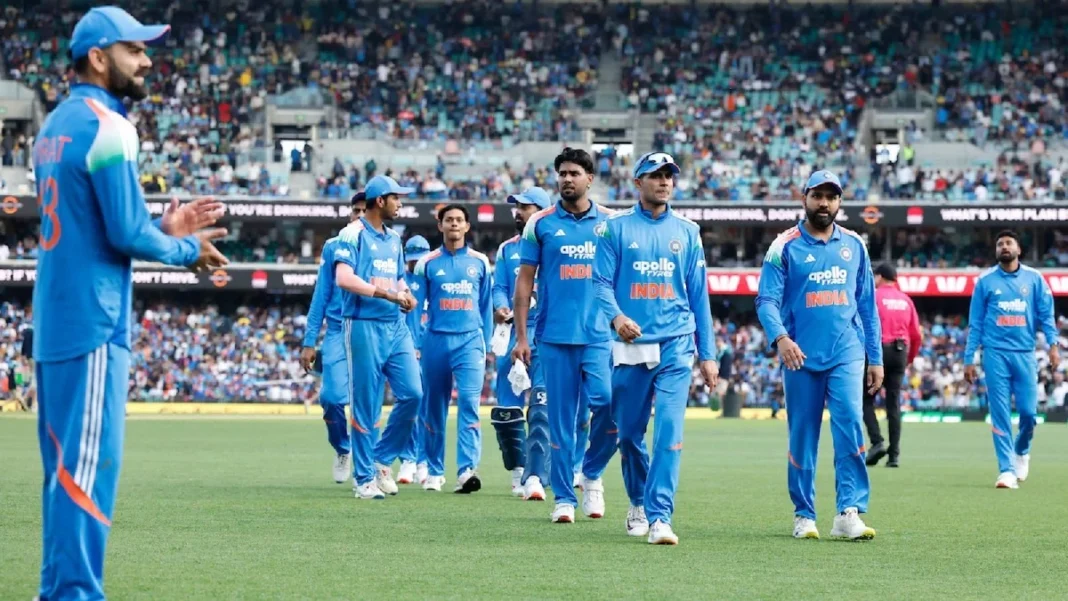


India have been fined 35 per cent of their match fee for a slow over-rate in the fifth and final ODI against New Zealand at Bay Oval in Mount Maunganui on 15 November. The International Cricket Council announced the sanction on 18 November, three days after the match, and the fine applies to the players and support staff of the side. India won the match by 22 runs and took the series 3-1, but the slow over-rate meant the win came with a penalty that followed the team into the Test series.
Slow over-rate costs India 35 per cent
Match referee Ranjan Madugalle of the Emirates ICC Elite Panel of Match Referees imposed the sanction after India were ruled to be seven overs short of the target once time allowances were taken into consideration. The shortfall was counted after the allowances for stoppages and delays that the rules permit, so the seven overs were the gap that remained when those were applied.
The slow over-rate fine follows the tariff set out in Article 2.22 of the ICC Code of Conduct for Players and Player Support Personnel, which covers minimum over-rate offences. Under the rule, players are fined five per cent of their match fee for every over their side fails to bowl in the allotted time, subject to a maximum cap of 50 per cent. Seven overs short at five per cent an over gave a deduction of 35 per cent for every member of the side.
Stand-in captain Shreyas Iyer pleaded guilty to the slow over-rate offence and accepted the proposed sanction, so there was no need for a formal hearing. Iyer led the side in the absence of regular ODI captain Shubman Gill for the last two games of the series, and he accepted the charge on behalf of the team. The charge was laid by on-field umpires Paul Reiffel and Wayne Knights, third umpire Kumar Dharmasena and fourth umpire Chris Brown.
Slow over-rate rule and the seven-over gap
The seven-over gap was a wide one by the standards of recent ODI cricket. Sides are given time allowances for wickets, injuries, drinks breaks and other stoppages, and the over rate is judged after those are taken out. India still finished seven overs behind the required rate, which points to a long stretch of play in which the overs did not come quickly enough.
One reason for the slow over-rate was the shape of the bowling attack. India picked four frontline fast bowlers in the side and used pace for 35 straight overs before spin was introduced. Fast bowlers take longer between balls than spinners, and a side that bowls pace for most of an innings has to work hard to stay ahead of the clock. The attack did its job with the ball, since India defended 209 and won by 22 runs, but the time taken to get through the overs was too long.
The ICC applies the same slow over-rate rule to every side, and the tariff leaves no room for a warning on a first offence. The fine is a straight percentage of the match fee, and the only question for the match referee is how many overs short the side was. In this case the answer was seven, and the maths gave 35 per cent.
A win that still ended with a fine
The slow over-rate did not change the result of the match. New Zealand were set 210 to win at Mount Maunganui, and the home side fell 22 runs short as India closed out the game. The win sealed a 3-1 series result for the visitors, who had already won the T20I series 3-2 earlier on the tour. The ODI series win was the second part of a strong tour for India, and the Test series that followed began in Wellington on 19 November.
The fine was also India’s second slow over-rate sanction of the year, after a similar offence in the third ODI against West Indies. The repeat will have been noted by the team management, since a side that loses a third of its match fee for a second time in a year has a problem with the pace of its play rather than a single bad day. The ICC announced the sanction on 18 November, and the players will now carry the fine into a Test series where over rates are watched just as closely.