
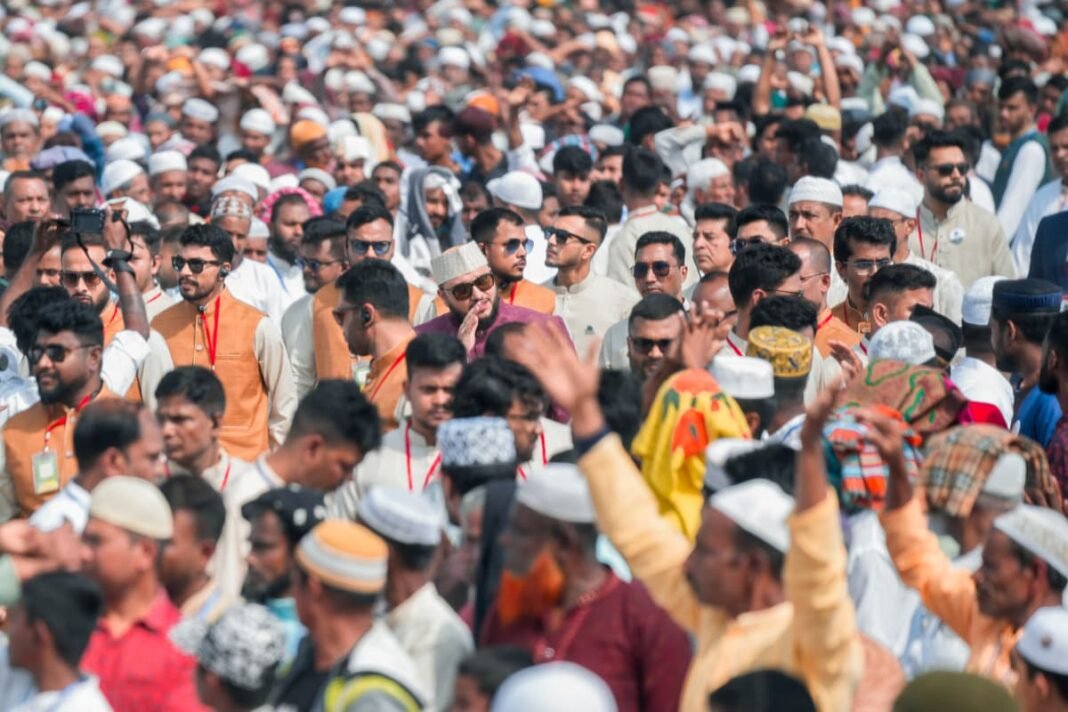


Pew survey projections show India will remain overwhelmingly Hindu for decades, even as its religious composition shifts gradually. The Pew survey estimates Hindus will make up 76 percent of India’s population by 2070, down from 79 percent in 2020.
The study, by the Pew Research Center, projects the religious populations of the world to 2070. It draws on data from 201 countries and territories and tracks seven religious groups between 2020 and 2070, working from census and survey data to establish each group’s size and age profile in 2020, and factoring in differences in fertility and in people switching religion. The findings put India at the centre of a wider demographic shift across South Asia.
Pew survey on Hindu and Muslim shares
The Pew survey estimates the Muslim share of India’s population will rise from 15 percent in 2020 to 20 percent by 2070. In absolute numbers, the picture looks different from the shares alone. India’s Hindu population is expected to grow by 176 million between 2020 and 2070, and Hindus will still account for more than three quarters of everyone living in the country. India had around 1.1 billion Hindus in 2020, about 95 percent of the global Hindu population.
India is also expected to have the world’s second-largest Muslim population by 2070, at about 334 million people, while Pakistan takes the top spot with an estimated 461 million. The projections offer little support for the more dramatic stories sometimes told about India’s changing religious composition. Demographers who study the figures push back against claims, often amplified by Hindu right-wing groups, that Muslims will eventually outnumber Hindus. There is no evidence of any significant religious conversion driving population change in India, they say, and the projections do not support such claims.
Pew survey on age, fertility and momentum
The shift is rooted largely in differences in age and fertility. Indian Muslims are younger than Hindus and, on average, have more children, and those two facts explain almost all of the change the researchers expect to see. Indian Muslims had a median age of 24 in 2020, compared with 29 for Hindus. Between 2025 and 2030, Pew estimates Muslim women in India will have an average of 2.3 children, against 1.8 among Hindu women.
“We expect religious change in India to be driven almost entirely by long-standing demographic differences between Hindus and Muslims: Muslims are younger and have higher fertility rates,” Stephanie Kramer of the Pew Research Center told the BBC. Pew senior demographer Conrad Hackett said fertility, rather than religious conversion, was the main driver of the projected change. The fertility gap has narrowed considerably, from more than one child per woman in 1992 to about half a child in recent years, and it is likely to keep shrinking. Hindu fertility is already below the replacement level, while Muslim fertility is projected to remain above it for another two decades.
Pew survey and the global picture
The researchers stress that these are demographic projections, not predictions of everything that might happen. Pew assumes recently observed patterns continue, and the figures would change if fertility, migration or switching patterns moved in a different direction. KS James, an Indian demographer at Princeton University, said the projections were hardly surprising, given the age and fertility differences already visible in the data.
Globally, the study projects a large change in the religious balance of the world. Muslims are expected to overtake Christians as the world’s largest religious group by 2035, with an estimated 2.57 billion Muslims against 2.52 billion Christians. The Pew survey covers virtually the entire global population, and its India findings sit inside that wider story of slow, long-run demographic change rather than sudden shifts.
The Pew survey also places India inside a wider South Asian picture. Its authors place India at the centre of a wider demographic shift across South Asia, and the same forces of age and fertility are at work in neighbouring countries. The Pew survey counts India as home to about 95 percent of the world’s Hindus, which makes the country’s figures central to the global Hindu total. The Hindu population worldwide is projected to keep growing in absolute terms even as its share of India’s population edges down.