
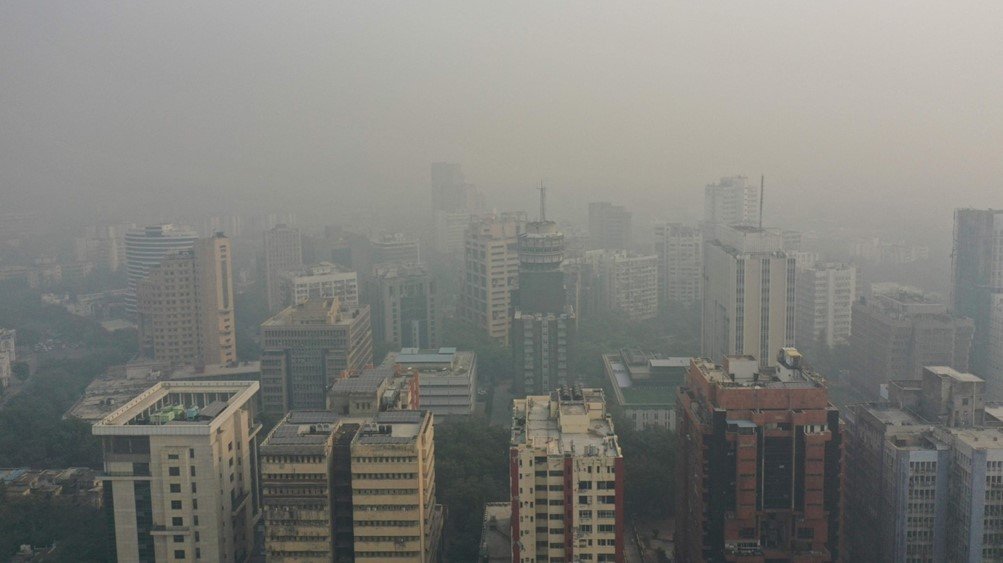


Delhi AQI rose to 286 at 7 am on Thursday, placing the capital in the “poor” category as air quality deteriorated again. The Delhi AQI reading came from the Central Pollution Control Board’s real-time data, with PM2.5 remaining the prominent pollutant.
The rise followed a brief improvement earlier in the week. The Indian Institute of Tropical Meteorology has forecast that the city’s air could deteriorate into the “very poor” category by Friday and remain there over the weekend. The Delhi government, meanwhile, has moved to tighten enforcement at pollution hotspots across the city.
Delhi AQI readings across the city
Pusa, monitored by the Indian Institute of Tropical Meteorology, recorded the highest station-level reading at 366. Of the 57 stations with valid readings at 7 am, 55 recorded air in the poor category or worse. The city-level figure of 286 sits near the top of the poor band, which runs from 201 to 300 under the Central Pollution Control Board’s National Air Quality Index. Readings from 0 to 50 count as good, 51 to 100 as satisfactory, 101 to 200 as moderate, 301 to 400 as very poor, and 401 to 500 as severe.
The Delhi AQI figure at 7 am was a city average, and conditions varied from one part of the capital to another. Stations near traffic corridors and construction sites tend to record higher readings than those in greener areas, and the morning figure reflected the usual pattern of pollution building up overnight when the air is still. Light winds and calm air let pollution gather near the ground, and the forecast for the coming days points to more of the same.
Delhi AQI forecast and the GRAP measures
The forecast of another pollution spell has put the Graded Response Action Plan back in focus. Stage I and Stage II measures under the plan remain in force across Delhi-NCR. The Commission for Air Quality Management has also retained separate restrictions on dust-generating demolition and outdoor construction activities, along with directions on physical office attendance, under its 30 October order. These measures are scheduled to remain in force until 20 November.
Chief Minister Rekha Gupta on Wednesday directed department heads to intensify field inspections, strengthen enforcement and ensure that dust-control measures are followed. The government reviewed pollution hotspots, road dust, construction activity, vehicular emissions, industrial pollution and waste management at a meeting held at the Delhi Pollution Control Committee’s Integrated Command and Control Centre. The Delhi AQI outlook was part of that review, with officials told to act before the forecast spell arrived rather than after it.
Delhi AQI after Diwali and the revoked curbs
The current spell follows a familiar pattern for the capital in November. On Diwali day, 8 November, Delhi recorded a 24-hour average AQI of 376, the highest for a Diwali day since 2021. The reading fell in the days after the festival, and the Commission for Air Quality Management revoked Stage III restrictions on 17 November after the city’s air improved to 204, a poor reading. Forecasts at the time indicated that air quality would remain in the poor or very poor category in the coming days.
That forecast has now been borne out by the Thursday morning reading. Stage III curbs, invoked on 6 November after the daily average reached 382, had included tighter restrictions on construction and vehicle movement. With the Delhi AQI now rising again and the weekend forecast pointing to very poor air, the measures in force and the enforcement drive ordered by the Chief Minister will be tested in the days ahead.
The pollution control board publishes a daily bulletin giving each city’s AQI at 4 pm, and the morning reading of 286 will be followed by that bulletin. The Delhi AQI figure for Friday will show whether the forecast deterioration has arrived on schedule. Enforcement teams will continue inspections at construction sites and pollution hotspots through the weekend as the forecast spell develops, with the Graded Response Action Plan measures remaining in force until 20 November.