
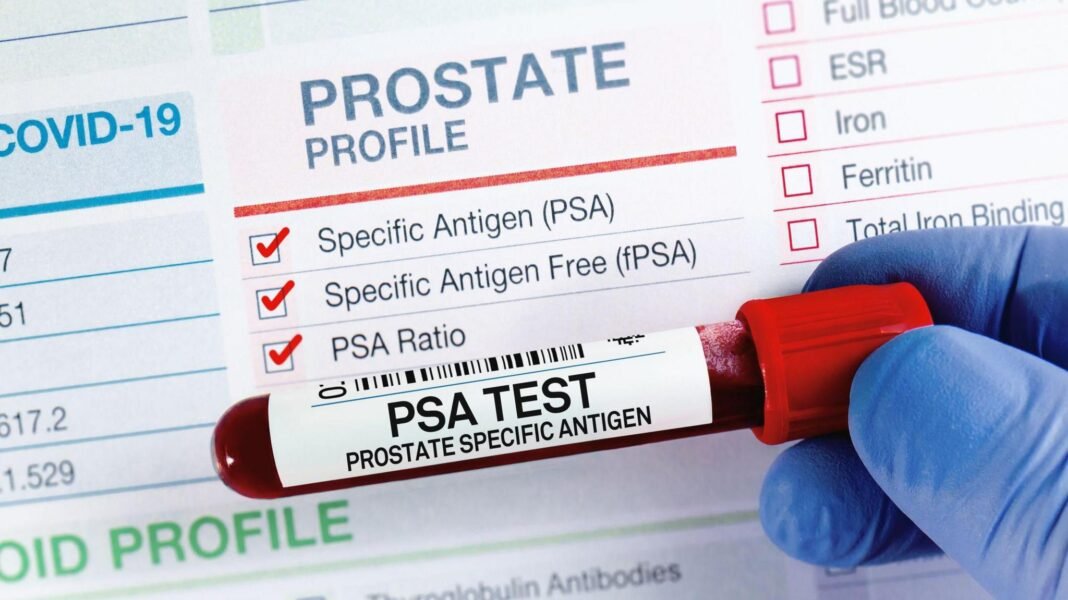


The American Cancer Society now recommends regular prostate cancer screening for most men, reversing guidance that left the decision to individual talks between patients and doctors.
Under the updated guideline, released on 12 November and published in CA: A Cancer Journal for Clinicians, prostate cancer screening for men at average risk means a prostate-specific antigen (PSA) blood test every two years from age 50 to 69.
The society had not made a direct recommendation for routine screening since 2010. Its earlier guidance asked men to weigh the benefits and harms with their doctors and decide for themselves. The new guideline says the evidence has moved on, with longer trial follow-up and better ways to handle raised PSA results.
The prostate cancer screening update comes as prostate cancer remains one of the most common cancers in men and the second leading cause of cancer death in men in the United States. The society estimates 333,830 men will be diagnosed in 2026 and 36,320 will die of the disease.
What the prostate cancer screening guideline recommends
For men at average risk, the guideline recommends a PSA test every two years from ages 50 to 69. Before testing starts, clinicians should make sure patients understand the possible benefits, limits and harms of screening.
Men at higher risk should start earlier and test more often. Black men, and non-Black men with a strong family history of prostate cancer, should have a PSA test every year from age 45 to 69. A strong family history means a first-degree relative diagnosed before age 65, or several first-degree relatives diagnosed at any age.
Non-Black men with a single first-degree relative diagnosed at age 65 or older should be screened every two years from ages 45 to 69. For men aged 70 to 74, the guideline calls for an individual decision with a doctor, since the balance of benefits and harms is less clear at that age.
Screening is not recommended for men aged 75 and older, though some very healthy men aged 75 to 79 may choose to carry on if their PSA has been rising. It is also not recommended for men aged 80 and older, or for men who are not expected to live another ten years.
Under the new prostate cancer screening plan, men with a PSA level of 3.0 nanograms per millilitre or higher at ages 45 to 69, or 6.5 or higher at ages 70 to 74, should have the test repeated within two weeks to three months. A confirmed raised level should lead to an MRI scan, a validated biomarker test, or both, before any decision about a biopsy.
The prostate cancer screening guideline also says a digital rectal examination should not be used as a screening test, and men found to have low-risk prostate cancer should be offered active surveillance, with the disease watched rather than treated at once.
Prostate cancer screening for men at higher risk
The updated guidance puts weight on closing the gap in outcomes for Black men, who carry a heavier burden from the disease. “Black men experience a 67% higher incidence and nearly double the mortality rate compared with White men, an inequity that needs immediate reversal,” said Dr William Dahut, chief scientific officer at the American Cancer Society and a contributing author of the guideline.
The society says the new prostate cancer screening advice aims to find aggressive cancers earlier while steering clear of aggressive treatment for slow-growing cancers that may never cause harm.
“PSA testing remains the cornerstone of detecting prostate cancer early, and we now have stronger evidence of its benefits,” said Dr Robert Smith, senior vice president for early cancer detection science at the American Cancer Society and senior author of the report. “We also have better approaches to catching lethal tumors while avoiding unnecessary tests for slow-growing cancers that may never need aggressive care.”
Why the guidance changed
The society based the prostate cancer screening update on a systematic review of the evidence and a modelling study of the benefits and harms of different screening plans. Longer follow-up from the European screening trial and the American PLCO trial, along with changes in how raised PSA results and low-risk cancers are handled, shifted the balance in favour of routine testing.
Modelling for the guideline projected 14 to 16 lives saved and 17 to 41 overdiagnoses for every 1,000 men screened, with MRI as a second step.
The change to prostate cancer screening does not by itself alter what insurers must cover, since federal coverage rules follow the US Preventive Services Task Force, whose prostate guidance still dates from 2018.
The American Cancer Society describes the prostate cancer screening guideline as a living document and says it will update the advice as new evidence appears.