
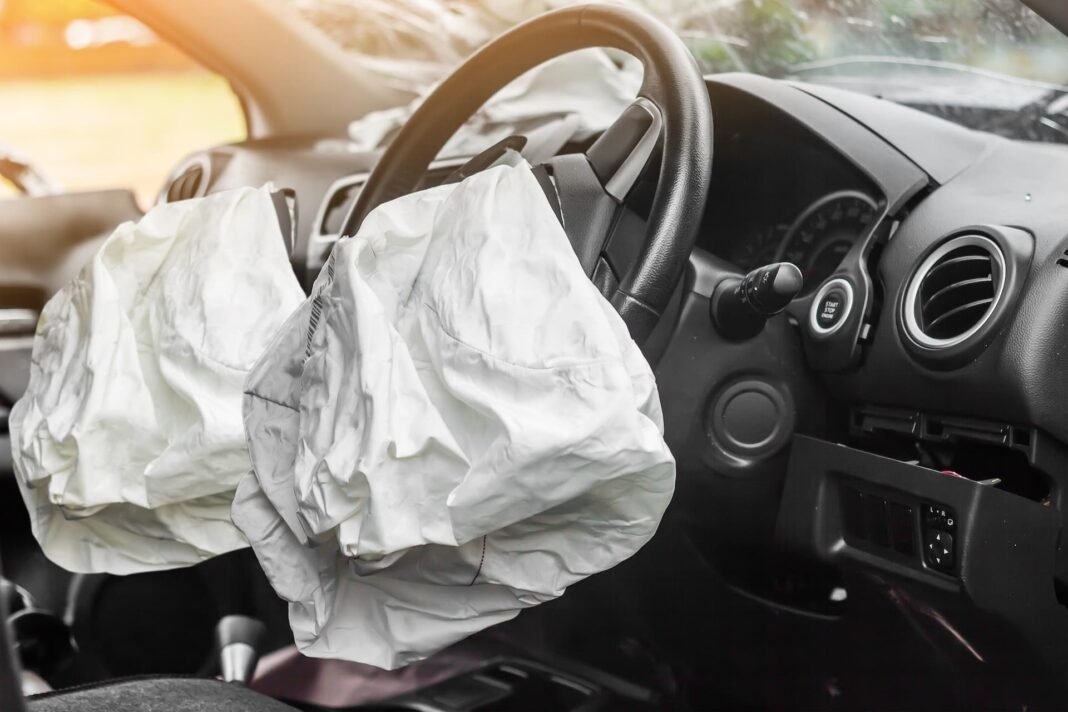


Honda and Toyota Motor said on Friday they are recalling about 1.6 million cars, trucks and SUVs over a risk that Takata airbag inflators could rupture. The Honda Toyota recall covers older vehicles from both makers, and the two companies said there have been no airbag inflator ruptures, crashes or injuries tied to the vehicles being recalled.
The Honda Toyota recall includes 810,592 older Honda cars and SUVs in the United States and 790,000 Toyota vehicles worldwide, including 314,000 in the United States. The automakers will replace the airbag inflators in the recalled vehicles free of charge, and owners will not have to pay for the replacement. Toyota expects the replacement inflators to be ready by early 2027, while Honda will begin notifying affected owners in December 2026.
The inflators in the Honda Toyota recall contain a moisture-absorbing material, unlike the millions of vehicles recalled previously. The National Highway Traffic Safety Administration said analysis and inflator degradation simulation models conducted by independent testing groups allowed the automakers to act ahead of potential risks.
Which vehicles the Honda Toyota recall covers
The Honda recall covers some 2013 Honda Accord, 2012-2013 Honda Civic, 2012-2013 Honda CR-V, 2013 Acura ILX and 2013 Acura RDX vehicles. It applies to vehicles originally sold or registered in 14 states or territories known for high temperature, humidity and large temperature fluctuations.
Those places are Alabama, California, Florida, Georgia, Hawaii, Louisiana, Mississippi, South Carolina, Texas, Puerto Rico, the US Virgin Islands, the Northern Mariana Islands, Guam and American Samoa. The Honda Toyota recall applies to Honda vehicles in those hot and humid markets, where the inflator propellant is most likely to degrade.
The Toyota recall includes the 2002-2010 Lexus SC430, 2011 IS250, 2017 GX460, 2003-2008 Toyota Corolla, 2005-2006 Tundra, 2005-2007 Sequoia and 2016-2017 4Runner. Toyota did not specify in which US states its recall applies.
Why the Honda Toyota recall is happening now
The Honda Toyota recall is happening because degraded propellant could cause the inflator to rupture if the airbag deploys and cause serious injuries. A rupture can send metal fragments through the airbag and into the passenger compartment at high speed. The inflators in the recalled vehicles use phase-stabilised ammonium nitrate propellant with a desiccant designed to absorb moisture.
Prolonged exposure to high temperatures, humidity and repeated temperature changes can gradually affect the propellant’s chemical stability. The safety agency said independent testing groups had developed degradation models that allowed manufacturers to identify vehicles potentially approaching the end of their inflators’ estimated safe service lives.
“Honda and Toyota saw early evidence of degradation risk in certain of their vehicles and are currently conducting proactive recalls of vehicles,” the safety agency said late on Friday, adding that other automakers continue to conduct inflator analysis and testing. Toyota decided to start a voluntary safety recall on 6 November, and its filing reached the safety agency on 12 November under recall number 26V748.
The safety agency said other automakers continue to conduct inflator analysis and testing, and more recalls could follow if their tests show the same risk. The current recalls are described as proactive, because they were started before any rupture was reported in the vehicles involved.
Honda Toyota recall in the wider Takata crisis
The new recalls are the latest chapter in the Takata airbag crisis, the largest recall in US auto history. Defective Takata inflators have killed at least 28 people and injured more than 400 in the United States since 2009. The Honda Toyota recall differs from earlier rounds because the inflators contain a desiccant meant to slow deterioration.
The Takata crisis has run for more than a decade. Millions of vehicles from many makers were recalled after inflators were found to explode in a crash, sending metal shards into the cabin. The fault was linked to ammonium nitrate propellant breaking down after long exposure to heat and humidity, the same process behind the new recalls.
Owners of the recalled vehicles will be told to bring them in for a free inflator replacement once parts are ready. Honda will start contacting owners in December 2026, and Toyota expects replacement inflators to become available in early 2027. The Honda Toyota recall covers about 1.6 million vehicles in total, with 810,592 from Honda in the United States and about 790,000 from Toyota worldwide.