
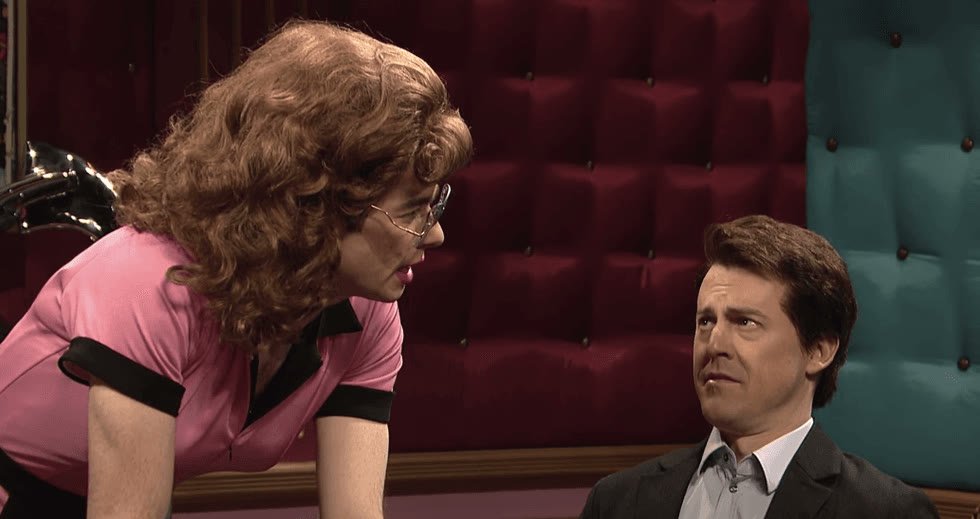


A three-minute Saturday Night Live sketch has turned into one of the most talked-about pieces of television. The SNL Sister sketch, a parody advertisement for a care service called Sister, aired on 14 November in the episode hosted by John Mulaney. It presents a sister as a live-in, round-the-clock elder care provider who is completely free. In less than a week it passed seven million views on YouTube.
SNL Sister and the parody that went viral
Mulaney plays the pitchman, selling Sister to a son worried about his ageing father. “Sister is a live-in, 24/7 elder care provider that is completely free, and also your sister,” he says. “Now I don’t have to worry about dad getting the care and attention he needs because my sister will do it, and I can get back to my life, and the stuff I like to do.” All a brother has to do is text “Dad fell”, and his sister quits her job and moves halfway across the country.
Mulaney, Andrew Dismukes and Kenan Thompson play three men who praise the service. Jane Wickline plays the sister, who gives her father his medication. A doctor played by Mikey Day explains how it works. “Years of internalized sexism warp Sister’s brain into thinking caretaking is her responsibility and somehow not yours,” he says. The SNL Sister sketch ends with an offer for an add-on service, Sister’s Husband.
Mikey Day and Streeter Seidell wrote the sketch, with former Saturday Night Live writer Simon Rich and an assist from Chase Rosenberg. Seidell dedicated the piece to his own sister, Heidi. The Guardian called it the best commercial sketch the show has done in a long while, and Vulture and LateNighter named it the best segment of the episode.
What caregivers told the Guardian
The Guardian spoke to women who saw their own lives in the SNL Sister sketch. Stacey Barnes, 45, a web developer, has lived with her parents since her mother was diagnosed with Parkinson’s disease about a year and a half ago, and is her mother’s main caregiver. “I immediately went to YouTube the next day and sent it to people,” she told the Guardian. “I’ve never felt seen like that before.”
Shauna Sweeney, 41, received at least a dozen messages about the SNL Sister sketch from friends. Her father was diagnosed with early-onset Alzheimer’s disease in 2014, and she took on his care without any family discussion about who would do what. “I didn’t have language for this,” she said. “I didn’t even know what a caregiver was for the first five years that I was doing the job.” A hospice nurse told the Guardian that the caregivers in her work are adult daughters most of the time.
SNL Sister by the numbers
The numbers behind the response give the SNL Sister sketch its weight. Within two days it had four million views on YouTube, and the total passed seven million in less than a week. More than 7,000 comments were left on the show’s official YouTube page. Research from AARP and the National Alliance for Caregiving says three out of five caregivers in the United States are women, and more than 51 million Americans care for someone aged 50 or older.
Melinda French Gates checked the SNL Sister sketch’s claims against research from her investment and philanthropic organisation, and found that most of them held up. Among adults aged 55 to 64, women are nearly 40 percent more likely than men to care for an older relative. Catalyst found that 42 percent of women who voluntarily left jobs in 2025 cited caregiving as the main reason. A home health aide costs more than $6,600 a month, and round-the-clock care can top $25,000. Nearly two-thirds of caregivers said they were under moderate or high emotional stress.
Why the sketch landed so widely
French Gates wrote on Instagram that no Saturday Night Live sketch had made its way into so many group chats so quickly. Senator Kirsten Gillibrand used the SNL Sister sketch to promote her bill, the Supporting Our Direct Care Workforce and Family Caregivers Act, which she introduced in June 2026. It would provide federal funding to states to train and retain the care workforce and family caregivers.
The New York Times cited studies showing that daughters generally provide at least twice as much care to ageing parents as sons do. The United States, unlike many wealthy countries, offers no federal paid leave or long-term care insurance for family caregivers. The SNL Sister sketch put a private arrangement on screen, and millions of people recognised it at once.