
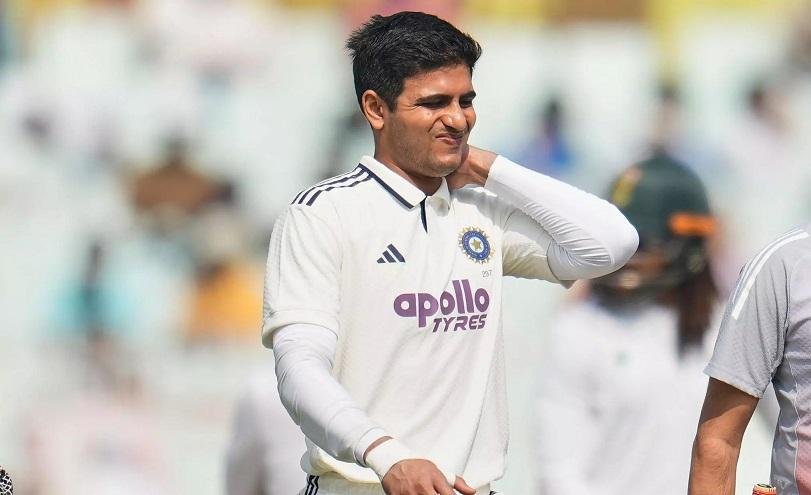


India captain Shubman Gill has called for cricket’s ban on using saliva to shine the ball to be lifted, saying bowlers are being left with little help on flat pitches. The Shubman Gill saliva ban appeal came after the first Test against New Zealand ended in a draw at the Basin Reserve in Wellington on Monday, November 23, 2026. India declared with a lead of 352 and had around 135 overs to bowl New Zealand out again, but took only five wickets as the hosts finished on 239 for five. Gill said the Kookaburra ball went soft after 25 to 30 overs, and the pitch gave the bowlers almost nothing.
Shubman Gill saliva ban: what the captain said
Gill spoke at the post-match press conference in Wellington, where he linked the ball’s condition to the draw. The Shubman Gill saliva ban call was the main point he raised. “I think a ball definitely plays a big role. Our first ball [Kookaburra in NZ] was very soft after 25-30 overs. I think the other team also complained,” he said. India had seen the same problem in England, where the Dukes ball went soft quickly. “I don’t know if the quality of the balls has come down or what,” Gill said.
“But in such conditions, if there is no help from the wicket, and on top of that, the ball has become soft, then it becomes very difficult for the bowlers to take wickets. [The edges] don’t carry. If there is not enough movement in the pitch, then all you have are lbws and bowleds,” he said. “We are way past Covid times. There was a rule that you can’t put saliva on the ball to make it shine. It’s been seven-eight years and I still don’t understand why they are not allowing it,” he added.
Gill put the case in plain terms. “I do believe that players, teams should be allowed to use saliva. It was a rule that was made during Covid. I think we are long past that,” he said. “If the ball is going soft after 25, 30 overs or it’s going out of shape, and you are also not able to maintain the ball and use saliva then it’s very difficult.” The Shubman Gill saliva ban argument is that saliva lets bowlers keep the ball in shape for longer.
How the Wellington draw unfolded
India declared their first innings at 720 for nine, a total built on KL Rahul’s 136 and Rishabh Pant’s 128. New Zealand replied with 368, with Henry Nicholls unbeaten on 175 and Glenn Phillips making 118. New Zealand resumed the final day on 119 for two, still 233 runs behind, and batted through to 239 for five from 120 overs. Daryl Mitchell finished unbeaten on 49 from 186 balls, and Glenn Phillips was 26 not out from 126 balls. The Shubman Gill saliva ban debate grew out of that final day, when India could not find a way through.
Gill said the draw left India frustrated. “If a team used to play a five-Test series, we used to draw two matches. It was common, but not so much now. That’s why we are not used to draws. That’s why we definitely feel more frustrated,” he said. The Shubman Gill saliva ban plea followed that frustration.
Shubman Gill saliva ban: the rule and its history
The ban on saliva was brought in during the Covid pandemic, when cricket’s lawmakers moved to stop it. The ICC made the ban permanent in 2022. Players can still use sweat to polish the ball, but saliva remains barred. Bowlers use saliva to keep one side of the ball smooth, which helps it swing in the air and stay in shape. The Shubman Gill saliva ban plea asks the ICC to weigh that trade-off again, now that the health emergency behind the rule has passed.
Gill also defended leaving Mohammed Siraj out of the Wellington XI, calling it a very tough decision. He said Siraj understood the reasoning and the call came down to which bowlers were in form. “Sometimes, you have to see which bowlers are in form, which bowlers are bowling the best,” Gill said. He called Siraj a great bowler and a close friend.
What happens next
India and New Zealand now move to Christchurch for the second Test at Hagley Oval, with the two-match series level at 0-0. The draw also cost India ground in the World Test Championship, where their points percentage fell from 51.52 to 50.00. Gill said his fast bowlers had bowled close to 50 overs each. The Shubman Gill saliva ban question will now sit with the ICC, and the Shubman Gill saliva ban debate will stay open until the game’s lawmakers answer it.