


US business activity growth slowed further in November, as high prices held back new orders and capacity limits restrained output, a survey showed on Monday.
The survey's headline gauge of US business activity, the S and P Global flash Composite PMI Output Index, eased to a four month low of 54.6 in November from a final reading of 55.9 in October. A reading above 50 shows the private sector is still expanding. The survey points to growth continuing at an above trend rate, even as the pace of expansion cools.
The US business activity survey covered November 12 to 20, a period that also saw a sharp selloff in the US stock market on concerns about the sustainability of the artificial intelligence boom. The stock market has been a key support for consumer spending.
US business activity in manufacturing and services
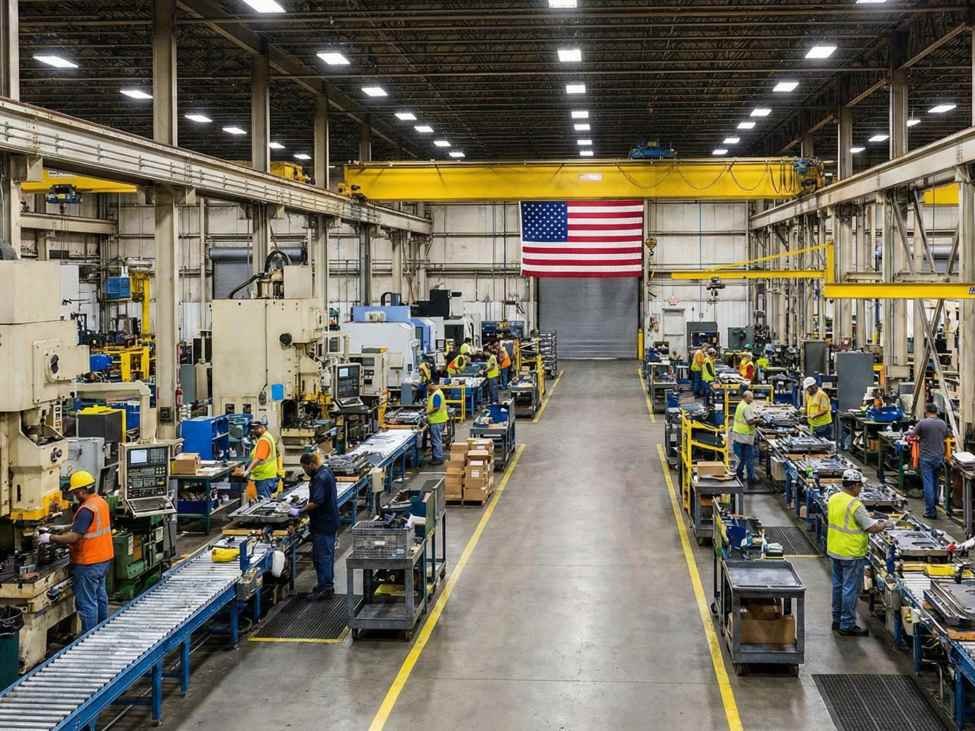
Growth slackened in both manufacturing and the vast services sector, which is responsible for roughly two thirds of US economic activity. The manufacturing PMI slipped to a three month low of 54.5 from 54.9 in October, while the services PMI dropped to a four month low of 54.7 from 56.1 last month.
Manufacturing output eased to 53.7, also a three month low, though the sector has now improved for a sixteenth successive month. Services growth outpaced manufacturing for a fifth successive month, even after the sharper fall. The composite index has now shown expansion for 46 months in a row.
New orders growth cooled for a second month to the weakest since July, led by a marked slowing of new business inflows into the service sector. Firms linked the slowdown to uncertainty among customers, high prices and reports of demand being reduced by higher interest rates. Exports fell for the first time in four months.
Demand is the part of the US business activity picture that weakened most. Services firms reported the sharpest drop in new work, while manufacturers saw orders ease more gently. The survey's new orders gauge now sits at its lowest since July, and the fall in exports breaks a run of growth that had lasted through the summer and autumn.
What the US business activity slowdown means for growth
Chris Williamson, chief business economist at S and P Global Market Intelligence, said the surveys still point to solid growth. "Although output growth slowed in November, recent readings have been impressively strong, and the PMI surveys still point to GDP rising at an annualized rate of about 3% in the fourth quarter," Williamson said.
Employment growth moderated for a second month, but it was the joint third largest seen for more than four years. Factory job creation was the second strongest since July 2021. Firms took on extra staff to help reduce backlogs, with a strong gain reported in manufacturing alongside solid but slowing service sector jobs growth. Hiring held up even as US business activity cooled, which suggests firms still expect orders to recover rather than fall away.
Price pressures stayed high. The survey's price gauges remain consistent with inflation well above the Federal Reserve's 2 percent target, Williamson said, though firms reported easing input costs, helped by lower fuel prices. High prices were one of the main reasons new orders slowed, and capacity constraints held back output in both sectors.
The US business activity surveys ask purchasing managers whether output, orders and hiring rose or fell in the month. A reading above 50 means more firms reported growth than decline, so the index tracks how broad the expansion is rather than its size. The flash reading published on Monday will be followed by final November figures in early December.
The November figures fit a steady rather than stalling picture. The US business activity reading of 54.6 is the lowest since July, but it still shows a private sector growing at a pace that points to about 3 percent annualized economic growth in the fourth quarter. The survey was published on November 23, and the final November readings are due in early December.