
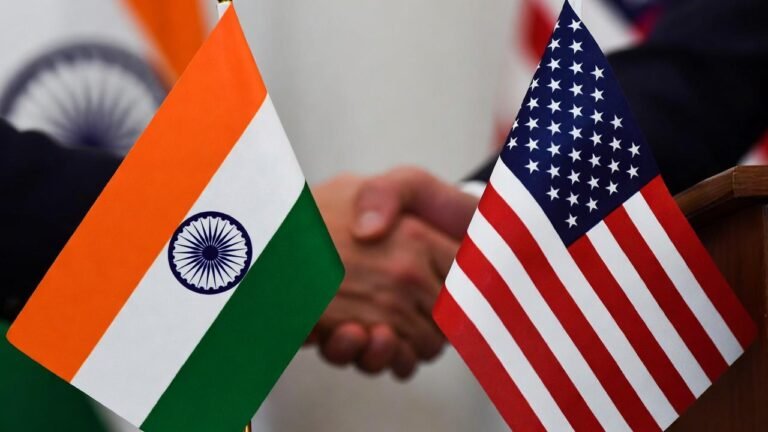


India has secured an agreement with the United States to receive preferential market access for its goods, with lower import duties than competing countries, according to a Times of India report quoting Commerce and Industry Minister Piyush Goyal. The proposed India-US trade agreement could create opportunities for Indian companies by improving market access, reducing tariff barriers and strengthening bilateral trade. Export-oriented sectors such as textiles, apparel, gems and jewellery, engineering goods and seafood could be among the beneficiaries, and Gokaldas Exports is the first stock Equitymaster picks as one to watch as the agreement nears.
Gokaldas Exports is a top Indian textile exporter based in Bengaluru. It manufactures outerwear, sportswear, casualwear, fashionwear and bottomwear for leading international fashion brands and retailers. The company has manufacturing operations across India, Kenya and Ethiopia, exports to more than 50 countries, and North America including the US accounts for as much as 77% of its sales. That exposure is what makes the US trade agreement matter so much for the stock.
US trade agreement and the Gokaldas case
Gokaldas management says US tariff rates under Section 301 place India on an equal footing with several competing sourcing destinations while retaining a clear advantage over China and Vietnam, both of which face a 12.5% tariff. After the first-half results for the 2027 financial year, management noted end-consumer demand remained strong in the US and UK, with retail sales growing 6% and 3% respectively in the year-to-date period ending September 2026, though growth moderated in September. In the first half of the 2026 financial year, revenues from operations grew 17% while net profit surged 73% year on year.
Gokaldas shares jumped about 6.5% to Rs 832.1 on February 9, 2026, when the interim framework was confirmed, and the stock derives roughly 70% of revenue from the US, according to Motilal Oswal. That February share move is background, not a November event, but it shows how closely the stock tracks the trade story. The company is the kind of exporter the US trade agreement is designed to help: a large supplier to American brands, with most of its sales in North America.
US trade agreement: the 18% duty advantage
The wider deal context is the India-US interim trade framework announced on February 6, 2026, which reduces US duties on most Indian goods to 18%, from 50%. Tariffs on Indian exports to the US had included a 25% reciprocal levy plus 25% linked to Russian oil trade since September 2025. India faces 18% versus about 20% for Vietnam and Bangladesh and 30 to 35% or more for China on apparel. The gap is the advantage Indian exporters are counting on, and it is why the agreement is being watched so closely. The US trade agreement gives India a duty advantage over Vietnam and Bangladesh, and a bigger one over China.
Jefferies said the deal is positive for investor sentiment and expects auto ancillaries, solar manufacturing, chemicals, textiles and Adani Group companies to benefit. The brokerage added Eternal to its model portfolio and raised metals exposure. Brokerage views differ on the exact beneficiaries, so sector calls should be read as views rather than certainties, but the textile case is the clearest of them.
What the US trade agreement means for textiles
The US trade agreement matters for textiles because the sector sells on price, and a lower duty is a direct gain. Gokaldas Exports, with 77% of its sales in North America and manufacturing in three countries, is positioned to take the orders that move when duties fall. The company’s management has said demand in the US and UK stayed strong through the first half of the year, and the trade agreement gives it a cost edge over China and Vietnam.
The agreement is still being finalised, and the exact shape of the final deal is not yet known. What is known is the interim framework’s 18% duty, the preferential access India has secured, and the sectors that stand to gain. The US trade agreement is the reason Gokaldas Exports is on the watchlist, and the stock’s February jump shows the market already treats it as a trade-deal play.