
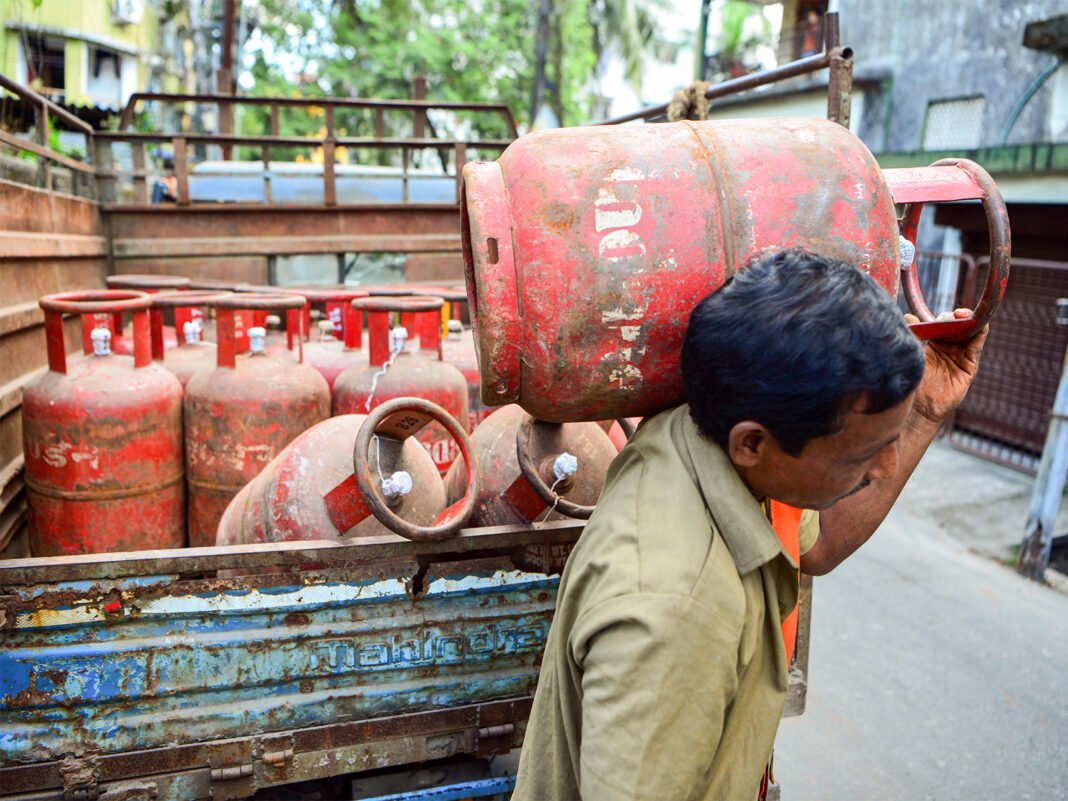


The LPG price hike for commercial cooking gas took effect on October 1, 2026, with state-run oil marketing companies raising 19-kg cylinder rates by Rs 62.50 to Rs 71.50 across major cities — the second straight monthly increase, timed just as the festive season begins. While businesses will feel the pinch, households get relief: the 14.2-kg domestic cylinder price remains unchanged.
Oil marketing companies revise LPG prices on the first of every month, benchmarking international LPG prices and currency movements. The October LPG price hike follows a Rs 9.51 increase in September; commercial rates had been cut in July and August before turning upward again, reflecting volatile global energy markets and geopolitical tensions.
LPG price hike: new city-wise commercial rates
The LPG price hike varies by city. In Delhi, the 19-kg commercial cylinder now costs Rs 2,810, up Rs 62.50 from Rs 2,747.50 in September. Mumbai saw a Rs 63 increase to Rs 2,764, Chennai rose Rs 66.50 to Rs 2,983, Kolkata climbed Rs 70 to Rs 2,954, and Hyderabad increased Rs 69 to Rs 3,065. Patna recorded the steepest hike of Rs 71.50, taking the cylinder to Rs 3,100.50 — Rs 336 more than Mumbai, the cheapest among major cities tracked.
Other markets moved similarly: Lucknow now pays Rs 2,932.51, Ahmedabad Rs 2,831.51 and Kanyakumari Rs 3,046 for the 19-kg cylinder. In contrast, the domestic 14.2-kg cylinder is untouched — Delhi holds at Rs 942, Mumbai at Rs 941.50, Chennai at Rs 957.50, Lucknow at Rs 979.50 and Patna at Rs 1,031.50.
Who the LPG price hike hits hardest
The LPG price hike lands squarely on businesses that cook for a living. Restaurants, hotels, caterers, cloud kitchens, food stalls and dhabas run on 19-kg commercial cylinders, often consuming several a month — so a Rs 62-72 rise per cylinder translates directly into higher monthly fuel bills. Industry watchers say eateries entering the high-demand festive season may pass part of the cost to customers through menu prices.
The timing compounds the pressure: the hike arrives as establishments stock up for Diwali-season catering and weddings. Small food businesses operating on thin margins have the least room to absorb it, though the unchanged domestic rate at least shields household kitchens from the inflation shock.
New Aadhaar rule alongside the LPG price hike
October 1 brought a second LPG change beyond pricing: a new Aadhaar-based authentication requirement for domestic LPG consumers has kicked in. The rule adds a verification layer to domestic connections — part of the government’s broader push to authenticate subsidy delivery and weed out duplicate or ghost connections.
Taken together, the LPG price hike for commercial users and the authentication drive for domestic users signal tighter management of India’s cooking-fuel economy. With global energy volatility keeping fuel prices under watch, businesses will be hoping November’s revision brings relief rather than a third consecutive increase.
The monthly revision follows a set formula. Public sector oil marketing companies reset cooking-fuel prices on the first of each month based on international benchmark LPG prices and the rupee’s exchange rate, with the Petroleum Planning and Analysis Cell under the petroleum ministry tracking the data. When global prices or the currency move, domestic revisions follow — in either direction.
The commercial segment has whipsawed this year. After price cuts in July and August brought relief to hotels and caterers, September’s Rs 9.51 increase and now October’s steeper revision have reversed those gains. For high-volume users such as wedding caterers and cloud kitchens running multiple cylinders a month, the two-month swing adds up to a meaningful cost line.
Smaller cylinders saw their own updates. According to Indian Oil’s October notification, a 5-kg domestic cylinder costs Rs 386 and a 10-kg composite cylinder Rs 750.50, while the 47.5-kg commercial cylinder is priced at Rs 7,781 — figures that matter to small eateries and street vendors who buy in smaller lots.
Consumer groups advise commercial buyers to check their distributor’s updated rate card before the next refill, since prices differ by city and the October revision is already in force at outlets nationwide.