
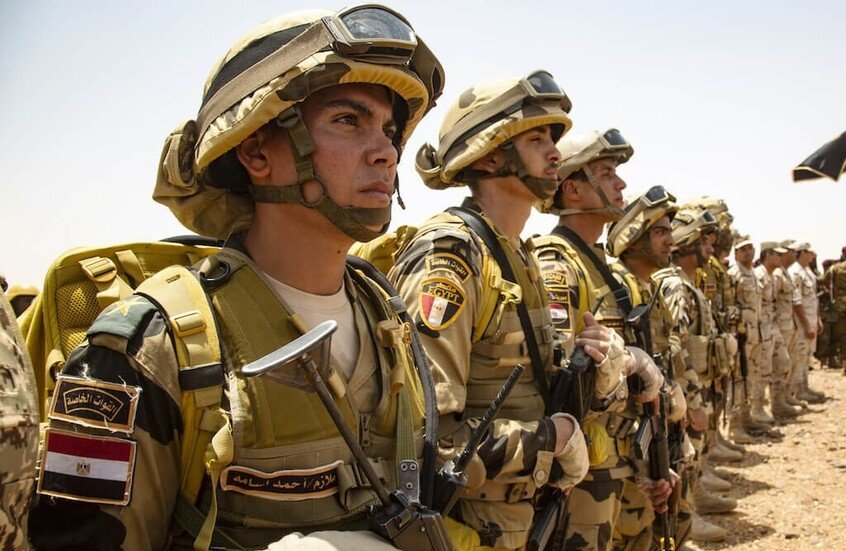


An Egypt Saudi Houthi security alignment took formal shape as Egypt’s highest security authority agreed to provide military and strategic assistance to Saudi Arabia as the kingdom faces escalating attacks from Yemen’s Houthi movement.
The decision, reported on October 19, marks a significant deepening of the Cairo-Riyadh security partnership at a moment when regional tensions are running at their highest level in years — with shipping under attack in the Red Sea, oil prices volatile, and multiple overlapping conflicts straining the Middle East’s fragile order.
Egypt Saudi Houthi: What Cairo Agreed To
Egypt’s top security body — the council that coordinates the country’s military, intelligence and national-security policy — formally agreed to support Saudi Arabia’s defence against Houthi attacks, according to regional reporting. The commitment encompasses military and strategic assistance, though the precise form of that support has not been publicly detailed.
The move is best understood in the context of Egypt’s own vital interests. The Houthi campaign against Red Sea shipping has devastated Egypt’s Suez Canal revenues, a critical source of foreign currency for Cairo’s strained economy. What began as a Saudi security problem has become an Egyptian economic emergency — giving Cairo direct skin in the game beyond traditional Arab solidarity.
For Saudi Arabia, Egyptian backing adds weight to its defensive posture. The kingdom has invested heavily in air-defence systems to intercept Houthi missiles and drones, but the tempo of attacks has tested even those formidable capabilities. A formal Egyptian commitment — from the Arab world’s largest military — sends a deterrent signal to the Houthis and their backers.
A Region on Edge
The Egypt Saudi Houthi development lands amid a cascade of regional crises. Ship attacks around the Strait of Hormuz have hit record highs, oil markets are whipsawing on geopolitical headlines, and the war in Gaza’s aftermath continues to reverberate through regional politics. The Houthis, emboldened by their Red Sea campaign, have shown no sign of de-escalation.
The alignment also reflects the broader realignment of Middle Eastern security architecture. Traditional partnerships are being tested and reinforced simultaneously: Gulf states hedging between Washington, Beijing and Moscow; Egypt balancing its economic desperation against its strategic weight; and Iran’s network of allied militias — including the Houthis — probing for weakness across multiple fronts.
Diplomats will be watching for whether Cairo’s commitment remains declaratory or translates into concrete military cooperation — joint exercises, intelligence sharing, air-defence coordination or even Egyptian naval participation in Red Sea security operations. Each step up that ladder carries its own escalatory logic.
What It Means for the Wider Conflict
The Houthi conflict has long been Yemen’s war with regional spillover; it is increasingly becoming the region’s war with Yemeni origins. Egypt’s formal entry into the Saudi defensive camp underscores that transformation — and raises the stakes for any miscalculation.
For global markets, the signal is unambiguous: the Red Sea crisis is not ending, the region’s major powers are digging in, and the shipping lanes and energy flows that the world economy depends on will remain hostage to Middle Eastern geopolitics for the foreseeable future.
The Egypt Saudi Houthi pact may deter further escalation, or it may simply formalize the battle lines of a confrontation already underway. Either way, Cairo has now publicly chosen its side — and the Middle East’s most dangerous standoff has a new and formidable participant.
Analysts note that the pact also serves a domestic purpose for both governments. For Cairo, aligning with Riyadh reinforces Egypt’s claim to regional leadership at a time of severe economic strain; for the Saudi leadership, Arab solidarity behind the kingdom’s defence complicates any narrative that it stands alone. In Middle Eastern statecraft, the audience for such announcements is as often domestic as foreign — and sometimes both at once.
Whether the pact ultimately deters Houthi attacks or simply hardens existing battle lines, it marks a clear inflection point: the Red Sea crisis has moved from a shipping disruption to a formal military alignment, and the region’s diplomacy will now have to reckon with Cairo as an active participant rather than a concerned bystander.