
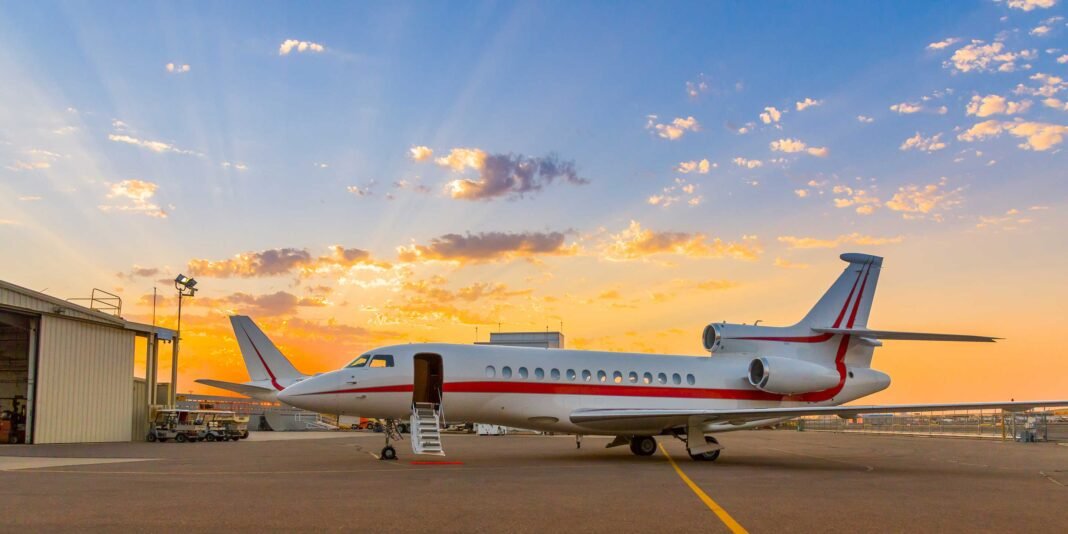


The business aviation growth remains firmly positive. Honeywell Aerospace said on 19 October that it expects 9,950 new business jet deliveries worldwide between 2026 and 2035, raising its forecast by 4.4 per cent from last year as higher aircraft utilisation and fleet expansion support demand. The projection comes from the company’s 35th annual Global Business Aviation Outlook, published from Phoenix.
The forecast now covers a broader slice of the market than ever before. In contrast to all previous reports, this year’s outlook encompasses turboprops and personal jets alongside traditional business jets. Including about 4,200 turboprop deliveries through 2035, total business aircraft deliveries are expected to reach roughly 14,000 over the decade, while the global business aviation fleet is projected to expand by approximately 29 per cent, growing from about 39,400 aircraft in 2025 to nearly 51,000 in 2035.
Growing demand for charter and fractional ownership is driving higher aircraft utilisation, helping support business jet demand despite economic uncertainty and geopolitical volatility. The company expects global business aviation flight hours to increase about 34 per cent through 2035, outpacing fleet growth as operators make greater use of shared-use models.
Business Aviation Growth Driven by New Ownership Models
The forecast reflects an industry that has evolved well beyond traditional ownership models. Charter, managed fleets and fractional operators are driving a growing share of activity, helping business aviation remain remarkably resilient amid economic uncertainty, geopolitical volatility and energy-market disruptions.
“Business aircraft owners and operators are consistently flying more, ordering new business jets, expanding fleets and investing in innovations that are driving growth across the sector,” said Linnea Whisler, president of Commercial Original Equipment at Honeywell Aerospace. Operators are adapting their business models, and the rising utilisation is feeding directly into order books.
Where Business Aviation Growth Is Coming From
North America remained the largest business aviation market, the company said, while demand was growing in Latin America and parts of Asia-Pacific, including India. The Indian market has drawn increasing attention from manufacturers and operators as corporate travel demand recovers and the country’s wealthy class expands its use of private aviation.
There are, however, pockets of weakness. Honeywell noted that conflict in the Middle East has disrupted flight operations and paused development activity in the region. The acknowledgement underscores how the sector’s resilience is being tested by the same geopolitical currents affecting the wider economy.
Business Aviation Growth Through 2035: Key Numbers
The headline figures tell a story of steady, compounding expansion rather than a boom. Aircraft utilisation continues to grow as operators adapt business models, and the 34 per cent rise in flight hours over the decade reflects both fleet growth and the increasing intensity with which each aircraft is used, particularly among charter and fractional operators.
For manufacturers, suppliers and service providers, the message is one of durable demand. With nearly 10,000 new business jets and thousands more turboprops expected to enter service by 2035, the aftermarket for maintenance, upgrades and avionics looks set for a long runway of its own.
The outlook’s authors stress that the industry’s resilience is structural, not cyclical. Charter, managed fleets and fractional operators now drive a growing share of flight activity, spreading fixed costs across more users and keeping aircraft flying even when corporate budgets tighten. That shift is visible in the numbers: flight hours are expected to grow 34 per cent over the decade, well ahead of the 29 per cent fleet expansion, meaning each aircraft will work harder than the last generation.
This year’s report also breaks new ground in scope. By folding turboprops and personal jets into the forecast for the first time, Honeywell is acknowledging that the definition of business aviation has widened beyond the traditional corporate jet. The 4,200 turboprop deliveries projected through 2035 reflect demand from regional operators and emerging markets where shorter runways and lower operating costs matter more than outright speed.
The 35th annual outlook was published on 19 October from Phoenix, and its findings were reported by Reuters from Montreal and Bengaluru.