
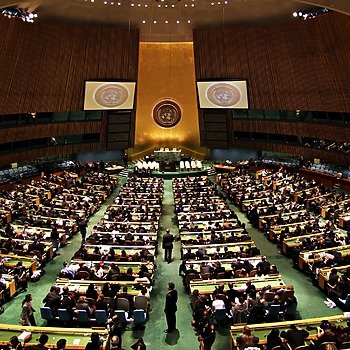


India has called on the global community to maintain strict weapons technology vigilance, voicing concern over the risk of weapons of mass destruction falling into the hands of terrorists. Delivering India’s statement at the UN General Assembly First Committee, which deals with disarmament and international security, Lok Sabha MP Alok Kumar Suman on Monday urged all member states to remain watchful about the transfer of sensitive technology, particularly to those with a “record” of proliferation and terror links.
“Terrorism remains a major challenge to international security. India is deeply concerned about the risk of weapons of mass destruction falling into the hands of terrorists and non-state actors,” Suman said. “We encourage all Member States to remain vigilant about the transfer of dual-use and sensitive technology, particularly to those with a record of proliferation or linked to terrorism,” he added.
The comments were widely read as a thinly veiled reference to Pakistan and the global proliferation network led by A. Q. Khan. The Pakistani nuclear physicist, also known as the father of Pakistan’s nuclear bomb, led an extensive international network aimed at the proliferation of nuclear equipment and know-how, which the US State Department has described as providing a “‘one-stop shopping’ for countries seeking to develop nuclear weapons”.
Weapons Technology Vigilance and the Khan Network Legacy
India’s invocation of the Khan network’s history is deliberate. The network’s exposure contributed to the adoption of UN Security Council Resolution 1540 in 2004, a binding measure that prohibits all countries from transferring weapons of mass destruction to terrorists, referred to in the resolution as “non-state actors”, and enabling them to obtain such weapons. The resolution also set up the 1540 Committee to monitor compliance.
New Delhi has consistently argued that the international community’s vigilance cannot be selective. The appeal to responsible suppliers to scrutinise the end users of dual-use technologies, from advanced materials to precision manufacturing equipment, reflects India’s long-standing position that proliferation controls must keep pace with the diffusion of technology.
India’s Record on Weapons Technology Vigilance at the UN
Suman noted that since 2002, India has tabled a resolution titled ‘Measures to prevent terrorists from acquiring weapons of mass destruction’, making it one of the most consistent voices on the issue at the United Nations. The statement at the First Committee continues that two-decade effort.
Suman is part of the second cohort of visiting Indian parliamentarians who arrived in New York for a UN familiarisation trip. The MPs will hold a diverse range of engagements at the United Nations headquarters during the visit and will also meet senior UN officials, envoys and members of the Indian diaspora.
Broader Context: India’s Stand Against Nuclear Blackmail
The vigilance call follows India’s firm posture at the same committee earlier this month, when it exercised its Right of Reply to reject attempts by state sponsors of terrorism to hide behind proxy outfits. India reiterated that it will make no distinction between those who sponsor terrorism and those who mastermind it, and that it will not bow to nuclear blackmail under any circumstances.
“We urge all states and all responsible suppliers to exercise the highest degree of vigilance, not because of India, but for their own security,” Indian officials have said in the committee’s debates. The message to the international community is blunt: technology transferred carelessly today can become the security crisis of tomorrow, and the cost of inattention will not be borne by India alone.
The vigilance appeal builds on India’s assertive recent record at the First Committee. Earlier this month, exercising its Right of Reply, India rejected attempts by state sponsors of terrorism to hide behind proxy outfits, stating that “the use of force by states under the garb of non-state actors does not erase the state’s responsibility” and that India’s right of self-defence remains intact. New Delhi also reiterated that it will make no distinction between those who sponsor terrorism and those who mastermind it.
Together, the two interventions present a coherent doctrine: deny terrorists both the weapons and the excuses. As dual-use technologies proliferate and supply chains globalise, India is betting that sustained diplomatic pressure, anchored in instruments like Resolution 1540, can keep the world’s most dangerous materials out of the most dangerous hands.