
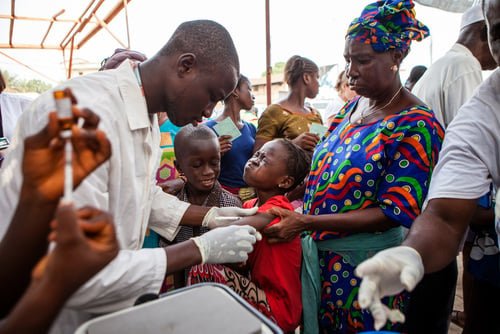


The Bangladesh measles outbreak is now the worst in the world — and experts say it should terrify every country with slipping immunization rates. Bangladesh is battling to contain the crisis, which has been exacerbated by weak data, inadequate outreach and vaccination gaps that specialists describe as a deadly warning to other nations.
Bangladesh, whose routine vaccination program faltered in 2025, reported 202,000 suspected measles cases — 22,000 of them laboratory-confirmed — from the start of the outbreak in mid-March to October 9, the World Health Organization said. That is more suspected cases than any other country this year.
Measles is one of the most contagious viruses known to medicine — and one of the most preventable. Two doses of the measles vaccine are about 97 percent effective, and the disease was once on track for regional elimination in several parts of the world. Outbreaks on the scale of Bangladesh’s do not happen by accident; they happen when immunization systems fail.
According to health officials and WHO assessments, Bangladesh’s routine vaccination program faltered in 2025, leaving growing cohorts of children unprotected. Weak surveillance data meant the gaps were not identified quickly; inadequate outreach meant they were not closed. By the time the outbreak was recognized in March, the virus was already racing through susceptible populations.
The 202,000 suspected cases represent an almost unfathomable caseload for a disease that a cheap, safe vaccine prevents. The 22,000 laboratory-confirmed cases are likely a significant undercount — in outbreaks of this scale, most cases are diagnosed clinically, and testing capacity is quickly overwhelmed.
Experts say the Bangladesh measles outbreak offers a stark lesson about the fragility of immunization gains. Measles vaccination coverage has been slipping in countries around the world, driven by a toxic mix of pandemic-era disruptions to health services, misinformation, complacency and, in some places, active anti-vaccine campaigning.
The WHO has warned repeatedly that falling coverage creates the conditions for exactly this kind of explosive outbreak. Measles requires approximately 95 percent population immunity to prevent sustained transmission — a threshold that leaves no margin for error. When coverage dips even a few points below it, the virus finds its opening.
Bangladesh’s experience is particularly sobering because the country was once a vaccination success story, with high coverage rates built through decades of investment in community health workers and outreach programs. If it can happen there, epidemiologists warn, it can happen anywhere the system weakens.
Bringing the Bangladesh measles outbreak under control will require a massive supplementary immunization campaign — vaccinating millions of children in a compressed timeframe, in many cases in hard-to-reach communities. Such campaigns are logistically daunting and expensive, and they must be executed while the outbreak is still spreading.
The longer-term fix is rebuilding the routine immunization system that faltered: restoring cold chains, retraining health workers, repairing data systems so coverage gaps are visible before they become outbreaks, and countering the misinformation that erodes parental confidence.
For the rest of the world, the message is simpler and more urgent. Measles is not a historical curiosity; it is a present-tense threat wherever vaccination rates slip. The Bangladesh measles outbreak — 202,000 suspected cases and counting — is what the post-vaccine era looks like when the vaccines stop reaching children. Every country with declining coverage should be watching, and acting, now.
The human cost behind the case counts is difficult to overstate. Measles kills by destroying immune memory, leaving survivors vulnerable to other infections for years — a phenomenon researchers call immune amnesia. In a country already straining under the caseload, the Bangladesh measles outbreak will leave a long tail of weakened children, missed school years and grieving families that no vaccination campaign, however urgent, can fully undo.
Global health officials say the response must also confront the information environment. Rumors about vaccine safety travel faster than the vaccines themselves, and rebuilding parental trust requires sustained community engagement — not just supply chains. Bangladesh’s health workers, who built one of the developing world’s most admired immunization programs, now face the task of rebuilding it under outbreak conditions.